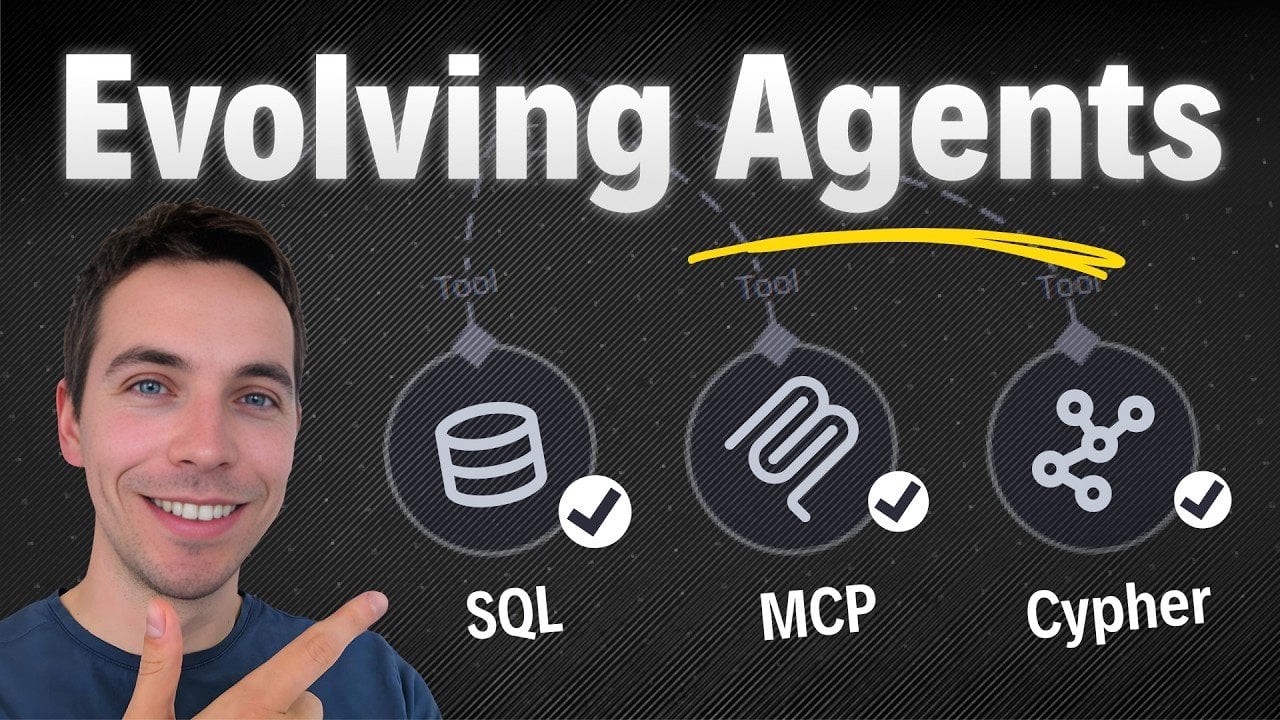
Build Reliable n8n AI Agents That Adapt, Improve Accuracy & Stay Secure
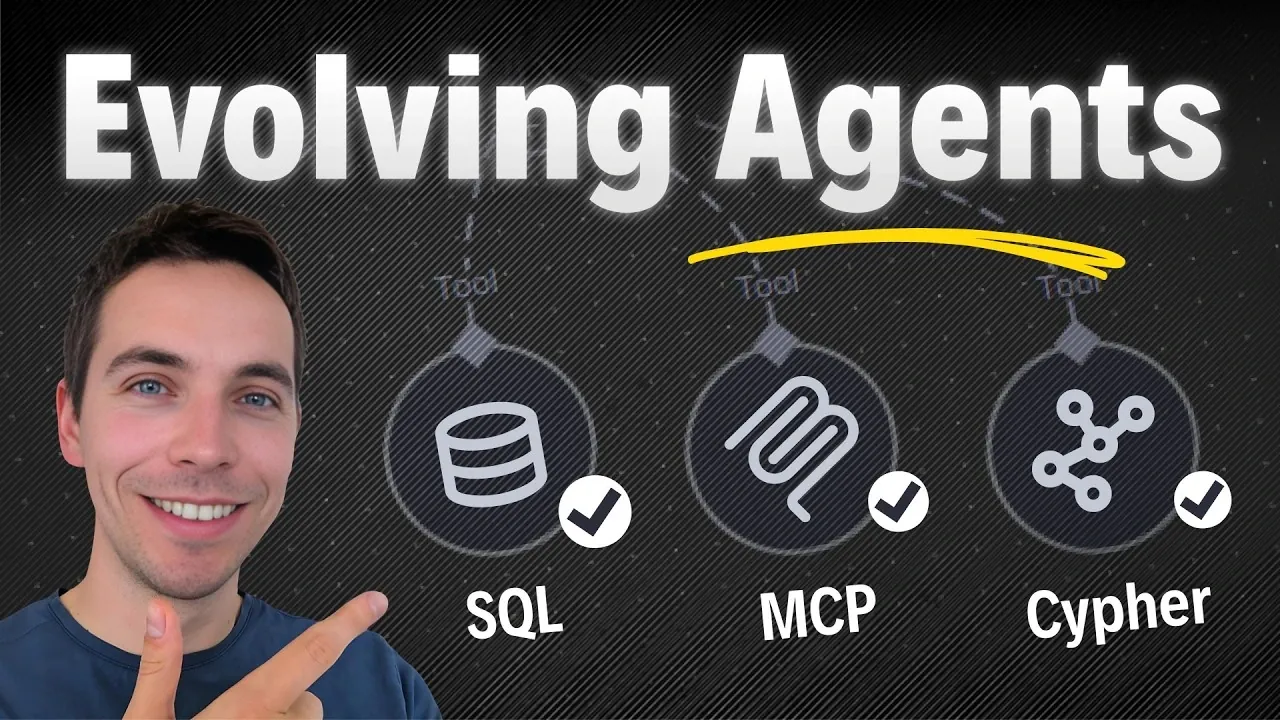
What if your database could not only answer your queries but also learn from them, growing smarter and more intuitive with every interaction? Imagine an AI-powered agent that understands your intent, adapts to your needs, and delivers precise insights, all while safeguarding your data. In a world where data drives decisions, the ability to create such self-improving systems isn’t just a futuristic dream; it’s a tangible opportunity. Yet, building these agents is no small feat. From overcoming the limitations of vector stores for structured data to integrating robust security protocols, the challenges are as complex as the solutions are fantastic. But the rewards? They could redefine how we interact with data.
AI Automators explores the innovative techniques behind crafting intelligent database agents that evolve with use. You’ll uncover how natural language queries (NLQ) bridge the gap between human intent and database logic, making data interaction more intuitive. We’ll also delve into methods like managed connection protocols and parameterized queries, which not only enhance efficiency but also fortify security. Whether you’re grappling with the limitations of traditional vector stores or seeking scalable solutions for growing datasets, this guide offers a roadmap to building agents that don’t just respond, they learn, adapt, and thrive. After all, the future of data isn’t static; it’s dynamic, responsive, and smarter with every query.
Smarter AI Database Agents
TL;DR Key Takeaways :
- AI-powered database agents must adapt to user needs, learn from past interactions, and ensure robust security to remain effective and reliable.
- Vector stores are less suitable for structured data due to limitations in preserving relational context and performing essential operations like calculations and aggregations.
- Natural Language Query (NLQ) enhances data interaction by allowing intuitive, everyday language queries, allowing agents to learn and improve over time.
- Effective database interaction methods include Managed Connection Protocols, Direct API Connections, Hardcoded Schemas, Database Views, and Parameterized Queries, each with unique benefits and trade-offs.
- Security measures such as Role-Level Security, Read-Only Users, Principle of Least Privilege, and Parameterized Queries are critical for protecting sensitive data and making sure safe database access.
Challenges of Vector Stores for Structured Data
While vector stores are highly effective for managing unstructured data, they often struggle when applied to structured, tabular data. These systems rely on vector embeddings to store information, which can fragment the relational context inherent in structured datasets. For example, retrieving a single row or column without its associated relationships can lead to incomplete or misleading results. Furthermore, vector stores lack critical functionalities such as calculations, aggregations, and groupings, capabilities that are essential for structured data queries. These limitations can result in inaccuracies or even hallucinations, making vector stores less suitable for applications requiring precise database interactions.
Natural Language Query (NLQ): Transforming Data Interaction
Natural language query (NLQ) has transformed the way users interact with structured data by allowing queries to be expressed in everyday language. This approach bridges the gap between human intent and database logic, making data retrieval more intuitive and accessible. AI agents equipped with NLQ capabilities can learn from successful queries, gradually improving their accuracy and adaptability. For instance, if an agent retrieves sales data for a specific region based on a user’s query, it can store this query pattern and apply it to similar future requests. This self-learning capability is a cornerstone of smarter, more responsive database agents.
Build n8n Database Agents That Get Smarter With Every Query
Learn more about n8n by reading our previous articles, guides and features :
- Free n8n Installation and Update Guide for Private Automations
- How to Use Claude AI to Copy & Replicate n8n Workflows Instantly
- How n8n Home Assistant Add-On Transforms Workflow Automation
- How to Set Up a Local AI System Offline Using n8n
- 20 Essential n8n Integrations to Boost Your Workflow Efficiency
- How to use Perplexity AI Inside n8n (No Code)
- 13 Essential n8n Nodes to Simplify & Supercharge Your Automation
- 8 Powerful AI Agent Use Cases to Boost Automation with n8n
- n8n vs Python: Choosing the Right Tool for AI Development
- How to Connect Slack to n8n for Workflow Automation
Effective Methods for Database Interaction
To ensure seamless and efficient database access, several interaction methods can be employed. Each method offers distinct advantages and trade-offs, allowing you to tailor your approach based on specific requirements:
- Managed Connection Protocol (MCP): MCP dynamically retrieves database schemas and executes SQL queries, streamlining the querying process. It also stores successful queries for future use. However, fallback mechanisms may be necessary to address potential reliability issues.
- Direct API Connection: This method establishes a direct connection to databases such as PostgreSQL, allowing real-time schema retrieval and query execution. It is particularly reliable for applications requiring immediate responses.
- Hardcoded Schema: Embedding the database schema directly into the agent’s system prompt eliminates the need for frequent API calls. While this approach reduces latency, it requires manual updates whenever the schema changes, which can be labor-intensive.
- Database Views: Pre-defined views simplify complex relationships by flattening data structures. They also enhance security by restricting access to specific fields, reducing query complexity and potential vulnerabilities.
- Parameterized Queries: These pre-prepared queries use dynamic parameters to ensure both security and efficiency. They are particularly effective in preventing SQL injection attacks and improving query reliability.
Using Query Memory for Continuous Improvement
One of the defining features of advanced database agents is their ability to learn from past interactions. By storing successful queries in a vector database, agents can build a repository of effective query patterns. This enables them to adapt to similar requests in the future, reducing response times and enhancing accuracy. For example, an agent frequently tasked with retrieving quarterly revenue data can refine its approach to handle variations in phrasing or additional parameters. This iterative learning process is essential for creating agents that grow smarter and more efficient over time.
Making sure Security in Database Access
Security is a critical consideration when granting database access to AI agents. Implementing robust security measures ensures that sensitive data remains protected and unauthorized actions are prevented. Key strategies for securing database interactions include:
- Role-Level Security (RLS): Restrict access based on user roles to ensure agents only retrieve data they are authorized to view.
- Read-Only Users: Assign agents read-only roles to limit them to non-destructive actions, safeguarding the integrity of the database.
- Principle of Least Privilege: Grant agents access only to the data necessary for their tasks, minimizing the risk of data breaches.
- Parameterized Queries: Use parameterized queries to prevent SQL injection attacks and ensure controlled data access.
Applications and Scalability of AI Database Agents
AI-powered database agents have a wide range of applications, from serving as exploratory tools to acting as analytics Copilots. For example, an analytics Copilot can dynamically query data and present insights in a user-friendly format, assisting users in making informed decisions. Deterministic workflows, such as customer-facing agents, benefit significantly from parameterized queries, which ensure predictable and secure interactions.
Scalability is another critical factor to consider. As databases grow in complexity or serve a larger number of users, interaction methods must evolve to maintain performance and security. Multi-tenant setups, for instance, require careful data separation and robust access controls to prevent cross-tenant data leaks. By addressing these challenges, you can ensure that your database agents remain effective and secure, even as demands increase.
Building the Future of Database Agents
Creating smarter database agents involves a careful balance of advanced query methods, self-learning mechanisms, and stringent security protocols. While vector stores have their strengths, they often fall short for structured data applications. Natural language query (NLQ) stands out as a fantastic approach, allowing agents to adapt and improve with each interaction. By selecting the right interaction methods and prioritizing security, you can develop AI agents that not only meet today’s requirements but also evolve to address future challenges effectively.
Media Credit: The AI Automators
Latest Geeky Gadgets Deals
Disclosure: Some of our articles include affiliate links. If you buy something through one of these links, Geeky Gadgets may earn an affiliate commission. Learn about our Disclosure Policy.