Inside 2025’s Most Interesting Humanoid Robots, Built for Work, Home & City Life
Imagine a world where your morning coffee is brewed by a robot that remembers your exact preferences, your home is cleaned by a machine with human-like dexterity, and factories are staffed by tireless humanoids capable of performing intricate tasks with precision. This isn’t science fiction, it’s the reality being shaped by the latest breakthroughs in humanoid robotics. From robots that can jog and navigate complex environments to those that fold laundry or assist in disaster response, these innovations are redefining what machines can do. With advancements in artificial intelligence, tactile sensitivity, and mobility, we’re witnessing a profound shift in how robots integrate into our lives, blurring the line between human and machine. The question is no longer if robots will transform society, but how far they’ll go in reshaping it.
In this exploration of the cutting edge of humanoid robotics, AI Grid explains the technologies driving this revolution and the companies leading the charge. Learn about robots that combine human-like motion with advanced problem-solving capabilities, and uncover how they’re being tailored for everything from household chores to industrial automation. Whether it’s a robot that can autonomously navigate city streets or one designed to handle delicate assembly tasks, these innovations are not just about convenience, they’re about creating a future where humans and machines collaborate seamlessly. As we delve into these breakthroughs, consider this: what role will these humanoids play in your world?
Humanoid Robotics Innovations
TL;DR Key Takeaways :
- Humanoid robotics is advancing rapidly, transforming industries, homes, and public services with innovations in dexterity, navigation, and adaptability.
- Domestic robots like Sunday Robotics’ MIMA, Tangible’s Eggy, and Sourcey are transforming household tasks with user-friendly and customizable designs.
- Industrial and public service robots, such as Agile Robots’ Agile One and Shenzhen’s sanitation robots, are enhancing efficiency, precision, and safety in challenging environments.
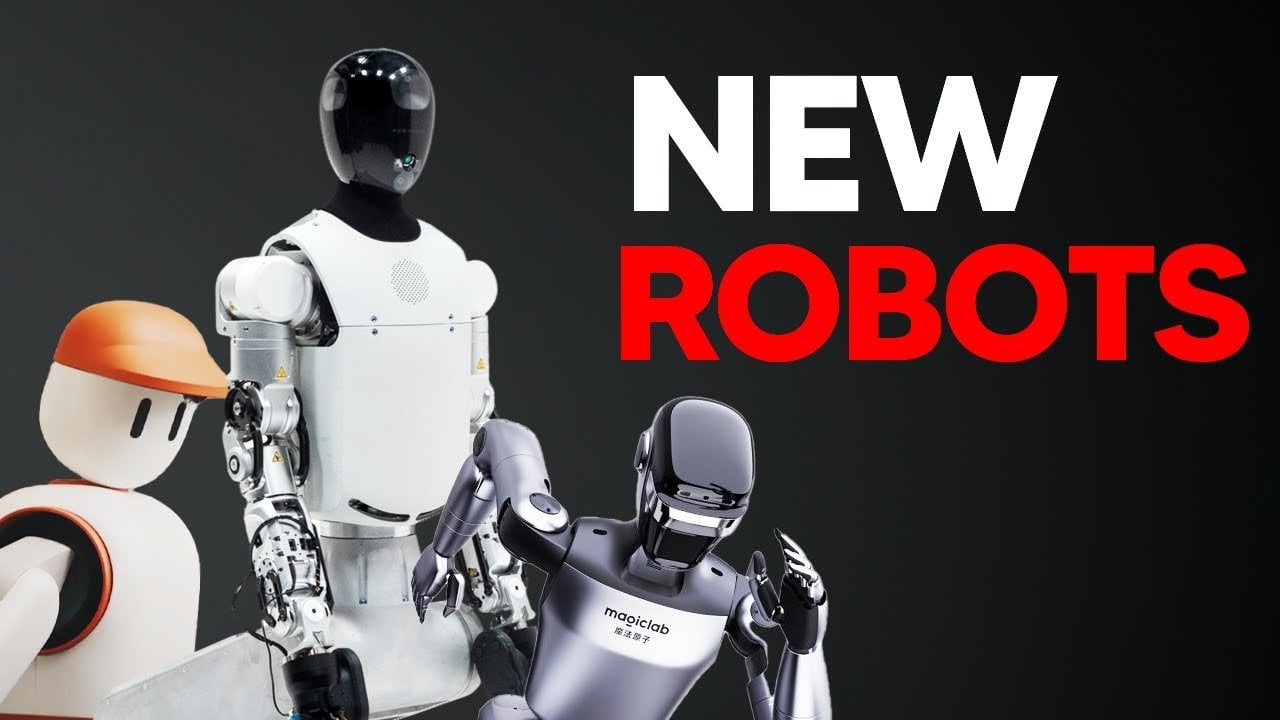
- Advanced humanoid designs, including Tesla Optimus Gen 3 and MindOn Robotics’ Unitree G1, are achieving human-like motion and adaptability for diverse applications.
- Emerging innovators like Xpeng Robotics and Lim X OOLI are driving the future of robotics with new designs for human interaction, mobility, and specialized tasks.
Domestic Robots: Enhancing Everyday Life
Domestic robots are transforming household management by offering convenience, efficiency, and adaptability. Companies like Sunday Robotics, Tangible, and Sourcey are leading this transformation with innovative designs that cater to diverse needs.
- Sunday Robotics (MIMA): This wheeled home robot is designed to handle tasks such as cleaning, dishwashing, and laundry. Its skill-capture training system allows users to teach it tasks without requiring complex programming, making it highly user-friendly.
- Tangible (Eggy): Featuring five-fingered hands, this robot excels in cluttered environments, offering tactile dexterity for organizing and cleaning, even in challenging spaces.
- Sourcey: An open source platform that combines household utility with educational potential, Sourcey makes robotics more accessible and customizable for a wide range of users.
These robots are simplifying daily life, bringing advanced automation into homes worldwide and making once-laborious tasks more manageable.
Industrial and Public Service Robots: Driving Efficiency
In industrial and public service sectors, humanoid robots are addressing challenges related to efficiency, precision, and scalability. Companies like Agile Robots and Shenzhen’s sanitation innovators are at the forefront of these advancements, introducing solutions that enhance productivity and safety.
- Agile Robots (Agile One): This bipedal humanoid is designed for factory and warehouse tasks, integrating dexterous robotic hands and advanced sensors to manage complex operations with precision.
- Shenzhen Sanitation Robot Competition: The competition showcased autonomous cleaning robots capable of fleet-level autonomy and real-world navigation, highlighting their potential for urban sanitation and maintenance.
These innovations are transforming industries by improving productivity, reducing human involvement in repetitive or hazardous tasks, and making sure greater operational efficiency.
Latest Humanoid Robotics Breakthroughs
Find more information on Humanoid Robotics by browsing our extensive range of articles, guides and tutorials.
- NVIDIA’s Breakthrough in Humanoid Robotics Explained
- Tesla’s New Teslabot: The Future of Humanoid Robotics
- OpenAI’s Strategic Investments in Humanoid Robotics Explained
- Boston Dynamics Atlas Humanoid Robot Incredible Moves
- Humanoid Robots from Tesla and Xpeng Demonstrate Real Motion
- 10 AI Humanoid Robots Set to Change Our Lives
- How Engine AI Is Transforming Humanoid Robotics in China
- $1,000 Kscale Labs Humanoid Robot : The Future of Affordable
- Atlas Humanoid Robot : Transforming Manufacturing and More
- Neo Humanoid Robot: Overhyped AI or Fantastic option?
Advanced Humanoid Designs: Bridging the Gap to Human-Like Motion
Humanoid robots are achieving unprecedented levels of fluidity and adaptability, bringing them closer to mimicking human movement. Companies like Tesla, MindOn Robotics, and Humanoid are spearheading these advancements with new designs.
- MindOn Robotics: The Unitree G1 robot uses imitation learning to perform complex household tasks with fluid, human-like motion, setting a new standard for robotic adaptability.
- Humanoid (HMND01 Alpha): This UK-based robot offers stable bipedal locomotion within 48 hours of assembly, making it a versatile solution for applications in healthcare and hospitality.
- Tesla Optimus Gen 3 and Figure 3: These robots demonstrate advanced jogging and movement capabilities, focusing on replicating human motion for diverse applications, from logistics to personal assistance.
These advancements are narrowing the gap between robotic and human movement, allowing robots to operate seamlessly in environments designed for humans.
Specialized Platforms: Precision for Complex Tasks
Specialized robots are addressing niche applications with remarkable precision and adaptability, offering tailored solutions for specific challenges. Companies like Kyber Labs and PI AI are leading the way in this domain.
- Kyber Labs: Their AI-native robotic hands, powered by artificial muscle actuators, are designed for delicate and high-impact tasks in manufacturing and assembly, making sure both precision and durability.
- PI AI: These robots excel in precision tasks such as coffee preparation and laundry folding, using experience-based learning to refine their performance over time.
These platforms highlight how robotics can be customized to solve complex problems across industries, from manufacturing to personal services.
Dynamic and Agile Robots: Expanding Mobility
Mobility and agility are becoming essential features for robots operating in diverse environments. Innovations like Magic Lab Z1 and Engine AI T800 exemplify this trend, showcasing the importance of adaptability in robotic design.
- Magic Lab Z1: This compact humanoid is optimized for dynamic movement and expressive interaction, making it ideal for human-centric spaces such as retail and education.
- Engine AI (T800): Designed for high agility and endurance, this robot is suited for applications in logistics, security, and even potential combat scenarios, demonstrating its versatility in demanding environments.
These robots emphasize the growing importance of mobility and adaptability in expanding the scope of robotic applications across various sectors.
Emerging Innovators: Shaping the Future of Robotics
New players and innovations are driving the robotics industry forward, fostering competition and pushing boundaries. Companies like Xpeng Robotics, Physical Robotics, and Lim X OOLI are making significant contributions to the field.
- Xpeng Robotics: Their humanoid robot features a flexible spine and synthetic skin, allowing human-like interaction in factories and public spaces, bridging the gap between humans and machines.
- Physical Robotics (Norway): This startup focuses on creating robots that integrate seamlessly into human life, enhancing overall quality of living through thoughtful design and functionality.
- Lim X OOLI: A modular humanoid capable of navigating rough terrain and handling heavy payloads, showcasing its versatility in challenging environments such as construction and disaster response.
These emerging innovators are setting the stage for the next generation of robotics, driving progress and expanding the possibilities of what robots can achieve.
Future Trends: What Lies Ahead
The future of humanoid robotics is poised to evolve rapidly, with several key trends shaping its trajectory:
- Enhanced dexterity and tactile intelligence, allowing robots to navigate unstructured and unpredictable environments with greater ease.
- Broader adoption across home, industrial, and public service sectors, expanding the range of applications and accessibility.
- Increased competition among startups and established companies, accelerating the pace of innovation and driving down costs.
These trends indicate a dynamic and rapidly evolving field, with robots set to play an increasingly integral role in everyday life, transforming how humans interact with technology.
Media Credit: TheAIGRID
Filed Under: AI, Technology News, Top News
Latest Geeky Gadgets Deals
Disclosure: Some of our articles include affiliate links. If you buy something through one of these links, Geeky Gadgets may earn an affiliate commission. Learn about our Disclosure Policy.