The AGI Debate That’s Currently Dividing Google & Meta
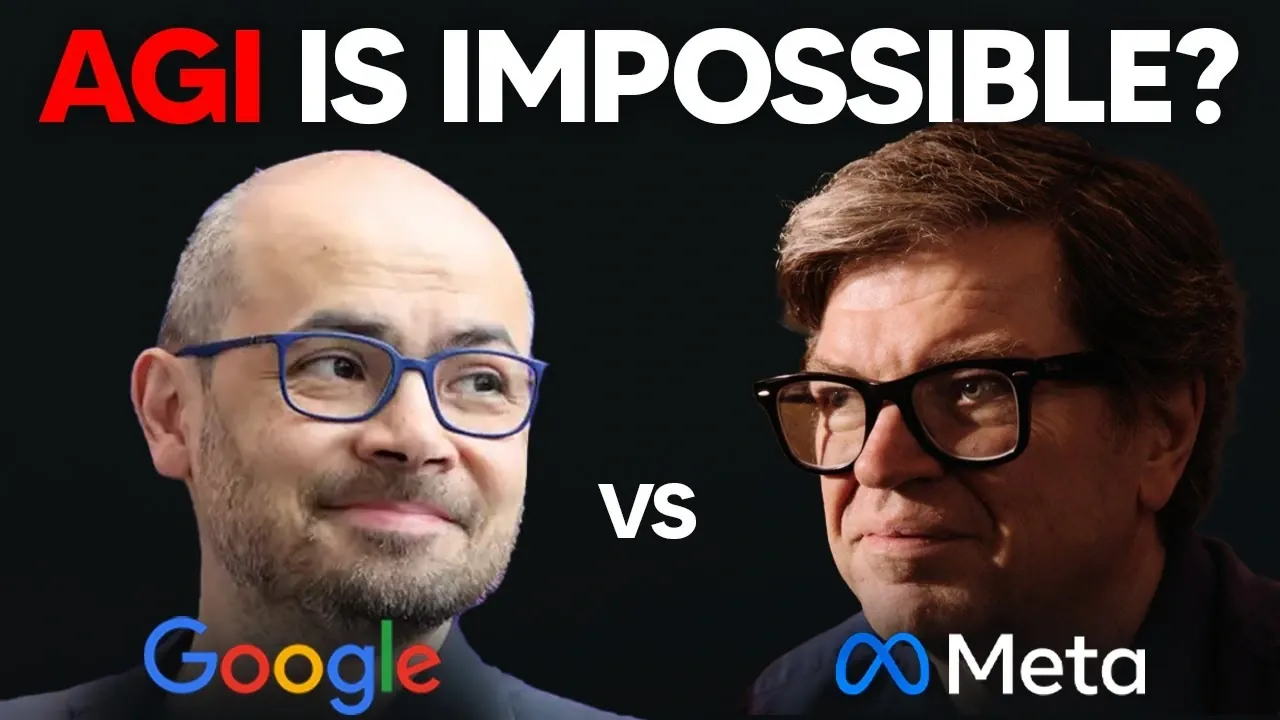
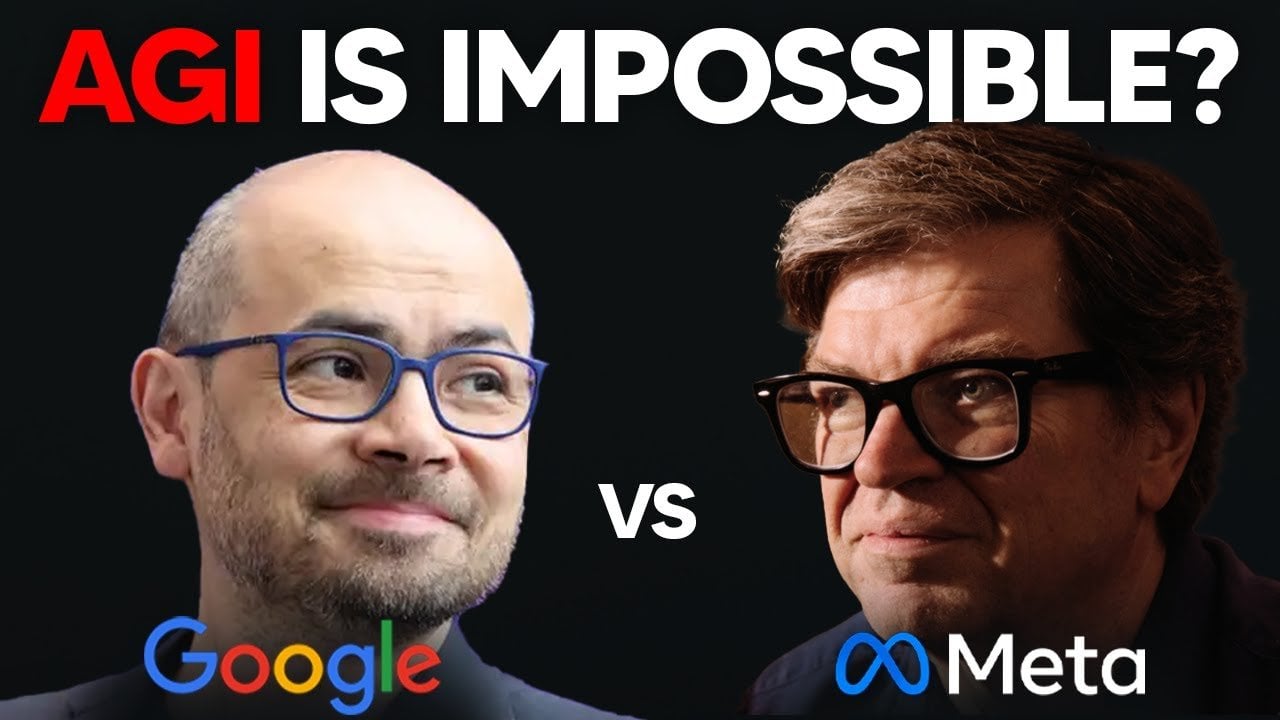
What if the future of artificial intelligence hinges on a single, unresolved question: is intelligence inherently specialized or truly general? In a fascinating video, the AI Grid breaks down the ongoing debate between two of AI’s most prominent thinkers, Yann LeCun from Meta and Demis Hassabis of DeepMind. Their disagreement isn’t just philosophical, it’s a clash of visions that could shape the trajectory of Artificial General Intelligence (AGI) itself. While LeCun argues that intelligence, even human intelligence, is fundamentally specialized and optimized for specific tasks, Hassabis counters with a bold assertion: intelligence, though bounded by practical limits, is inherently general and adaptable. These opposing views reveal a deeper tension about how we define intelligence and what it means for the future of AI systems.
In this explainer, you’ll uncover the key arguments driving this high-stakes debate and why it matters for AGI development. From LeCun’s focus on efficiency and task-specific optimization to Hassabis’s emphasis on flexibility and adaptability, the discussion highlights the trade-offs researchers must navigate in designing intelligent systems. You’ll also gain insight into how these differing philosophies could influence the way AI tackles real-world challenges, from solving niche problems to adapting across diverse domains. As you explore these contrasting visions, you might find yourself questioning not just the future of AI, but the very nature of intelligence itself.
LeCun vs Hassabis on AGI
TL;DR Key Takeaways :
- The debate between Yann LeCun (Meta) and Demis Hassabis (DeepMind) centers on defining “general intelligence” and its implications for Artificial General Intelligence (AGI) development.
- Yann LeCun argues that intelligence is inherently specialized, shaped by biological and practical constraints, and suggests AGI should focus on task-specific optimization.
- Demis Hassabis views intelligence as general within practical limits, advocating for AGI systems that can adapt and learn across diverse domains, reflecting human versatility.
- Both agree that AGI will not be a universal problem-solver, emphasizing the need to balance adaptability with resource constraints like computational power and data availability.
- The debate highlights broader challenges in AGI research, including defining intelligence, navigating trade-offs between specialization and generality, and addressing practical limitations in system design.
This debate is not merely academic; it has profound implications for the future of AI research and the design of intelligent systems. By examining their arguments, we gain insight into the challenges and opportunities that lie ahead in the pursuit of AGI.
Yann LeCun: Intelligence as a Specialized Tool
Yann LeCun argues that human intelligence is inherently specialized rather than general. He asserts that humans excel in tasks they evolved to handle, such as social interaction, pattern recognition, and solving survival-related problems. However, outside these domains, human abilities are limited. For example, humans struggle with tasks requiring precise computation or processing vast datasets, areas where machines significantly outperform them.
LeCun emphasizes that intelligence is shaped by biological and practical constraints. The human brain operates within finite energy, memory, and processing resources, which inherently limit its capabilities. He critiques the term “general intelligence” as misleading, suggesting that even human intelligence is optimized for a narrow range of problems rather than being universally adaptable. According to LeCun, AGI development should focus on creating systems that excel in specific tasks, acknowledging the trade-offs required to optimize performance within resource constraints.
This perspective highlights the importance of efficiency and specialization in intelligent systems. By designing AI to address specific challenges, researchers can create tools that are both powerful and practical, even if they lack the broad adaptability often associated with AGI.
Demis Hassabis: Intelligence as General Within Boundaries
In contrast, Demis Hassabis views human intelligence as general, albeit within practical limits. He likens the human brain to an approximate Turing machine, a theoretical construct capable of solving a wide variety of problems given sufficient resources. While humans may not excel in every domain, Hassabis argues that their ability to adapt to diverse challenges demonstrates a form of generality.
Hassabis contends that specialization does not contradict generality. Instead, it reflects efficient resource allocation. For instance, humans can learn entirely new skills, such as programming or playing chess, even though these activities were not part of their evolutionary history. He believes AGI should aim to replicate this adaptability, allowing systems to learn and perform across multiple domains without requiring explicit programming for each task.
This vision of AGI emphasizes flexibility and learning capacity. By creating systems that can adapt to new challenges, researchers can develop AI that mirrors the versatility of human intelligence, even if it cannot achieve perfection in every domain.
The AGI Debate That’s Dividing Google & Meta
Here is a selection of other guides from our extensive library of content you may find of interest on Artificial General Intelligence (AGI).
- Google Predicts Artificial General Intelligence (AGI) by 2030
- How Artificial General Intelligence Will Reshape Society by 2035
- Microsoft’s CEO Questions the Relevance of Artificial General
- OpenAI AI Model 03 Surpasses Human Reasoning – AGI?
- Why Artificial General Intelligence (AGI) is so difficult to create
- Has OpenAI Achieved AGI? AI Breakthrough and Its Implications
- Sam Altman’s Shocking AGI Prediction: Are We Ready for 2025
- Grok 5’s Role in the Journey Toward Artificial General Intelligence
- Elon Musk’s GROK 5 Plan Revealed and Vision for Artificial General
- The Debate Over Grok 5 and Its Role in Achieving AGI
Key Points of Disagreement
The core of the debate lies in how LeCun and Hassabis define “general intelligence” and its implications for AGI development.
- Yann LeCun: Intelligence is fundamentally specialized, shaped by biological and environmental constraints. He argues that AGI should prioritize optimizing performance for specific tasks, acknowledging inherent trade-offs in resource allocation.
- Demis Hassabis: Intelligence is general within the limits of its architecture and resources. He envisions AGI as a system capable of broad adaptability, even if it cannot achieve perfection in every domain.
Despite their differences, both agree that AGI will not be a universal problem-solver. Instead, it will need to balance adaptability with practical constraints, such as computational power and data availability. This shared understanding underscores the complexity of creating intelligent systems that are both effective and efficient.
Implications for AGI Development
The differing perspectives of LeCun and Hassabis have significant implications for how researchers approach AGI. Should AGI aim to solve all conceivable problems, or is adaptability across diverse but finite domains sufficient?
LeCun’s perspective suggests a focus on task-specific optimization, where AGI systems are designed to excel in particular areas while accepting trade-offs in others. This approach prioritizes efficiency and practicality, making sure that resources are allocated to achieve the best possible outcomes within defined parameters.
Hassabis, on the other hand, advocates for AGI systems that can learn and adapt broadly, even if they are not perfect in every domain. This vision emphasizes the importance of flexibility and the ability to tackle unforeseen challenges, reflecting the versatility of human intelligence.
The “No Free Lunch Theorem” further underscores the need for balance. This theorem states that no single algorithm can perform optimally across all possible problems, highlighting the importance of adaptability and efficiency in AGI systems. Researchers must navigate these trade-offs carefully, balancing the desire for generality with the practical limitations of computational resources and data availability.
Theoretical Foundations and Broader Context
Hassabis draws on the Turing machine model to support his argument for generality. A Turing machine, a foundational concept in computer science, can theoretically simulate any algorithm given enough time and resources. He suggests that human intelligence, and by extension AGI, operates on a similar principle: generality constrained by practical limitations.
LeCun counters by highlighting the vast limitations of human cognition compared to the theoretical possibilities of a Turing machine. While humans can approximate generality, their intelligence remains fundamentally specialized, shaped by evolutionary pressures and bounded by biological constraints.
This debate reflects broader discussions within the AI community about the nature of intelligence and the feasibility of AGI. Researchers continue to grapple with defining “general intelligence” and determining whether it is achievable, or even desirable, in artificial systems. The conversation also underscores the importance of adaptability, specialization, and resource allocation in shaping intelligent behavior.
As AI research progresses, the questions raised by this debate will remain central to understanding intelligence, both human and artificial. By exploring these differing viewpoints, researchers can better navigate the path toward creating systems that balance specialization, adaptability, and resource efficiency. The future of AGI will depend not only on technological advancements but also on a nuanced understanding of what it truly means to be intelligent.
Media Credit: TheAIGRID
Filed Under: AI, Technology News, Top News
Latest Geeky Gadgets Deals
Disclosure: Some of our articles include affiliate links. If you buy something through one of these links, Geeky Gadgets may earn an affiliate commission. Learn about our Disclosure Policy.