ChatGPT 5 Surpasses Human Score on ARC AGI 2, Thanks to an Unhobbling Manager Layer
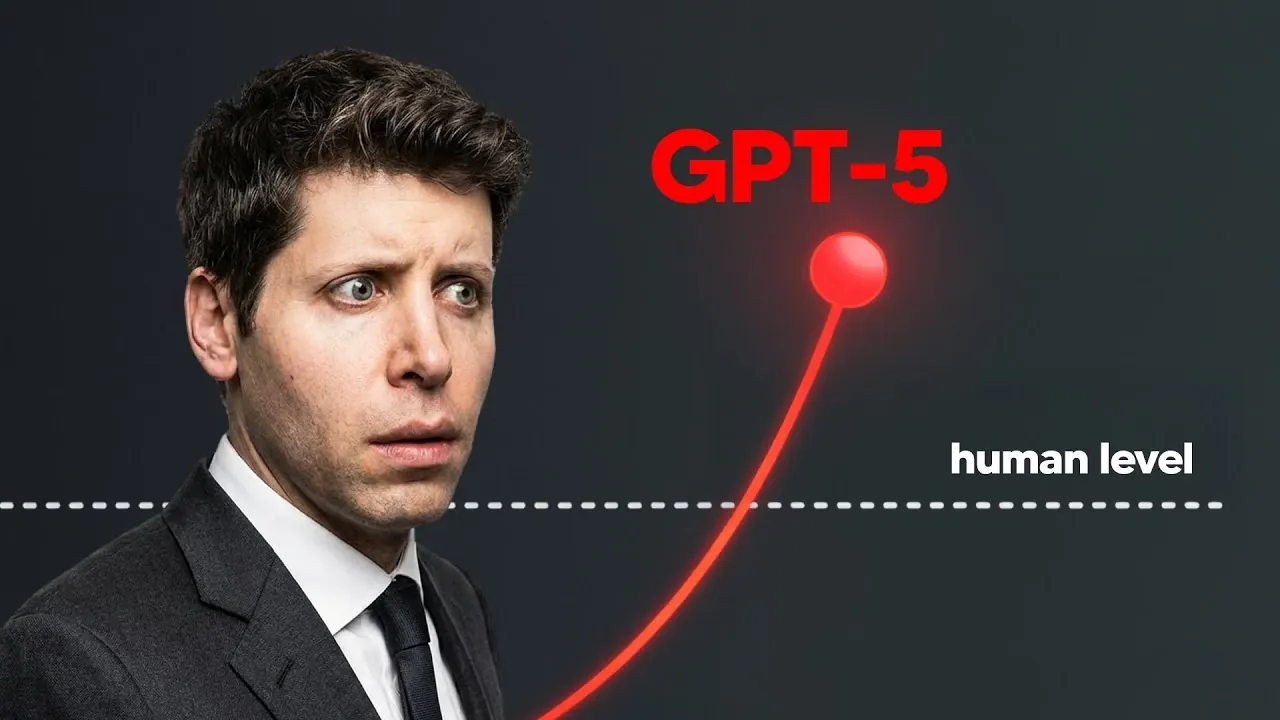
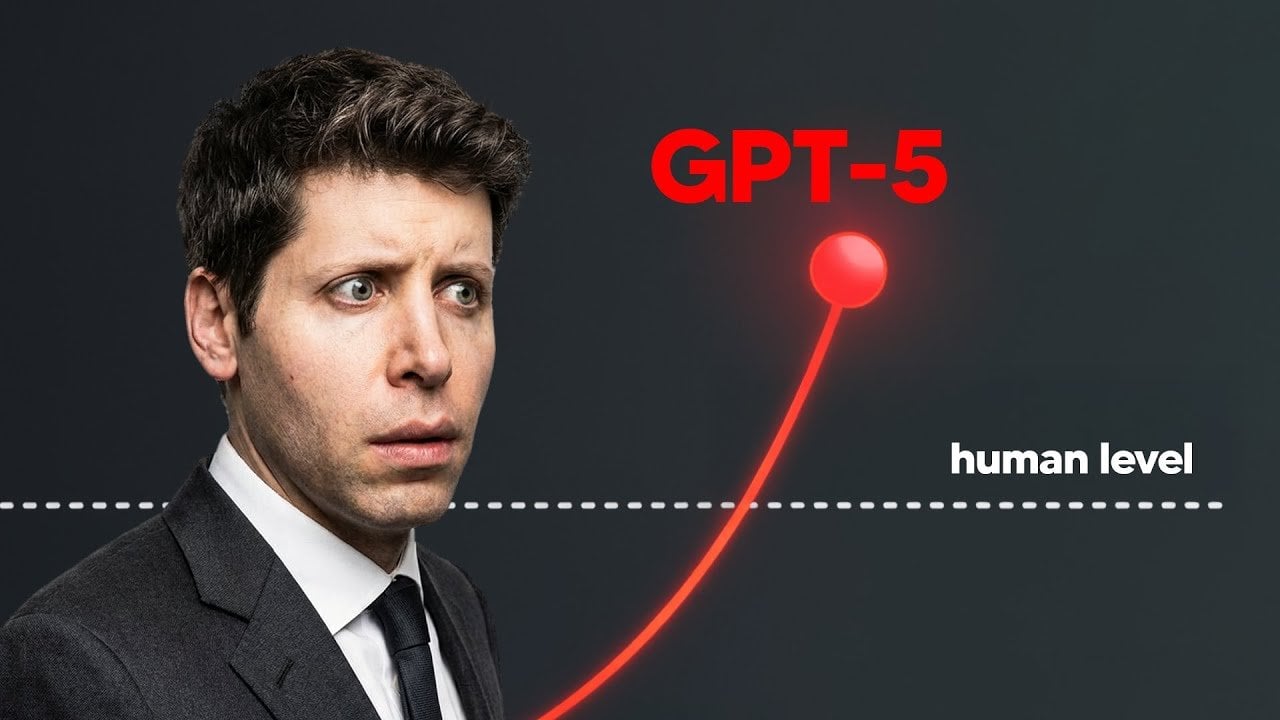
Could an AI ever truly think like a human? For years, skeptics have pointed to abstract reasoning and adaptability as insurmountable barriers for machine intelligence. Yet, that line in the sand may have just been crossed. AI Grid explains how GPT-5 achieved a new 75% score on the ARC AGI 2 benchmark, a test specifically designed to measure an AI’s ability to solve problems it has never seen before. This isn’t just about crunching numbers or recognizing patterns, it’s about reasoning, generalizing, and thinking in ways that were once thought to be uniquely human. With GPT-5 surpassing the human average of 60%, the implications for AI development are staggering.
So, what makes ChatGPT 5 different? This deep dive explores the innovative techniques behind its success, from “unhobbling” constraints to the use of meta-systems like the manager layer that help it tackle complex tasks with precision. You’ll discover how these innovations allow GPT-5 to break problems into manageable steps, adapt to unfamiliar challenges, and even monitor its own progress. But this achievement also raises pressing questions: Can AI ever fully replicate human intuition? And what happens when it does? These are no longer hypothetical musings, they’re the next frontier in AI.
ChatGPT 5 Surpasses Human Reasoning
TL;DR Key Takeaways :
- ChatGPT 5 achieved a new 75% score on the ARC AGI 2 benchmark, surpassing the human average of 60%, showcasing its advanced reasoning, generalization, and problem-solving abilities.
- The ARC AGI 2 benchmark evaluates AI’s capacity to adapt and solve novel problems, focusing on abstract reasoning, compositional thinking, and pattern recognition in unfamiliar contexts.
- GPT-5’s success is attributed to “unhobbling,” a process that removes artificial constraints and enhances reasoning through techniques like chain-of-thought prompting, meta-systems integration, and structured problem-solving frameworks.
- The introduction of meta-systems, particularly the “manager layer,” enables GPT-5 to decompose tasks, select optimal methods, and monitor progress, improving efficiency and adaptability in complex problem-solving.
- Despite its advancements, GPT-5 faces challenges such as limited long-term memory, autonomous goal-setting, and reasoning in entirely novel environments, with future benchmarks like ARC AGI 3 aiming to address these gaps.
What is the ARC AGI 2 Benchmark?
The ARC AGI 2 benchmark is a rigorous evaluation framework created to measure an AI’s ability to reason and adapt in unfamiliar situations. Unlike traditional benchmarks that assess tasks within the scope of a model’s training data, ARC AGI 2 focuses on how well an AI can generalize knowledge to solve problems it has never encountered before. This makes it a critical test for assessing true intelligence in machine learning systems.
Key areas assessed by the benchmark include:
- Abstract reasoning: The capacity to think beyond specific examples and identify underlying principles or patterns.
- Compositional thinking: The ability to combine smaller concepts into cohesive solutions for complex problems.
- Pattern recognition in novel contexts: Identifying relationships and structures in unfamiliar scenarios to derive meaningful insights.
GPT-5’s success on this benchmark highlights its ability to move beyond rote memorization and pattern matching. Instead, it demonstrates a capacity for adaptive reasoning, allowing it to tackle dynamic and unpredictable challenges effectively.
How “Unhobbling” Unlocks AI Potential
A key factor behind GPT-5’s achievement is the process of “unhobbling,” which involves removing artificial constraints that limit an AI’s capabilities. This optimization strategy focuses on enhancing the model’s reasoning abilities without merely increasing its size or computational power. By refining the architecture and improving the decision-making processes, unhobbling allows the AI to operate more intelligently and efficiently.
Several techniques have been instrumental in this process, including:
- Chain-of-thought prompting: Encouraging the AI to break down complex problems into smaller, logical steps for better accuracy.
- Meta-systems integration: Embedding systems that guide the AI’s reasoning process and improve adaptability.
- Structured problem-solving frameworks: Allowing the AI to approach challenges systematically and logically.
By prioritizing smarter design over brute computational force, unhobbling has allowed GPT-5 to achieve significant advancements in reasoning and adaptability. This approach underscores the importance of innovation in AI architecture, rather than relying solely on scaling up existing models.
This Test Was Built to Block AI : GPT-5 Finally Passed It

Check out more relevant guides from our extensive collection on GPT-5 that you might find useful.
- Everything We Know About ChatGPT 5 So Far
- Master ChatGPT 5 Prompts With This Simple Strategy
- ChatGPT 5 Overview : Features, Benefits and Ethical Implications
- GPT-5 Coding Capabilities Tested : Innovative Coding Skills
- How GPT-5 Codex Handles Complex Coding Tasks & Real-Time
- 7 ChatGPT 5 Upgrades You Need to Know About
- GPT-5 Pro vs Grok 4 Heavy vs Claude 4.1 Opus vs Gemini 2.5 Pro
- Why ChatGPT 5 Has AI Fans Divided: The Pros and Cons
- GPT-5 Pro Review : Parallel Reasoning, Strengths and Limitations
- Latest GPT-5 Codex Review: Features, Benefits and Limitations
The Role of Meta-Systems and Manager Layers
One of the most innovative features of GPT-5 is its use of meta-systems, particularly the “manager layer.” This architectural enhancement acts as an internal guide, helping the AI organize and streamline its problem-solving processes. The manager layer is designed to improve the AI’s ability to handle complex tasks by introducing a structured and efficient approach to reasoning.
The manager layer enables GPT-5 to:
- Decompose tasks: Break down problems into discrete, manageable steps for better clarity and execution.
- Select optimal methods: Choose the most appropriate tools or strategies for each step of the process.
- Monitor progress: Continuously evaluate its performance and adjust its approach as needed to improve outcomes.
This structured approach minimizes computational waste and enhances the AI’s ability to tackle intricate reasoning tasks. By focusing on efficiency and adaptability, GPT-5 sets a new precedent for AI design, emphasizing intelligent resource management over raw computational power.
Challenges and Future Directions
Despite its impressive performance, GPT-5 still faces several limitations that highlight the challenges of advancing AI systems. These limitations include:
- Long-term memory: The inability to retain and apply knowledge over extended periods, which limits its capacity for cumulative learning.
- Autonomous goal-setting: A lack of ability to independently define objectives or prioritize tasks without external input.
- Reasoning in entirely novel environments: Difficulty adapting to situations with no prior context or data, which remains a significant hurdle for AI development.
Addressing these gaps will require further advancements in adaptive intelligence and autonomous problem-solving. The upcoming ARC AGI 3 benchmark, anticipated later in 2026, is expected to push the boundaries of AI capabilities even further. This new benchmark will test interactive reasoning, multi-step planning, and autonomous exploration, aiming to bring AI closer to achieving true agency and dynamic intelligence.
What This Means for the Future of AI
GPT-5’s success on the ARC AGI 2 benchmark underscores the rapid evolution of AI and its potential for fantastic applications across various domains. This progress is driven not by sheer computational power but by algorithmic innovations, such as unhobbling and the integration of meta-systems. These advancements pave the way for AI systems capable of functioning as autonomous collaborators or agents in solving complex, real-world problems.
As researchers continue to refine these techniques, the focus is shifting toward creating AI systems that can reason, plan, and adapt with unprecedented sophistication. The development of such systems has the potential to transform industries, from healthcare and education to logistics and scientific research. By allowing AI to operate with greater cognitive flexibility, these innovations are bringing us closer to a future where AI can function as a true partner in tackling humanity’s most pressing challenges.
Media Credit: TheAIGRID
Filed Under: AI, Technology News, Top News
Latest Geeky Gadgets Deals
Disclosure: Some of our articles include affiliate links. If you buy something through one of these links, Geeky Gadgets may earn an affiliate commission. Learn about our Disclosure Policy.