Grok 4.2 vs Gemini 3.0 : Speedier Code, Video Smarts & Improved Reasoning
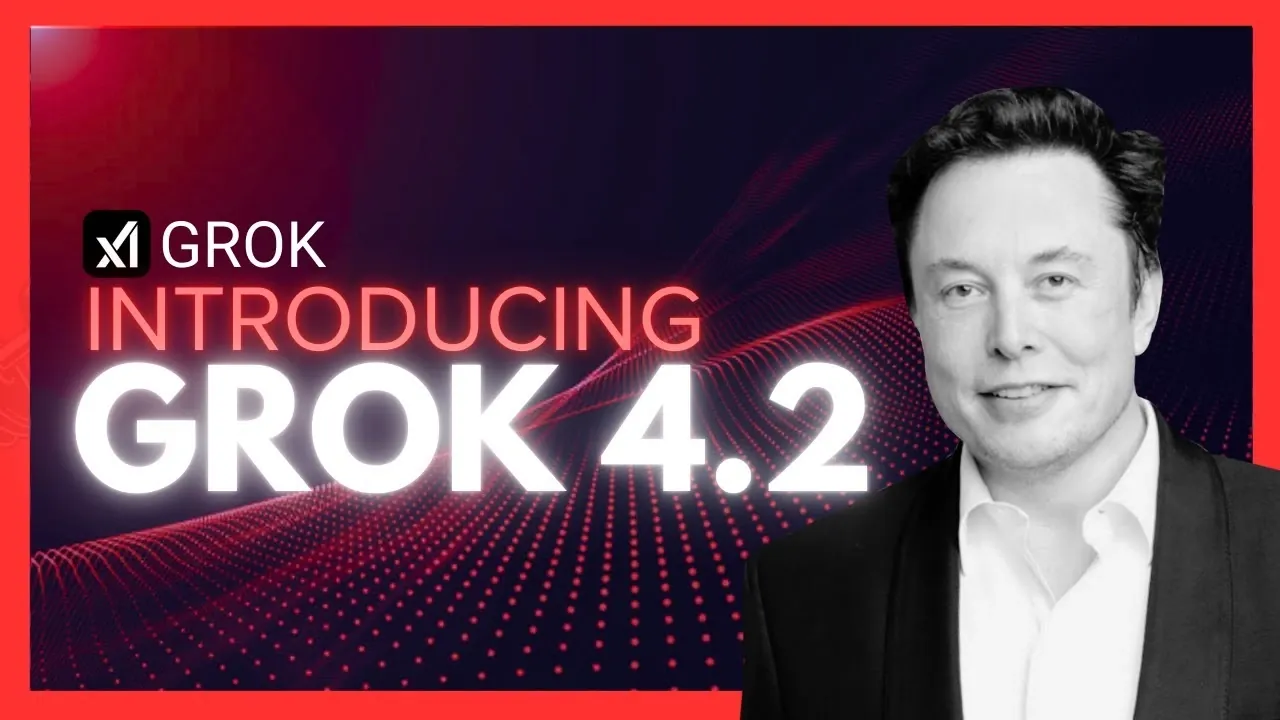
Is Grok 4.2 the most intelligent coding model we’ve seen yet? With its release in January 2026, this AI powerhouse has already sparked conversations across the tech world. In this comparison, World of AI explains how Grok 4.2 pushes the boundaries of coding precision, multimodal integration, and even video comprehension. But is it truly flawless, or does its reliance on iterative refinement hold it back?
This overview dives into the new features of Grok 4.2, from its enhanced coding capabilities to its ability to deliver multimodal outputs that blend text, images, and video seamlessly. You’ll uncover how its dense architectural optimization makes it both faster and more resource-efficient, appealing to developers and businesses alike. Yet, the model’s potential isn’t without its challenges, including occasional output inconsistencies that require human oversight. Whether you’re curious about how it stacks up against competitors like Gemini 3.0 or intrigued by its applications in game development and data visualization, Grok 4.2 promises to leave you questioning the limits of AI innovation.
Grok 4.2 Key Features and Innovations
TL;DR Key Takeaways :
- Grok 4.2 introduces significant advancements in coding precision, multimodal output, video comprehension, and logical reasoning, enhancing its utility across industries.
- Key features include enhanced coding capabilities, seamless integration of text and media formats, advanced video analysis, and improved logical problem-solving.
- Early testing with stealth models like Vortex Shade and Obsidian demonstrates high speed and efficiency, though iterative prompting is often required for optimal results.
- The model’s optimized architecture improves compute efficiency, delivering high-quality outputs while minimizing resource consumption, making it cost-effective for businesses.
- Challenges such as output consistency and reliance on iterative prompting highlight areas for improvement, but updates are expected to enhance reliability and performance further.
Grok 4.2 builds on the foundation of its predecessor, Grok 4.1, by introducing a range of improvements that enhance its functionality and broaden its applications. These advancements include:
- Enhanced Coding Capabilities: The model generates, refines, and optimizes code with greater accuracy and speed, significantly improving development workflows.
- Multimodal Output: Seamless integration of text, images, and other media formats expands its utility across industries, from content creation to technical documentation.
- Video Comprehension: Advanced video analysis and summarization capabilities enable the extraction of actionable insights from multimedia data.
- Advanced Reasoning: Improved logical reasoning allows the model to tackle complex problems with contextually relevant and efficient solutions.
These features position Grok 4.2 as a versatile tool capable of addressing a wide array of technical and creative challenges, making it a valuable asset for developers and organizations alike.
Performance Insights from Stealth Models
Early testing of Grok 4.2 has included stealth models such as Vortex Shade, Obsidian, and Quantum Crow, evaluated on platforms like Design Arena and Alamarina. These models demonstrate exceptional speed and efficiency, often outperforming competitors in terms of speed-to-quality ratios. However, they still face challenges when compared to leading models like Gemini 3.0 and Opus 4.5 in terms of coding quality.
For example, while stealth models excel at generating functional code rapidly, achieving optimal results often requires iterative prompting. This iterative process, though effective, highlights the need for further refinement to enhance output consistency and reduce the reliance on manual intervention. Despite these challenges, the stealth models showcase the potential of Grok 4.2 to deliver high-performance results in demanding scenarios.
Grok 4.2 a Powerful & Fast Coding Model?
Browse through more resources below from our in-depth content covering more areas on Grok 4.2.
- Grok 4.20 AI Trading Model Beats Rivals in Two Weeks
- Grok 4.2 Early Performance Tests : Sharper UI Design & Reliable
- Grok 4.1 Review: Live X Data Strengths, Coding Weaknesses
- GPT-5 Pro vs Grok 4 Heavy vs Claude 4.1 Opus vs Gemini 2.5 Pro
- Claude 4 vs Grok 4 : Which AI Model is Best for AI Coding?
- Claude 4 vs Grok 4 : In-Depth AI App Development Comparison
- xAl Grok 4 : Elon Musk’s Latest AI Model Explained
- GPT-4.5 vs Grok 3: A Comprehensive Comparison of Generative AI
- 10 Grok 4 Key Insights is It Worth the Hype?
- Grok 4.2 and Sonoma Sky Alpha: A New Era for Artificial Intelligence
Applications Across Industries
The capabilities of Grok 4.2 extend far beyond coding, offering practical applications across various industries. Its versatility makes it a powerful tool for tasks such as:
- Developing interactive games and prototypes
- Creating dynamic dashboards for data visualization
- Designing animations and multimedia content
- Analyzing and summarizing video content for actionable insights
While these applications highlight the model’s potential, early testing reveals certain limitations. For instance, while Grok 4.2 can produce functional prototypes and multimedia outputs, these often require additional debugging and refinement before deployment. This underscores the importance of human oversight to ensure the quality and reliability of the final product.
Optimized Architecture for Efficiency
One of the standout features of Grok 4.2 is its dense architectural optimization, which enhances its ability to handle complex tasks without compromising speed or accuracy. This optimization improves compute efficiency, allowing the model to deliver high-quality results while minimizing resource consumption. These advancements make Grok 4.2 not only faster but also more cost-effective, appealing to businesses seeking scalable and efficient AI solutions.
The combination of speed, precision, and resource efficiency positions Grok 4.2 as a competitive option for organizations aiming to streamline their workflows and reduce operational costs. Its ability to handle diverse tasks with minimal resource expenditure makes it particularly attractive for industries with high computational demands.
Challenges and Opportunities for Improvement
Despite its many strengths, Grok 4.2 is not without its challenges. Key areas for improvement include:
- Iterative Prompting: The reliance on iterative prompting to refine outputs can be time-consuming, particularly for complex tasks.
- Output Consistency: Occasional bugs and inconsistencies in generated outputs require manual adjustments, which can slow down workflows.
These challenges are not uncommon in emerging AI technologies and represent opportunities for further development. Addressing these issues will be critical to unlocking the full potential of Grok 4.2. As updates and refinements are introduced, the model is expected to deliver even greater reliability and efficiency, making it a preferred choice for developers and businesses.
Exploring Grok 4.2
For those interested in testing Grok 4.2, free trials are available on platforms like Design Arena and Alamarina. These platforms provide an opportunity to explore the model’s capabilities and assess its suitability for specific use cases. Whether you are developing software, analyzing multimedia content, or creating innovative projects, Grok 4.2 offers tools designed to streamline and enhance your workflow.
By using its advanced features, you can unlock new possibilities in coding, content creation, and data analysis, making Grok 4.2 a valuable addition to your toolkit.
Media Credit: WorldofAI
Filed Under: AI, Technology News, Top News
Latest Geeky Gadgets Deals
Disclosure: Some of our articles include affiliate links. If you buy something through one of these links, Geeky Gadgets may earn an affiliate commission. Learn about our Disclosure Policy.