
The Skill Gap That Will Separate Al Winners from Everyone Else
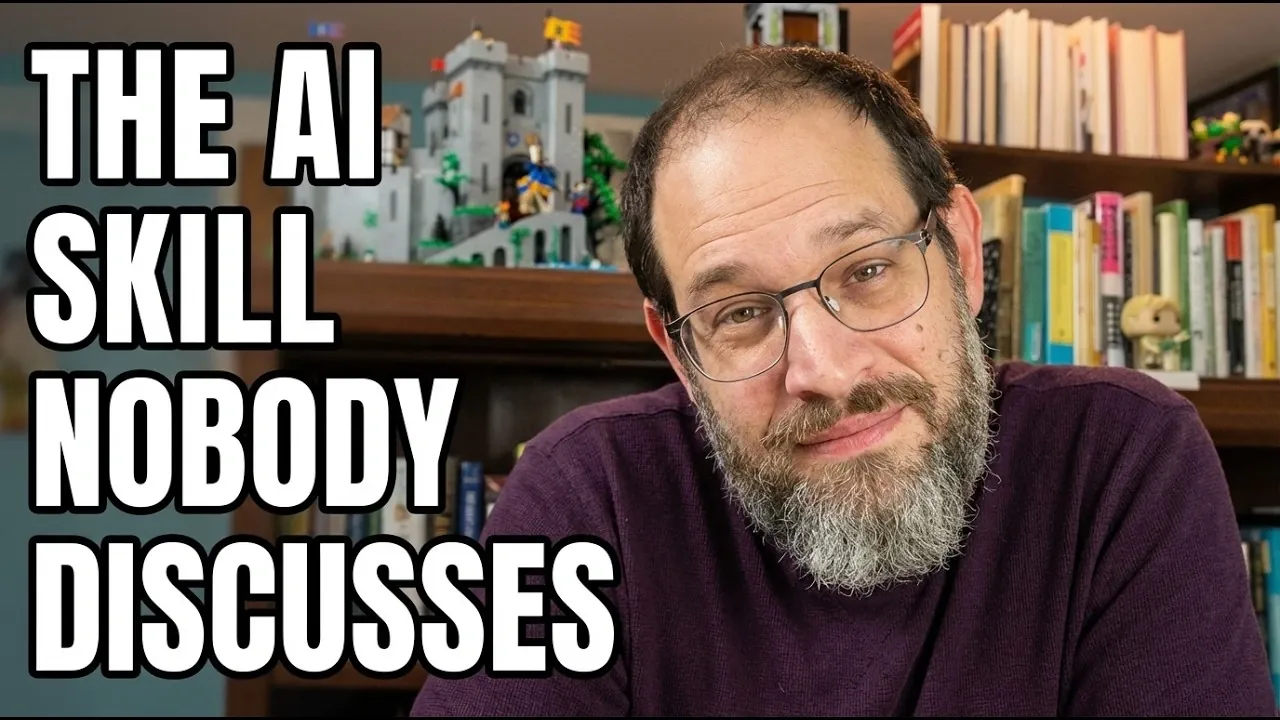
What will set AI leaders apart from the rest by 2026? It won’t simply be access to advanced systems or the latest breakthroughs in artificial intelligence, it will come down to something far more human. In this overview, Nate B Jones explores how the real differentiator lies in the skills users cultivate to collaborate with AI agents, rather than the technology itself. As personal AI evolves with memory retention, task management integration, and “always-on” capabilities, the critical question becomes whether users can adapt quickly enough to harness their full potential.
This breakdown examines the growing skill gap that will define success in the AI-driven future, highlighting both the challenges and opportunities ahead. From mastering workflow optimization to effectively communicating priorities, the ability to work seamlessly with these advanced systems will determine who thrives in this new era of productivity. For those looking to stay ahead in a world where AI is no longer just a resource but a partner, this guide offers insights into the strategies that could transform how we work, innovate, and compete. The future of AI isn’t just about innovation, it’s about how we rise to meet it.
The Rise of Personal AI
TL;DR Key Takeaways :
- By 2026, personal AI agents with advanced memory, task delegation, and sustained attention capabilities are expected to transform daily life, emphasizing user adaptation for effective integration.
- Key technological breakthroughs in 2025, including improved hardware, memory scaffolding, and task management integration, have enabled AI agents to become proactive collaborators in personal and professional workflows.
- Barriers to widespread adoption include complexity for non-technical users and challenges in defining tasks clearly, requiring intuitive design and user education to bridge the gap.
- AI agents are evolving into “always-on” assistants capable of managing schedules, drafting emails, and monitoring deadlines, with secure permissions making sure functionality and privacy.
- The competitive landscape sees tech giants and startups racing to develop user-friendly AI solutions, with success hinging on robust memory, secure systems, and intuitive interfaces to deliver tangible value.
What’s Driving the Evolution of AI Agents?
The rapid evolution of AI agents is fueled by key technological breakthroughs achieved in 2025. These advancements have laid the groundwork for the next generation of AI systems, allowing them to perform more complex and autonomous functions. Some of the most notable developments include:
- Improved Hardware: Consumer devices now feature GPU-friendly designs, allowing more efficient processing for both local and cloud-based AI operations. This advancement is essential for powering “always-on” AI systems that require continuous computational resources to function seamlessly.
- Memory Scaffolding: AI systems have overcome previous limitations related to forgetfulness and reactivity. With long-term memory capabilities, these agents can now retain information about user preferences, ongoing projects, and past interactions, allowing for more personalized and proactive assistance.
- Task Management Integration: By combining memory retention with advanced task management systems, AI agents can autonomously prioritize and execute complex workflows. For example, they can draft overviews, manage schedules, and even anticipate user needs based on historical data.
These advancements are transforming AI agents from reactive tools into proactive collaborators, capable of handling intricate tasks with minimal user intervention. This shift is redefining the role of AI in both personal and professional contexts.
Barriers to Widespread Adoption
Despite these technological strides, several challenges must be addressed before AI agents can achieve widespread adoption. These barriers highlight the gap between innovation and usability, particularly for non-technical users.
- Complexity for Non-Technical Users: Many AI systems still require a level of technical expertise to set up and manage effectively. This creates a steep learning curve for users unfamiliar with the underlying technology. To bridge this gap, developers must focus on creating intuitive interfaces and using natural language processing to simplify interactions.
- Ambiguity in Task Definition: While AI agents excel at executing specific, well-defined tasks, they often struggle with vague or overly broad instructions. Users must learn to communicate their priorities and expectations clearly to ensure meaningful and accurate results.
Overcoming these barriers will require a combination of user education and improved system design. By making AI tools more accessible and intuitive, developers can ensure that these systems deliver tangible value to a broader audience.
The Skill Gap for Smart Assistants Is Getting Real

Enhance your knowledge on AI Agents by exploring a selection of articles and guides on the subject.
- Microsoft CEO Predicts AI Agents Will Replace Traditional Software
- How to Build Custom AI Agents to Automate Your Workflow
- How to Build Custom AI Agents with Claude Code SDK
- Using Nano Banana to Build a Team of Creative AI Agents
- Build AI Agents 10x Faster Using String’s Natural Language Prompts
- How to Build AI Agents For Free
- Beginner’s Guide to Using Cursor AI Agents for Developers
- How Triage AI Agents Use Real-Time Data to Solve Complex
- Copilot Studio AI Agents: The Future of Business Automation
- How AI Agents Will Transform Work and Life by 2025
Breakthroughs in AI Integration
The emergence of “always-on” personal AI assistants marks a significant milestone in AI development. These systems function as chief-of-staff agents, capable of managing priorities, delegating tasks, and providing real-time updates. Their integration into daily workflows is made possible by advancements in memory scaffolding and task management systems. For instance, an AI assistant could autonomously:
- Schedule meetings and manage calendars
- Draft and send emails
- Monitor project deadlines and provide updates
To achieve this level of functionality, developers are focusing on creating secure permissions layers that allow AI systems to interact safely with local files, browsers, and other applications. This ensures both functionality and privacy, addressing user concerns about data security. Additionally, these systems are being designed to adapt to shifting priorities, allowing them to anticipate user needs and respond proactively.
Adapting to the AI Revolution
As AI agents become more capable, users will need to adapt their workflows to fully use these tools. This adaptation involves developing new skills and strategies to maximize the potential of AI systems. Key areas of focus include:
- Task Structuring: Clearly outlining goals and priorities will enable AI assistants to break down projects into manageable steps and execute them efficiently. This skill is essential for making sure that AI agents deliver meaningful results.
- Workflow Optimization: AI systems are increasingly capable of analyzing user habits and suggesting improvements. By embracing these insights, users can streamline their workflows, making task delegation more intuitive and productive.
This evolving relationship between users and AI has the potential to redefine productivity. By offloading routine and time-consuming tasks to AI agents, individuals can focus on strategic objectives and higher-level decision-making. This shift not only enhances efficiency but also allows users to allocate their time and energy to more impactful activities.
Market Implications and Competitive Landscape
The race to develop user-friendly, value-driven AI solutions is intensifying, with both established tech giants and innovative startups competing to shape the future of AI. The competitive landscape is characterized by several key dynamics:
- Tech Giants: Established companies with extensive resources and infrastructure are well-positioned to dominate the market. Their ability to invest in research and development enables them to create robust, scalable systems that appeal to a wide audience.
- Startups: Agile and innovative startups are focusing on niche applications, addressing specific user needs with specialized solutions. These companies have the potential to carve out significant market share by offering unique value propositions.
The competition to lead this transformation is fierce, with both established players and emerging innovators striving to create systems that are not only technologically advanced but also accessible and intuitive. Companies that succeed in integrating robust memory capabilities, secure permissions, and user-friendly interfaces will gain a competitive edge in this rapidly evolving market.
Preparing for the Future of AI
The technical foundation for personal AI agents is nearly complete, but their success will depend on more than just innovation. User adoption, intuitive design, and the ability to deliver tangible value will determine which systems thrive in the coming years. As these tools become more accessible, the gap between those who can effectively use them and those who cannot will widen. By developing the skills and strategies needed to integrate AI into your workflows, you can position yourself to harness the full potential of this fantastic technology.
Media Credit: AI News & Strategy Daily
Filed Under: AI, Technology News, Top News
Latest Geeky Gadgets Deals
Disclosure: Some of our articles include affiliate links. If you buy something through one of these links, Geeky Gadgets may earn an affiliate commission. Learn about our Disclosure Policy.