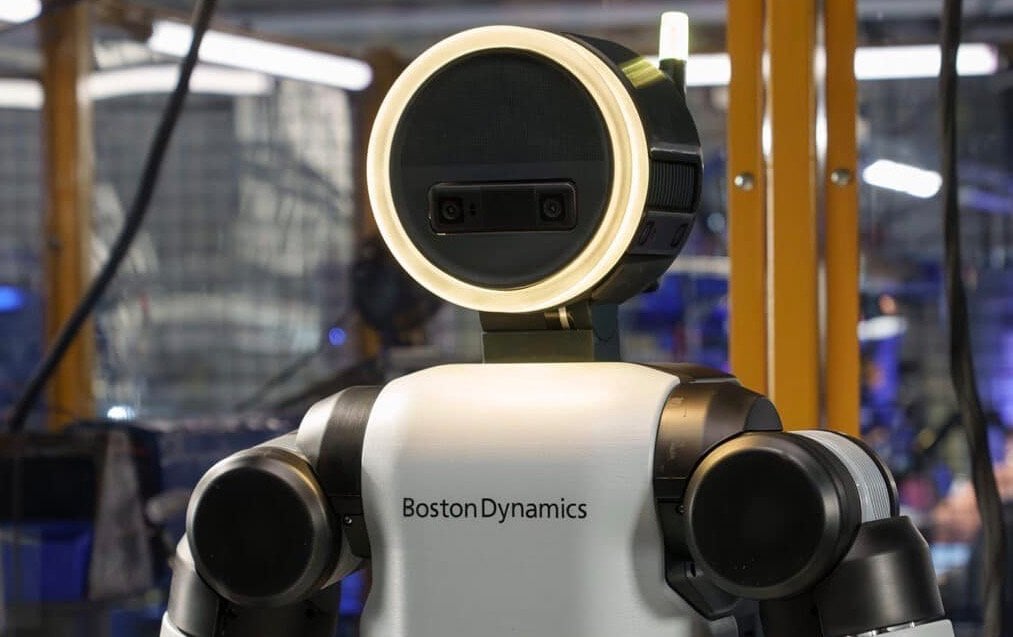
Google DeepMind & Boston Dynamics Announce New Partnership to Bring AI to Humanoid Robots
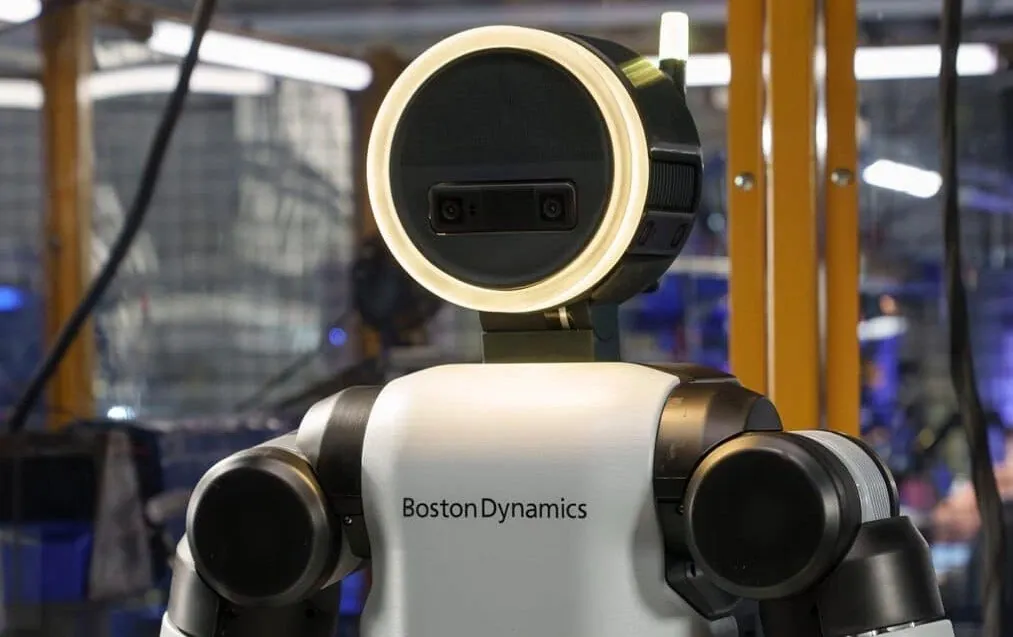
What happens when two industry giants join forces to redefine the future of robotics? Learn how a new partnership between Google DeepMind and Boston Dynamics is poised to transform humanoid robots. Unveiled at CES 2026, this collaboration combines Boston Dynamics’ engineering brilliance with Google DeepMind’s innovative AI expertise, promising to push the limits of what humanoid robots like the Atlas can achieve. Imagine a robot not only capable of navigating rugged terrain with ease but also making split-second decisions in disaster zones, this is the bold vision driving their alliance. With competition in robotics heating up among major players like Tesla, Nvidia, and Waymo, this partnership signals a pivotal moment in the race to integrate intelligence and adaptability into machines.
In this breakdown, you’ll discover how this collaboration could transform the capabilities of humanoid robots, from enhanced mobility to real-time problem-solving in high-stakes environments. By delving into the sophisticated AI algorithms being integrated into Boston Dynamics’ flagship Atlas robot, you’ll gain insight into how these advancements might reshape industries like disaster response and industrial automation. What sets this partnership apart is its focus on merging physical dexterity with cognitive intelligence, a combination that could set new benchmarks for the robotics industry. As you explore the implications of this union, consider how this leap in technology might redefine not just robotics but the way humans interact with intelligent machines.
AI-Powered Humanoid Robotics
TL;DR Key Takeaways :
- Google DeepMind and Boston Dynamics have partnered to integrate advanced AI into Boston Dynamics’ Atlas humanoid robot, enhancing its decision-making and problem-solving capabilities.
- The Atlas robot, known for its mobility and adaptability, will gain improved functionality for tasks like navigating hazardous environments and disaster response through this collaboration.
- The partnership reflects growing competition in the robotics and AI sectors, with companies like Tesla, Nvidia, and Waymo driving innovation in autonomous systems and AI technologies.
- Autonomous driving remains a key battleground, with companies like Waymo, Uber, and Baidu advancing urban mobility solutions and navigating diverse regulatory challenges globally.
- Regulatory hurdles, including safety and compliance, remain critical challenges for robotics and AI companies, requiring strategic collaboration with policymakers to enable safe and ethical deployment of technologies.
Atlas: A Technological Leap in Humanoid Robotics
The Atlas robot, Boston Dynamics’ flagship humanoid platform, is at the center of this new collaboration. Designed with fully rotational joints and advanced mobility systems, Atlas is capable of executing precise movements and maintaining balance on uneven or unstable surfaces. Its ability to operate in extreme conditions, including high temperatures and rugged environments, distinguishes it from other humanoid robots currently on the market.
Through the integration of Google DeepMind’s sophisticated AI algorithms, Atlas is expected to gain enhanced decision-making and problem-solving capabilities. These improvements will enable the robot to perform complex tasks that require real-time situational awareness, such as navigating hazardous environments or assisting in disaster response scenarios. By combining physical dexterity with cognitive intelligence, this partnership positions Boston Dynamics as a leader in the rapidly evolving field of humanoid robotics, setting new standards for functionality and adaptability.
Competitive Dynamics in Robotics and AI
The collaboration between Google DeepMind and Boston Dynamics highlights the intensifying competition in the robotics and AI sectors. Companies like Tesla, Nvidia, and Waymo are vying for dominance in this space, each using their unique strengths to push technological boundaries.
- Tesla continues to focus on autonomous technology, particularly in the automotive sector, with its proprietary AI systems designed to enhance vehicle performance and safety.
- Nvidia has developed reusable AI software models that simplify the deployment of autonomous systems across industries, offering developers greater flexibility and scalability.
- Waymo, a subsidiary of Alphabet, has made significant progress in autonomous driving, deploying self-driving vehicles in multiple cities and setting benchmarks for operational reliability.
This competitive landscape is fostering innovation, as companies strive to develop technologies that are not only advanced but also practical and scalable. The rivalry among these industry leaders is accelerating the pace of development, benefiting both businesses and consumers.
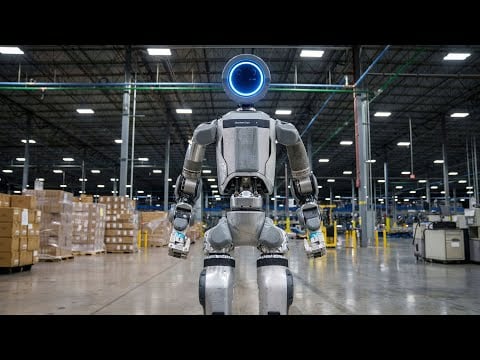
Google DeepMind & Boston Dynamics
Here are more detailed guides and articles that you may find helpful on Google DeepMind.
- Google DeepMind CEO Demis Hassabis Unveils AGI Roadmap
- Gemini 3 Pro Support in Antigravity, Google DeepMind’s Agent IDE
- Google DeepMind’s Gemini 3.0 Pro: Features, Benefits and Impact
- Google DeepMind Launches Pomelli : Simplifying Marketing for
- Google DeepMind AlphaProof AI solves advanced reasoning
- Google DeepMind CEO explains more about AlphaFold 3
- Google DeepMind Jules 3.0 AI Update Will Change How You Code
- Google DeepMind Gemini CLI 3.0 & GenKit Extension Framework
- How Google DeepMind Uses Video Games to Train Advanced AI
- Google DeepMind’s Gemini Agent : Autonomous Al Coding Agent
Autonomous Driving: A Key Battleground
The autonomous driving sector serves as a microcosm of the broader competition in robotics and AI. Companies like Waymo, Uber, Lyft, and Baidu are making significant strides in this area, each contributing to the evolution of urban mobility and transportation systems.
- Waymo has expanded its self-driving vehicle operations to multiple cities, demonstrating its technological maturity and operational readiness.
- Uber and Lyft are heavily investing in autonomous rideshare solutions, aiming to transform urban transportation by reducing costs and improving efficiency.
- Baidu, a leader in the Chinese market, has extended its autonomous vehicle operations internationally, including deployments in cities like London, showcasing its global ambitions.
These advancements underscore the global nature of the industry, as companies navigate diverse regulatory environments and technological challenges to bring their innovations to market. The competition in this sector is not only reshaping transportation but also influencing the development of AI and robotics technologies more broadly.
Regulatory Challenges and Industry Implications
As robotics and autonomous systems continue to advance, regulatory hurdles remain a significant challenge for companies operating in this space. Issues such as safety, data privacy, and compliance with local laws are critical considerations that can impact the deployment and adoption of these technologies. For instance, autonomous driving regulations vary widely across regions, requiring companies to tailor their systems to meet specific legal and operational requirements.
This regulatory complexity adds another dimension to the competition, as companies that can effectively navigate these challenges are better positioned to succeed in the global market. Addressing these issues requires not only technological innovation but also strategic collaboration with policymakers and stakeholders to establish frameworks that support safe and ethical deployment.
The Future of Robotics and Autonomous Systems
The partnership between Google DeepMind and Boston Dynamics represents a significant milestone in the integration of AI with humanoid robotics. By using advanced AI technologies, Boston Dynamics aims to expand the potential applications of humanoid robots, from industrial automation to disaster response and beyond. This collaboration exemplifies how interdisciplinary partnerships can drive innovation and unlock new possibilities in robotics.
Meanwhile, the broader robotics and autonomous systems industry is undergoing a period of rapid evolution, fueled by relentless innovation and intensifying competition. Companies like Tesla, Nvidia, Waymo, and Baidu are pushing the boundaries of what is possible, exploring new frontiers in mobility, automation, and AI. These advancements have the potential to reshape industries, improve efficiency, and redefine the role of robotics in society.
As the industry moves forward, the integration of AI and robotics will likely play a pivotal role in addressing some of the world’s most pressing challenges, from improving disaster response capabilities to enhancing urban mobility. The collaboration between Google DeepMind and Boston Dynamics is just one example of how partnerships can accelerate progress, setting the stage for a future where robotics and AI are seamlessly integrated into everyday life.
Media Credit: Boston Dynamics
Filed Under: AI, Technology News, Top News
Latest Geeky Gadgets Deals
Disclosure: Some of our articles include affiliate links. If you buy something through one of these links, Geeky Gadgets may earn an affiliate commission. Learn about our Disclosure Policy.