CES 2026 Highlights : Agile AI Robots, Health Mirrors, Smarter Screens & More
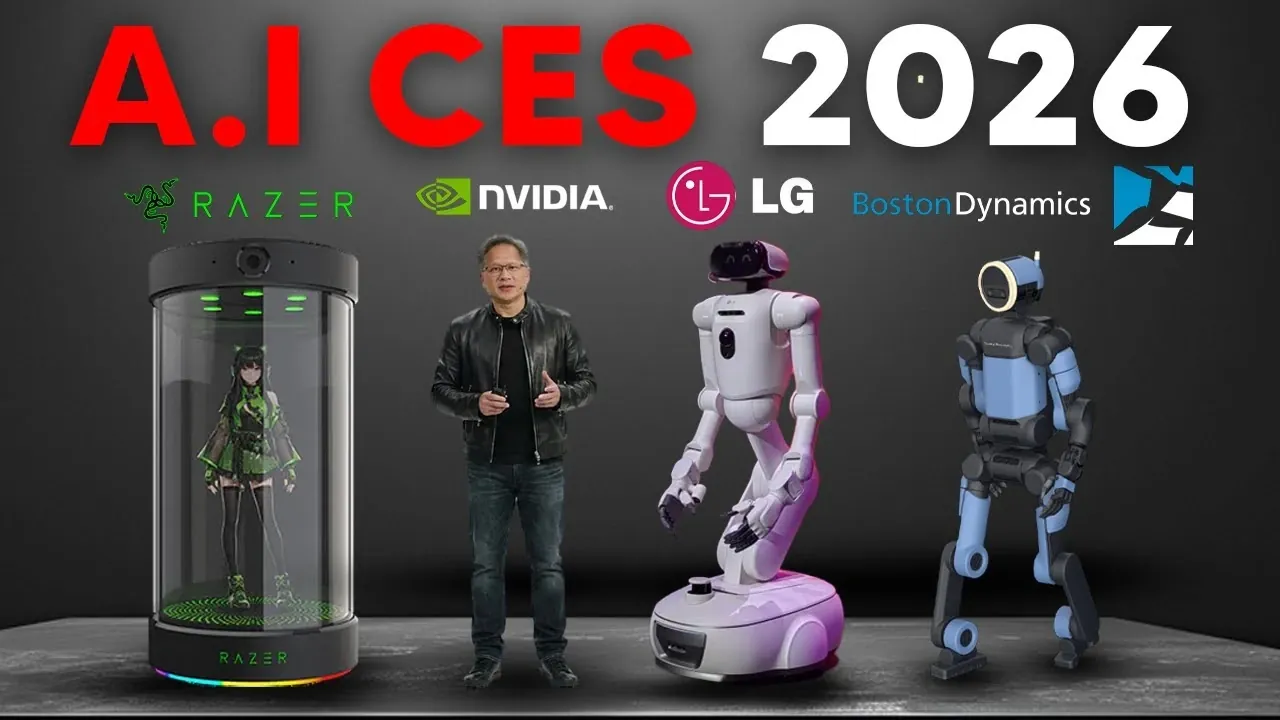
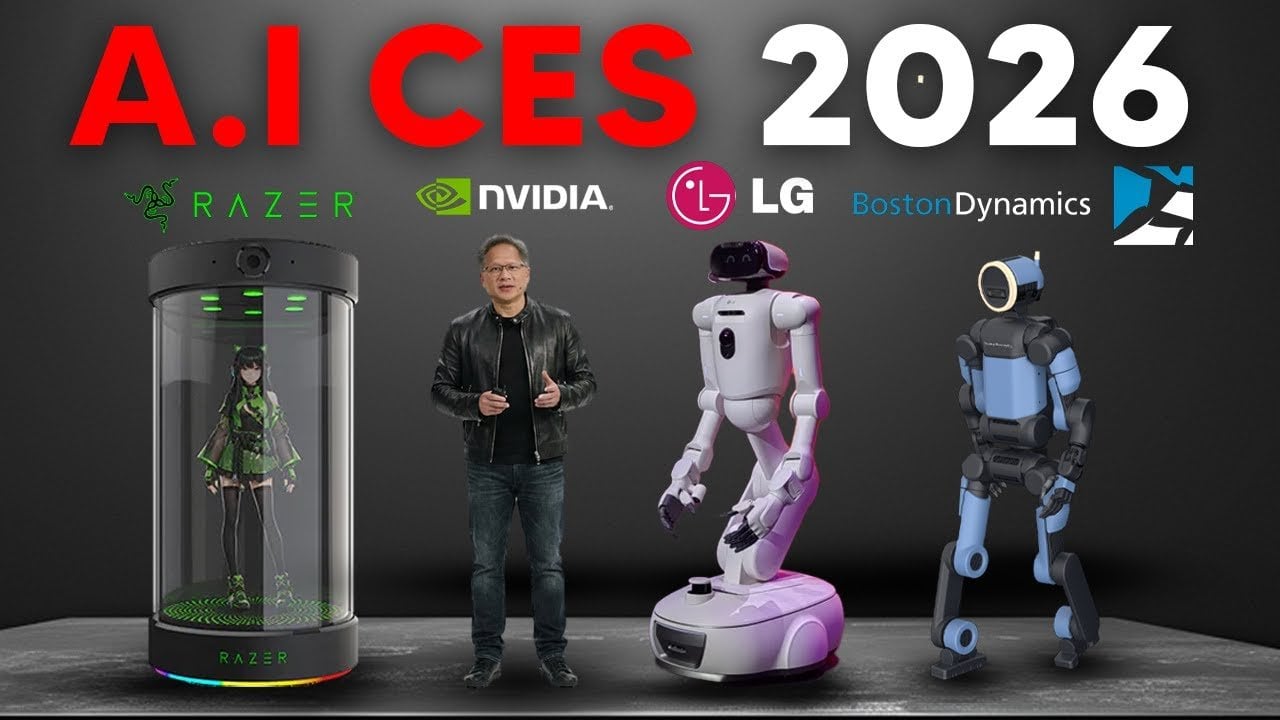
What if your home could prepare your dinner, your health monitor could predict potential risks, and your office assistant could operate without a screen? These aren’t distant sci-fi dreams, they’re the tangible innovations unveiled at CES 2026. In this guide, The AI Grid explains how the most stunning AI announcements from the event are not just pushing boundaries but actively reshaping the way we live and work. From Boston Dynamics’ agile Atlas robot transforming industrial operations to LG’s “Cloid” bringing emotional intelligence to home automation, the future of AI feels closer than ever. These breakthroughs don’t just promise convenience; they challenge us to rethink what’s possible in our daily lives.
Take a closer look at the technologies that stole the spotlight, including Samsung’s AI TV redefining entertainment and Omnia’s health devices making preventive care more accessible. You’ll discover how AI is evolving beyond mere functionality to deliver personalized, human-like interactions and unprecedented adaptability. Whether it’s Motorola’s screenless assistant or NVIDIA’s innovative platforms for autonomy, these innovations hint at a world where technology integrates seamlessly into every aspect of life. As you explore these innovative developments, consider how they might transform not just industries but the very fabric of how we connect, work, and thrive.
Key Highlights from CES 2026
TL;DR Key Takeaways :
- Boston Dynamics unveiled the commercial Atlas robot, featuring advanced agility, tactile sensing hands, and Google DeepMind’s Gemini AI, designed to transform industrial operations with precision and durability.
- LG introduced “Cloid,” a humanoid robot for home automation, capable of performing delicate tasks and learning user habits to provide personalized assistance within smart home ecosystems.
- Omnia showcased the 360° Health Mirror and Body Scan 2, AI-powered devices offering advanced health monitoring through biomarkers and personalized insights, emphasizing preventive healthcare.
- Motorola’s Project Maxwell debuted as a screenless AI assistant, using voice and gesture-based interactions to reduce screen dependency while maintaining productivity and connectivity.
- NVIDIA launched the Rubin Platform for AI model training and Alpameo for autonomous vehicles, highlighting advancements in AI infrastructure and self-driving technology.
Boston Dynamics Atlas Robot: Transforming Industrial Operations
Boston Dynamics unveiled the commercial version of its highly anticipated Atlas robot, engineered specifically for industrial applications. This humanoid robot features extraordinary agility, with 360° rotating joints and 156 degrees of freedom, allowing it to execute complex tasks with remarkable precision. Its tactile sensing hands are capable of handling delicate components, while a self-swappable battery system ensures uninterrupted operation, even in demanding environments.
Powered by Google DeepMind’s Gemini AI, Atlas can interpret natural language commands and solve real-time problems, making it a versatile asset for industries. Built to withstand harsh conditions, it features an IP67 rating for water and dust resistance and operates efficiently in extreme temperatures. These features position Atlas as a robust solution for enhancing productivity and safety in industrial settings.
LG’s “Cloid”: Transforming Home Automation
LG introduced “Cloid,” a humanoid robot designed to elevate home automation to unprecedented levels. With human-like arms offering seven degrees of freedom and five-fingered hands, Cloid excels at performing delicate household tasks, such as folding laundry or preparing meals. Its “Affectionate Intelligence” system learns user habits over time, allowing it to provide personalized assistance and proactive support tailored to individual needs.
Cloid integrates seamlessly with existing smart home ecosystems, creating a cohesive and intuitive living environment. While still in its prototype phase, this innovation represents a significant step toward fully autonomous home management systems, offering a glimpse into a future where daily chores become virtually effortless.
Most Stunning Announcements From CES 2026
Here is a selection of other guides from our extensive library of content you may find of interest on AI and Robotics.
- China’s 1 Million AI Robots Plan: Global Automation in 2025
- How NVIDIA’s AI Innovations Are Shaping the Future of Robotics
- How Gemini Robotics Combines AI & Robotics for Real-World Tasks
- Google’s Gemini AI Robots Now Adapt Like Humans in 2025
- Neo Humanoid Robot: Overhyped AI or Fantastic option?
- Google DeepMind & Boston Dynamics Partner : AI to humanoid robots
- Humanoid Robots with AI Brains: The Next Frontier in Technology
- Combining robotics and AI to create humanoid robots
- The Genesis Project: Open source Innovation for Robot Training
- How Genesis AI Accelerates Robotics Training by 430,000x
Omnia 360° Health Mirror and Body Scan 2: Redefining Health Monitoring
Health technology took center stage with Omnia’s 360° Health Mirror and Body Scan 2, two AI-powered devices designed to bring advanced health monitoring into the home. The Health Mirror combines a full-length display with a sensor-equipped floor mat, delivering comprehensive health assessments. Using bio-impedance technology, it measures critical biomarkers such as vascular age, ECG, and cellular health, providing users with a detailed understanding of their physical condition.
An integrated AI companion interprets this data, offering personalized health insights and connecting users with healthcare professionals when necessary. For those seeking a more compact solution, the Body Scan 2 offers similar functionality in a high-tech scale format, making advanced health monitoring accessible to a broader audience. These devices underscore the growing role of AI in preventive healthcare and personalized wellness.
Motorola Project Maxwell: A Screenless AI Assistant
Motorola introduced Project Maxwell, a wearable AI device designed to reduce screen dependency while maintaining productivity. This minimalist device, available as a pendant or clip-on, uses voice and gesture-based interactions powered by Motorola’s Cira AI platform. Equipped with a camera and microphone array, it offers multimodal perception, allowing users to interact with their digital environment intuitively.
Project Maxwell acts as an extension of smartphones and PCs, addressing the growing issue of screen fatigue. Its innovative design reflects a shift toward more natural and less intrusive technology, catering to users who prioritize convenience and efficiency without sacrificing connectivity.
Razer AI Innovations: Enhancing Gaming and Daily Life
Razer unveiled two new AI projects aimed at enhancing both gaming experiences and everyday productivity. Project Ava is a desktop AI companion featuring a 3D animated avatar that provides gaming tips, productivity assistance, and entertainment. This interactive assistant is designed to adapt to user preferences, offering a personalized experience.
Meanwhile, Project Mokco introduces AI-powered headphones equipped with cameras and microphones for contextual awareness. These headphones enable seamless interaction with multiple AI systems, making them ideal for multitaskers and gamers seeking an immersive experience. Together, these innovations highlight Razer’s commitment to pushing the boundaries of AI in consumer technology.
Samsung AI TV: Redefining Home Entertainment
Samsung’s latest AI TV sets a new standard for home entertainment with its “Vision AI Companion” system. This conversational AI provides personalized content recommendations, real-time translation, and contextual assistance, such as recipe suggestions while cooking. Its advanced microRGB display technology delivers stunning visuals, complemented by an immersive audio system for an unparalleled viewing experience.
Supporting 4K resolution at 165Hz and offering seven years of software updates, Samsung’s AI TV is designed to remain at the forefront of smart home entertainment. This innovation underscores the growing role of AI in creating more engaging and personalized media experiences.
NVIDIA AI Platforms: Advancing AI and Autonomy
NVIDIA introduced two fantastic AI platforms that promise to drive the next wave of innovation. The Rubin Platform is a data center solution optimized for training and deploying advanced AI models, offering reduced inference costs and improved operational efficiency. This platform is tailored to meet the demands of businesses using AI at scale.
For autonomous vehicles, NVIDIA unveiled Alpameo, a 10-billion-parameter model capable of reasoning-based decision-making. Paired with Alpazim, a simulator designed to test edge cases, Alpameo represents a significant leap forward in self-driving technology. These platforms highlight NVIDIA’s leadership in AI infrastructure and autonomous systems.
Noah AI Pen: Bridging Analog and Digital Worlds
The Noah AI Pen offers a seamless blend of traditional handwriting and digital convenience. Equipped with cameras and sensors, it captures handwriting in real time, transcribing and organizing notes digitally. Its AI-powered search function allows users to retrieve handwritten content effortlessly, bridging the gap between analog and digital workflows.
Positioned as a competitor to OpenAI’s rumored AI pen, the Noah AI Pen caters to professionals, students, and creatives who value the tactile experience of writing while benefiting from the efficiency of digital tools. This innovation reflects the growing demand for hybrid solutions that combine the best of both worlds.
Shaping the Future of AI and Robotics
The innovations unveiled at CES 2026 demonstrate the rapid evolution of AI and robotics, with applications spanning industrial automation, home living, health monitoring, and entertainment. These advancements promise to deliver unprecedented levels of convenience, efficiency, and personalization. As these technologies transition from prototypes to commercial products, they are poised to reshape industries and redefine daily life in the years to come.
Media Credit: AIGRID
Filed Under: AI, Technology News, Top News
Latest Geeky Gadgets Deals
Disclosure: Some of our articles include affiliate links. If you buy something through one of these links, Geeky Gadgets may earn an affiliate commission. Learn about our Disclosure Policy.