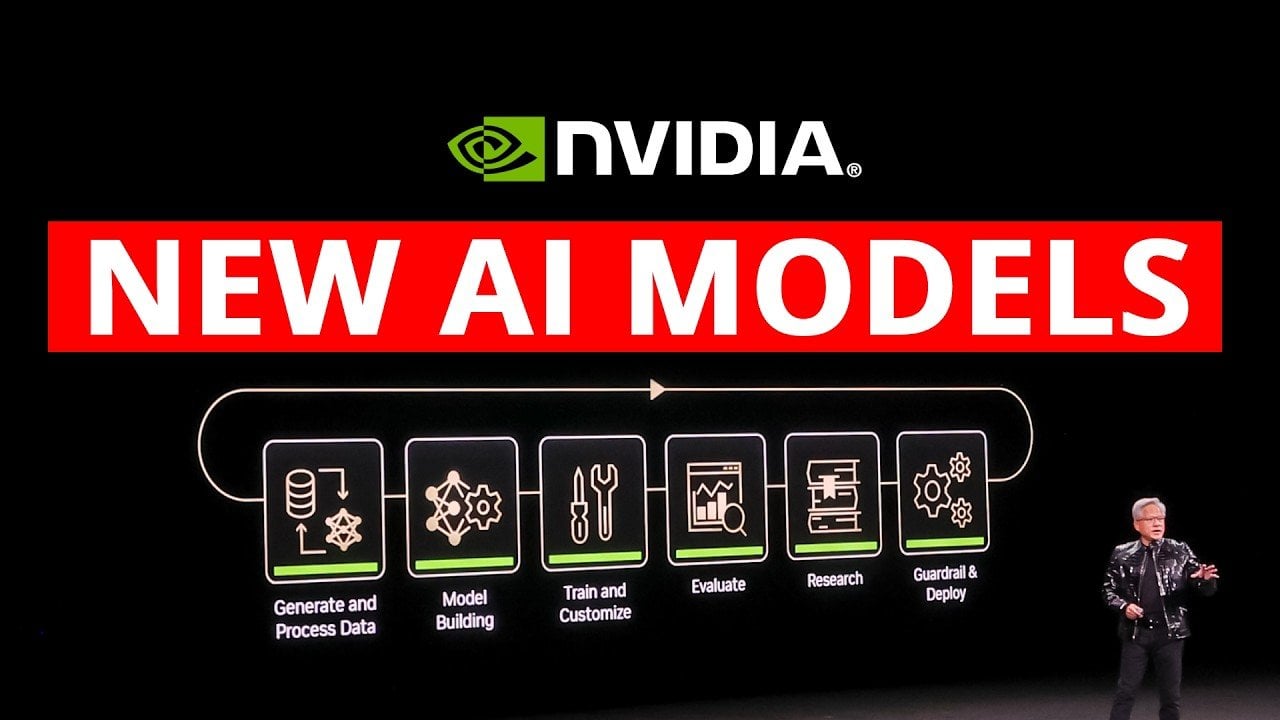
NVIDIA Unveils New Open AI Models at CES 2026 & New AI Platform with 5x Speed
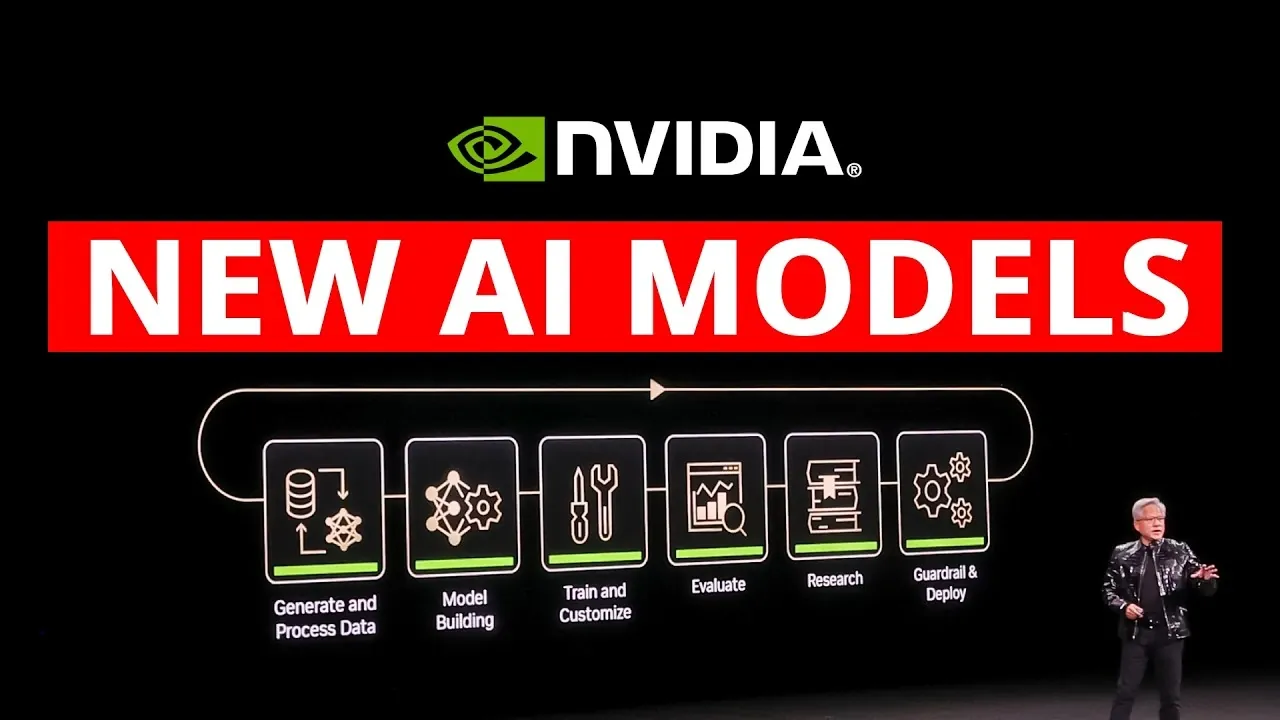
What if the future of AI wasn’t locked behind closed doors but instead placed in the hands of developers and innovators worldwide? Below, Sam Witteveen takes you through how NVIDIA’s latest breakthroughs, unveiled at CES 2026, are reshaping the landscape of artificial intelligence with 13 open AI models and the innovative Vera Rubin platform. These advancements promise to make innovative AI more accessible, scalable, and efficient than ever before, sparking excitement across industries like autonomous vehicles, robotics, and healthcare. But with such bold claims, one might wonder: is this the dawn of a truly open AI era, or just another step in NVIDIA’s dominance of the AI ecosystem?
In this CES 2026 announcement overview, you’ll uncover how NVIDIA’s innovations, like the fivefold performance boost of the Vera Rubin platform, are setting new benchmarks in AI supercomputing. From the fantastic Alpa Mayo model for self-driving cars to the Claraara models transforming healthcare, each development offers a glimpse into AI’s potential to solve real-world challenges. Whether you’re curious about the future of multimodal AI or how these models are already being integrated by major players like AWS and Mercedes-Benz, this breakdown will leave you questioning what’s next for AI, and how soon it will arrive.
NVIDIA Unveils AI Innovations
TL;DR Key Takeaways :
- Vera Rubin Platform: NVIDIA unveiled the Vera Rubin platform, a next-gen AI supercomputer offering a fivefold performance boost over its predecessor, optimized for large-scale AI operations and adopted by major cloud providers like AWS, Google, Microsoft, and Oracle.
- Autonomous Vehicles: NVIDIA introduced AlpaMayo and AlpaSIM models to enhance self-driving systems, focusing on advanced decision-making and robust simulation testing, with Mercedes-Benz integrating these technologies into its vehicles.
- Robotics AI: The Cosmos models and Isaac Group innovations accelerate robotics development by generating synthetic training data and allowing humanoid robots to perform complex tasks in industries like manufacturing and healthcare.
- Healthcare AI: The Claraara models aim to transform precision medicine by accelerating drug discovery and allowing breakthroughs in genomics, biopharmaceuticals, and diagnostic imaging.
- Multimodal AI and Speech Recognition: Neatron Agentic AI models excel in processing multimodal data, while low-latency ASR models enhance real-time speech recognition for applications like live captioning and voice AI.
Vera Rubin Platform: Redefining AI Supercomputing
The Vera Rubin platform represents NVIDIA’s latest advancement in AI supercomputing, designed to address the growing demands of hyperscalers and data centers. This platform delivers a fivefold performance boost compared to its predecessor, the Blackwell chips, and is specifically optimized for training mixture-of-experts models. By significantly reducing inference costs, the Vera Rubin platform offers a cost-effective solution for large-scale AI operations.
Major cloud providers, including AWS, Google, Microsoft, and Oracle, have already adopted this innovative technology. Its integration into their infrastructures underscores its potential to reshape AI ecosystems, allowing faster and more efficient processing for a variety of applications. The Vera Rubin platform sets a new benchmark in AI supercomputing, offering unparalleled performance for enterprises and developers alike.
Transforming Autonomous Vehicles: Alpa Mayo and Alpa SIM
NVIDIA’s contributions to autonomous vehicle technology are embodied in two innovative models: AlpaMayo and AlpaSIM. These models aim to enhance the capabilities of self-driving systems, making sure safer and more reliable autonomous transportation.
- AlpaMayo: A reasoning model designed for self-driving cars, allowing advanced decision-making and adaptability in dynamic environments. This model allows vehicles to respond intelligently to complex scenarios, such as unpredictable traffic patterns or adverse weather conditions.
- AlpaSIM: A simulation framework that integrates vision-based input and APIs, providing a robust testing environment for autonomous systems. This framework ensures that self-driving technologies are rigorously tested and refined before deployment.
Mercedes-Benz is among the first automakers to integrate these technologies into its upcoming vehicle lineup. By adopting Alpa Mayo and Alpa SIM, the company is paving the way for a new era of safer, smarter, and more efficient transportation systems.
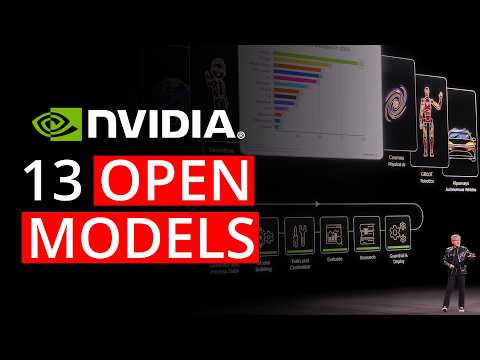
NVIDIA’s New Open Models Introduced at CES 2026
Expand your understanding of NVIDIA AI with additional resources from our extensive library of articles.
- Microsoft, Anthropic, and NVIDIA Partner on Enterprise AI
- How the NVIDIA DGX Spark Redefines Local AI Computing Power
- Amazon Just Declared War On NVIDIA : Inside Amazon’s New AI
- NVIDIA NVQLink for Real-Time Quantum Error Correction with AI
- NVIDIA Nemotron 70b: A Breakthrough in Open-Source AI
- Inside the AI Funding Loop Linking Microsoft, NVIDIA, and OpenAI
- OpenAI vs NVIDIA: The Push to Build Cheaper, Faster AI Chips
- NVIDIA GauGAN2 AI can create photorealistic artwork
- NVIDIA NitroGen AI Used 40,000 Hours of Gameplay Video for
- NVIDIA DGX Spark : Compact AI Mini Supercomputer Unboxing
Advancing Robotics AI: Cosmos Models and Isaac Group
In the field of robotics, NVIDIA introduced the Cosmos Transfer and Cosmos Predict models, which are designed to generate synthetic training data for physical AI systems. These models accelerate the training process for robotics, allowing faster and more precise development of AI-driven machines. By reducing the time and resources required for training, the Cosmos models are driving innovation in robotics across various industries.
The Isaac Group further expands NVIDIA’s robotics portfolio with humanoid robot models capable of performing complex physical tasks and facilitating human-robot interactions. These models are tailored for applications in industries such as manufacturing, logistics, and healthcare, offering practical solutions for tasks that require precision and adaptability. NVIDIA’s advancements in robotics AI are setting new standards for efficiency and functionality in automated systems.
Transforming Healthcare with Claraara Models
Healthcare remains a critical focus for NVIDIA, as demonstrated by the introduction of the Claraara models. This suite of four specialized AI models is designed to accelerate drug discovery and enhance health-related applications. By using advanced computational techniques, the Claraara models aim to transform precision medicine, offering new possibilities for medical research and treatment development.
These models enable researchers to analyze vast datasets with unprecedented speed and accuracy, facilitating breakthroughs in areas such as genomics, biopharmaceuticals, and diagnostic imaging. NVIDIA’s commitment to healthcare innovation underscores the fantastic potential of AI in improving patient outcomes and advancing medical science.
Multimodal AI Breakthroughs: Neatron Agentic AI Models
The Neatron Agentic AI models represent a significant advancement in multimodal AI, excelling in the processing and understanding of text, vision, and multimodal documents. These models are designed to handle complex data inputs, making them ideal for industries requiring real-time, multimodal AI capabilities.
- RAG Embedding and Re-Ranking: This feature enhances the ability to process and analyze multimodal data efficiently, improving the accuracy and relevance of AI-driven insights.
- Neotron Speech ASR: A low-latency speech recognition model optimized for real-time applications such as live captioning, meeting transcription, and in-car assistance. This model ensures seamless performance in environments where speed and accuracy are critical.
By integrating these capabilities, the Neatron Agentic AI models provide a robust framework for applications in education, entertainment, and enterprise solutions, further expanding the scope of multimodal AI.
Speech Recognition: Efficiency Meets Innovation
NVIDIA has made significant strides in speech recognition technology with its low-latency ASR models. These models incorporate advanced caching mechanisms to minimize redundant computations, resulting in improved efficiency and reduced operational costs. By allowing local deployment, these models make speech recognition systems more accessible for a variety of applications, including transcription, voice AI, and assistive technologies.
The low-latency ASR models are particularly well-suited for real-time environments, where speed and accuracy are paramount. Their ability to process speech data efficiently ensures that they can meet the demands of modern applications, from virtual assistants to live event captioning.
Empowering Developers with Accessible Tools
To foster innovation and collaboration, NVIDIA has made its AI models available on platforms such as Hugging Face. This integration allows developers to experiment with and incorporate these models into their workflows, promoting cross-industry collaboration and accelerating the development of AI-driven solutions.
By prioritizing accessibility, NVIDIA ensures that its tools are available to a diverse range of users, from startups to large enterprises. This approach not only provide widespread access tos access to advanced AI technologies but also encourages the development of innovative applications that address real-world challenges.
A New Era of AI Possibilities
NVIDIA’s announcements at CES 2026 reflect its unwavering dedication to advancing AI infrastructure and tools. With a focus on efficiency, scalability, and real-time capabilities, the company is driving innovation across industries such as autonomous vehicles, robotics, healthcare, and multimodal AI. The Vera Rubin platform and the suite of open AI models represent a bold step forward, empowering developers and enterprises to explore new frontiers in artificial intelligence.
Media Credit: Sam Witteveen
Filed Under: AI, Technology News, Top News
Latest Geeky Gadgets Deals
Disclosure: Some of our articles include affiliate links. If you buy something through one of these links, Geeky Gadgets may earn an affiliate commission. Learn about our Disclosure Policy.