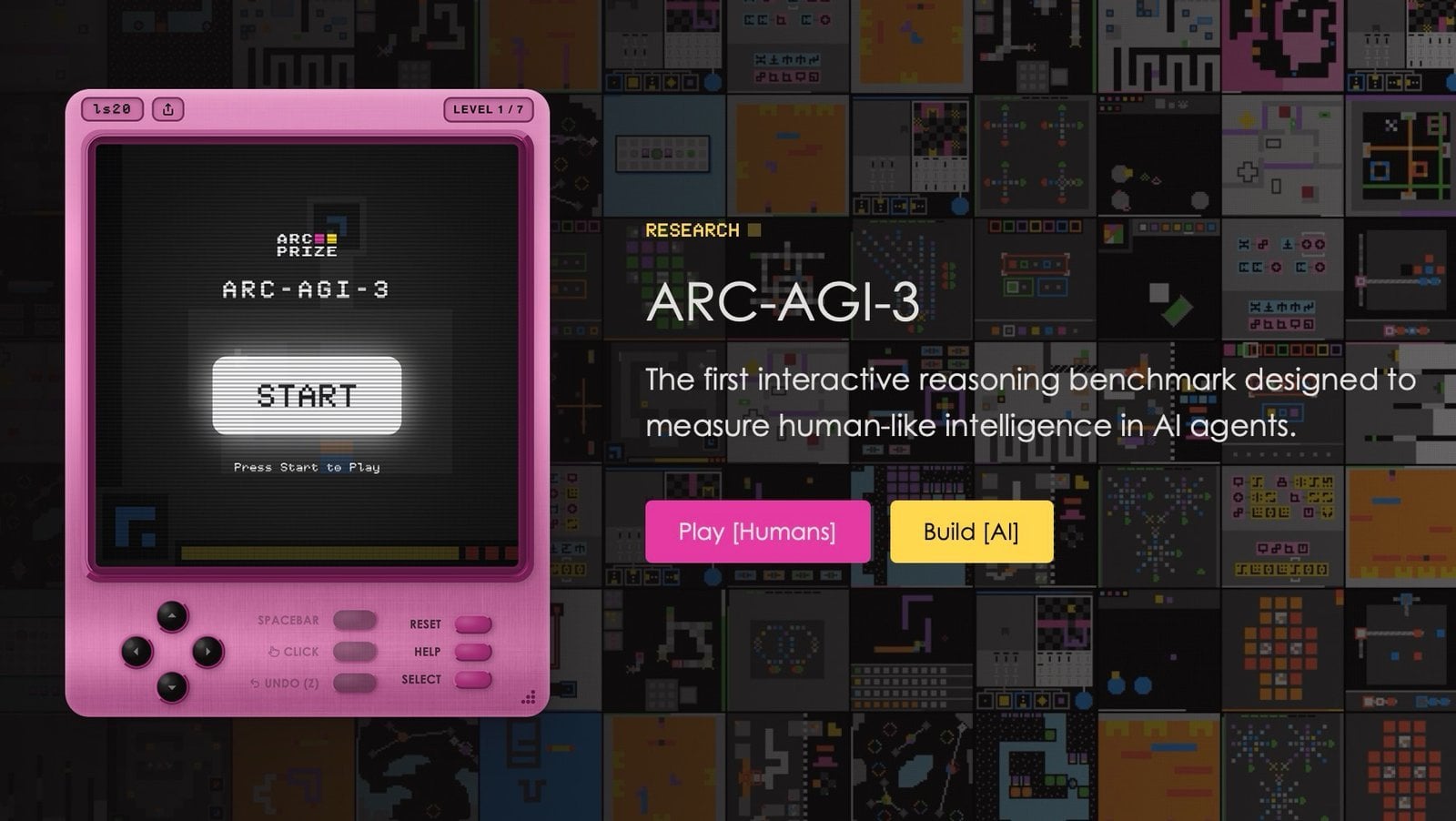
Why Advanced AI Models Fail ARC AGI 3 But Humans Easily Score 100%
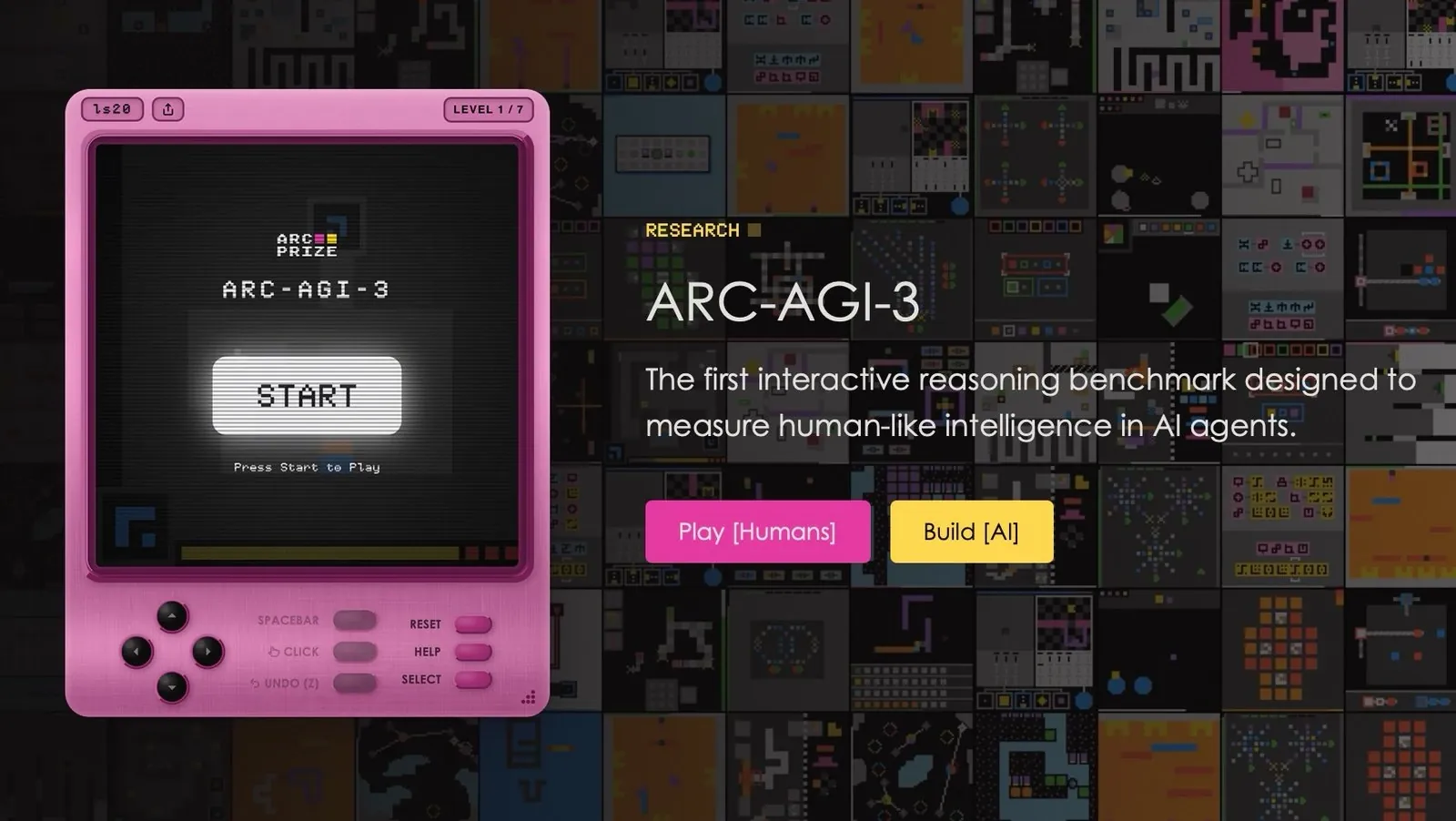
ARC AGI 3, the latest iteration of the Artificial Reasoning Challenge, introduces a new benchmark for evaluating artificial general intelligence (AGI). This version emphasizes unstructured problem-solving through interactive, game-like tasks that require logical deduction and intuitive reasoning. Unlike traditional AI benchmarks, ARC AGI 3 challenges systems to adapt without explicit instructions, mirroring real-world scenarios where objectives are often ambiguous. Matthew Berman explores how these updates highlight the persistent gap between human cognitive flexibility and the capabilities of even the most advanced AI models, such as GPT 5.4 and Gemini 3.1 Pro.
Dive into this overview to understand how ARC AGI 3’s unique features, such as its focus on limited-turn gameplay and dynamic task environments, push the boundaries of AGI evaluation. You’ll gain insight into the specific challenges AI faces in generalization, efficiency and reasoning under uncertainty. Additionally, the discussion sheds light on the broader implications for AGI research, including the $2 million prize incentivizing breakthroughs in saturating this benchmark.
The Purpose and Vision Behind ARC AGI
TL;DR Key Takeaways :
- ARC AGI 3 is a significant advancement in evaluating artificial general intelligence (AGI), focusing on generalization, adaptability and problem-solving under complex conditions.
- The benchmark highlights the persistent performance gap between humans and AI, with humans excelling in logical reasoning, pattern recognition and intuitive problem-solving, while advanced AI models struggle to achieve meaningful progress.
- ARC AGI 3 introduces interactive gameplay, limited turns and unstructured challenges, emphasizing adaptability, strategic thinking and intuitive reasoning in dynamic environments.
- Critical challenges exposed by ARC AGI 3 include AI’s difficulty with intuitive reasoning, adaptability to unstructured tasks and the significant disparity in performance compared to human cognition.
- A $2 million prize incentivizes breakthroughs in AGI research, with ARC AGI 3 serving as a pivotal benchmark to guide progress and address key limitations in achieving true general intelligence.
The ARC AGI benchmark series is purpose-built to evaluate the core attribute of generalization, which is a defining characteristic of AGI. Unlike narrow AI systems that excel at specific, predefined tasks, AGI aspires to replicate human-like adaptability across a broad spectrum of challenges. ARC AGI achieves this by presenting tasks that are solvable by the average human but remain elusive for even the most advanced AI systems. Key objectives of the ARC AGI benchmarks include:
- Testing Generalization: Evaluating an AI’s ability to apply knowledge across diverse and unfamiliar tasks.
- Measuring Efficiency: Assessing performance in terms of computational resources and task completion time.
- Highlighting Cognitive Gaps: Identifying the disparity between human cognitive abilities and current AI capabilities.
By focusing on these objectives, ARC AGI benchmarks provide a structured framework for understanding the limitations of AI and guiding future research efforts.
Humans vs. AI: The Persistent Performance Divide
ARC AGI benchmarks consistently reveal a stark performance gap between humans and AI systems. Humans excel at these tasks, achieving near-perfect accuracy by using their innate abilities in logical reasoning, pattern recognition and intuitive problem-solving. These strengths allow humans to adapt to new challenges with remarkable ease.
In contrast, even the most advanced AI models, such as GPT 5.4 and Gemini 3.1 Pro, struggle to achieve meaningful progress. With scores often failing to surpass 1%, these systems highlight the significant challenges AI faces in replicating human cognitive processes. This disparity is particularly evident in areas requiring adaptability, reasoning under uncertainty and the ability to infer solutions without explicit instructions.

Uncover more insights about AI models in previous articles we have written.
- Which Claude 3 AI model is best? All three compared and tested
- 12 Research Papers, 6 Years : The AI Industry Explained
- NVIDIA Open AI Models Released at CES 2026 & Faster Platform
- Midjourney V7 Default Style Realism Example.Webp
- AI actors advanced AI video creation and 3D AI models
- How Encord Simplifies AI Training with Fine Tuning Tools
- A Quick Guide to Claude Mythos & the Latest AI Releases
- Model Collapse in AI: Why Training on Synthetic Text Degrades Quality
- Stability AI unveils TripoSR AI image to 3D model generator
- Agent Zero : Private Local AI Agent with Docker & Terminal Access
The Evolution of ARC AGI Benchmarks
The ARC AGI benchmarks have undergone significant evolution, with each version introducing new challenges to push the boundaries of AGI testing. This progression reflects the growing complexity of the tasks and the increasing demands placed on AI systems.
- ARC AGI 1: Focused on basic pattern recognition and application tasks that were straightforward for humans but challenging for AI.
- ARC AGI 2: Introduced unsaturated benchmarks with increased complexity, making sure tasks were solvable by humans but resistant to exploitation by AI algorithms.
- ARC AGI 3: Features interactive, game-like tasks requiring logical deduction, intuitive reasoning and problem-solving under strict constraints.
This iterative development ensures that the benchmarks remain relevant and continue to challenge the capabilities of emerging AI systems.
What Sets ARC AGI 3 Apart?
ARC AGI 3 distinguishes itself through its innovative approach to AGI evaluation. Unlike its predecessors, this version incorporates interactive gameplay, requiring AI systems to solve tasks without prior instructions. This format mirrors real-world scenarios, where adaptability, quick decision-making and strategic thinking are essential.
Key features of ARC AGI 3 include:
- Interactive Gameplay: Tasks are designed to resemble video games, requiring AI to adapt to dynamic and unpredictable environments.
- Limited Turns: AI systems must complete tasks within a fixed number of moves, emphasizing efficiency and strategic planning.
- Unstructured Challenges: Tasks lack predefined rules or objectives, forcing AI to independently infer solutions.
These features highlight the areas where AI still lags behind humans, particularly in intuitive reasoning and adaptability to unstructured environments. By emphasizing these challenges, ARC AGI 3 provides a clearer picture of the hurdles that must be overcome to achieve true general intelligence.
Challenges Exposed by ARC AGI 3
Despite significant advancements in AI technology, ARC AGI 3 exposes several critical limitations that continue to hinder progress toward AGI. These challenges emphasize the complexity of replicating human-like cognition in machines.
- Intuitive Reasoning: AI struggles with tasks that require inferring solutions without explicit guidance or predefined rules.
- Adaptability: Unstructured tasks, where objectives are ambiguous or undefined, remain a significant obstacle for AI systems.
- Performance Gap: Even the most advanced models, such as GPT 5.4 and Gemini 3.1 Pro, fail to achieve meaningful progress on this benchmark, highlighting the limitations of current AI architectures.
These challenges underscore the need for innovative approaches to AI research, particularly in areas like generalization, reasoning under uncertainty and adaptability to novel situations.
Incentivizing Breakthroughs in AGI
To accelerate progress in AGI research, a $2 million prize has been offered for saturating the ARC AGI 3 benchmark. This substantial incentive is designed to inspire researchers and organizations to push the boundaries of AI capabilities and explore novel solutions to longstanding challenges.
Achieving saturation, however, will likely require fundamental advancements in AI research. Areas such as intuitive reasoning, adaptability and the ability to generalize across diverse tasks will need to be addressed. The difficulty of the benchmark reflects the complexity of these challenges and the need for new innovations to overcome them.
The Significance of ARC AGI 3
ARC AGI 3 represents a pivotal moment in the pursuit of artificial general intelligence. By exposing the limitations of current AI systems, it provides a clear framework for measuring progress and identifying areas for improvement. The benchmark also serves as a reminder of the unique strengths of human cognition, such as:
- Problem-solving under constraints: Humans excel at finding creative solutions within limited resources.
- Adapting to new environments: The ability to navigate unstructured and unfamiliar scenarios is a hallmark of human intelligence.
- Using intuitive reasoning: Humans can infer solutions even in the absence of explicit instructions or rules.
As AI continues to evolve, benchmarks like ARC AGI 3 play a critical role in guiding research and making sure that progress is both measurable and meaningful. By setting clear goals and exposing critical limitations, ARC AGI 3 ensures that the development of AGI remains focused on addressing the most pressing challenges in the field.
Media Credit: Matthew Berman
Disclosure: Some of our articles include affiliate links. If you buy something through one of these links, Geeky Gadgets may earn an affiliate commission. Learn about our Disclosure Policy.