OpenAI’s Gumdrop AI Pen Brings Voice Help, Handwriting Capture, and More
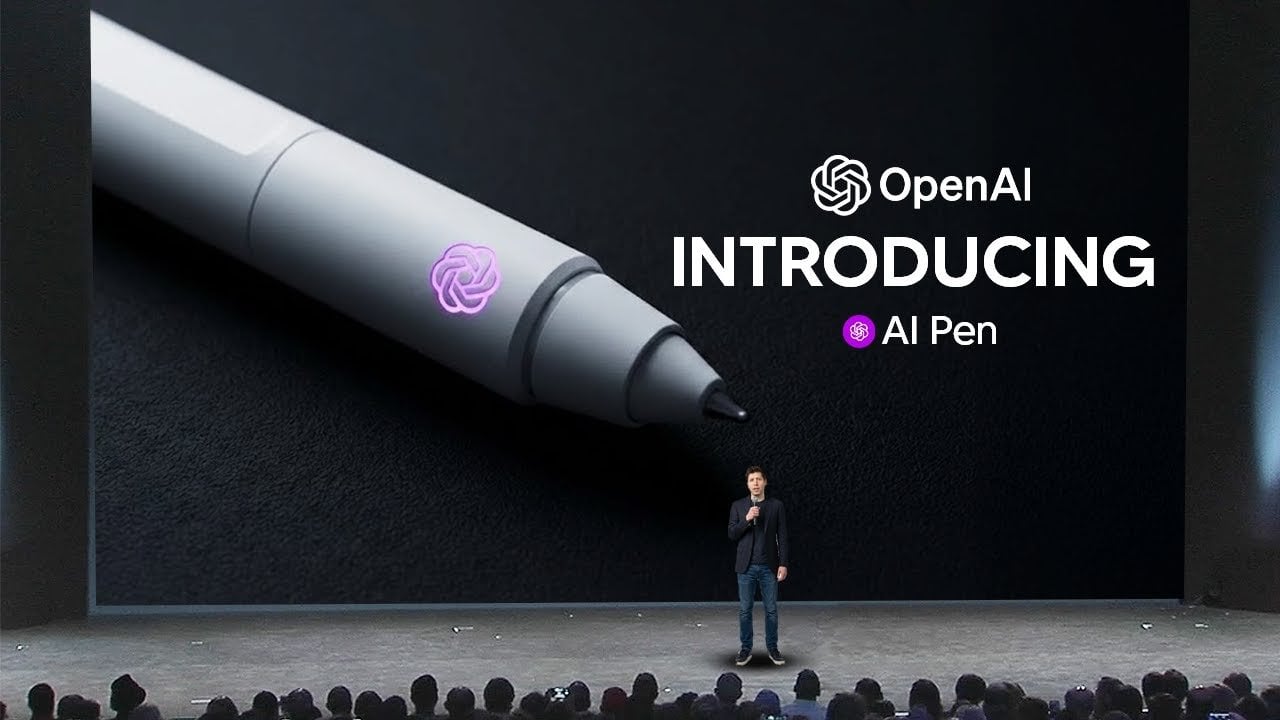
What if the future of AI wasn’t a screen in your pocket but something as simple as a pen in your hand? The AI GRID explores how OpenAI’s ambitious new AI pen project, codenamed “Gumdrop,” could redefine our relationship with technology. This AI-powered pen, expected to launch between 2026 and 2027, is designed to bridge the gap between smartphones and laptops, offering features like contextual awareness and handwritten-to-text conversion in a sleek, minimalist form. But with privacy concerns, consumer skepticism, and a competitive wearable market, can this device succeed where others have failed? The video dives into the bold vision behind the AI pen and the challenges it must overcome to earn its place in our daily lives.
In this overview, we’ll unpack what makes the AI pen stand out, from its screenless design to its promise of distraction-free productivity. You’ll discover how OpenAI’s collaboration with renowned designer Jony Ive aims to deliver not just functionality but a seamless, intuitive experience. But there’s more to this story than just innovation, questions about privacy, affordability, and whether users will embrace a new kind of device loom large. Could this be the first AI wearable to truly work, or will it become another cautionary tale in the tech world? Let’s explore the possibilities and the stakes behind this new project.
OpenAI’s AI Pen Overview
TL;DR Key Takeaways :
- OpenAI is developing an AI-powered pen, codenamed “Gumdrop,” set to launch between 2026 and 2027, featuring contextual awareness, handwritten-to-text conversion, and two-way voice communication.
- The pen is designed as a minimalist, screenless “third device” to complement smartphones and laptops, emphasizing simplicity and functionality.
- Privacy concerns arise due to always-on cameras and microphones, alongside challenges like consumer skepticism, entrenched habits, and a high price range of $400–$600.
- OpenAI collaborates with designer Jony Ive and has shifted manufacturing to Vietnam and the U.S. to ensure quality and mitigate supply chain risks.
- To succeed, OpenAI must differentiate the pen from competitors like AI-powered smart glasses, address privacy and cost concerns, and position it as a complementary productivity tool.
The AI pen represents OpenAI’s vision of a “third device,” bridging the gap between smartphones and laptops. Unlike traditional devices, it is screenless, focusing on simplicity and functionality. Its design prioritizes a distraction-free user experience while offering innovative features, such as:
- Contextual awareness: The pen intelligently adapts to your environment and needs, providing personalized assistance.
- Handwritten-to-text conversion: Effortlessly transform handwritten notes into digital text for easy storage and sharing.
- Two-way voice communication: Engage in hands-free, AI-driven conversations for seamless interaction.
- Local AI processing: Perform tasks directly on the device for speed and efficiency, with cloud integration available for more complex operations.
Designed by renowned designer Jony Ive, the pen emphasizes a sleek, minimalist aesthetic. It is equipped with always-on cameras and microphones, making sure constant readiness to assist users. However, these features have sparked valid concerns about privacy, as some users may hesitate to adopt a device that continuously monitors its surroundings.
How the AI Pen Is Being Developed
The development of the AI pen, codenamed “Gumdrop,” reflects OpenAI’s commitment to pushing the boundaries of hardware innovation. In 2025, OpenAI acquired Jony Ive’s design firm for $6.5 billion, underscoring the importance of design and usability in this project. The collaboration aims to create a device that is not only functional but also aesthetically appealing, blending innovative technology with intuitive design.
Manufacturing for the AI pen has shifted from China to locations such as Vietnam and the United States. This decision aligns with broader industry trends to diversify supply chains amid geopolitical tensions. By localizing production, OpenAI aims to ensure greater control over quality and reduce potential disruptions, positioning the pen as a premium product in the global market.
OpenAI’s AI Pen Might Be the First AI Device That Works
Expand your understanding of OpenAI with additional resources from our extensive library of articles.
- OpenAI o3 and o3-mini Introduced
- New OpenAI Swarm Framework Designed to Simplify Multi-Agent AI
- OpenAI Reveals How To Use GPT-4o More Effectively
- What Is OpenAI’s Index-Free RAG System and How Does It Work
- New ChatGPT Memory feature now available to use
- OpenAI Q Strawberry AI model everything we know so far
- OpenAI’s $3 Billion Windsurf Acquisition Changes AI Forever
- OpenAI AI Model 03 Surpasses Human Reasoning – AGI?
- OpenAI Horizon Alpha: Open Source ChatGPT-5 AI Model Details
- How to use OpenAI Assistants API
Challenges Facing the AI Pen
Despite its potential, the AI pen faces several significant challenges that could impact its adoption:
- Consumer skepticism: Past failures of AI hardware, such as the Humane AI Pin and Rabbit R1, have left consumers wary of new devices in this category.
- Privacy concerns: The inclusion of always-on cameras and microphones may deter users who prioritize privacy and data security.
- Entrenched habits: Smartphones dominate daily life, making it difficult to persuade users to incorporate a new device into their routines.
- Pricing: With an anticipated price range of $400–$600 and potential subscription fees, affordability could be a barrier for many consumers.
Overcoming these obstacles will require OpenAI to clearly demonstrate the pen’s unique value proposition while addressing concerns about privacy and cost. Building trust with consumers will be essential to its success.
Competition in the AI Wearable Market
The AI pen enters a competitive landscape dominated by AI-powered smart glasses from major players like Meta, Google, and Apple. Smart glasses are often perceived as a more natural and versatile form factor for AI wearables, offering features such as augmented reality and hands-free interaction. These devices have already gained traction among consumers, making it challenging for the AI pen to carve out its own space.
To differentiate itself, OpenAI must position the pen as a complementary device rather than a direct competitor to smart glasses. By emphasizing its unique capabilities, such as handwritten-to-text conversion and contextual awareness, the pen could appeal to users seeking a specialized tool to enhance productivity and creativity.
What Sets the AI Pen Apart?
Despite the challenges, the AI pen offers several advantages that could help it establish a niche in the market:
- AI expertise: OpenAI’s leadership in artificial intelligence, demonstrated by products like ChatGPT, lends credibility to the pen’s capabilities and potential.
- Design excellence: The involvement of Jony Ive, known for iconic products like the iPhone, enhances the pen’s aesthetic and functional appeal.
- Lessons learned: OpenAI can use insights from previous AI hardware failures to avoid repeating the same mistakes, making sure a more refined product.
- Complementary positioning: By framing the pen as an addition to existing devices rather than a replacement, OpenAI can make it more appealing to users who are already invested in their current technology ecosystems.
- Extended timeline: The projected launch in 2026 or 2027 allows ample time for refinement, testing, and addressing potential issues, making sure a polished and reliable product at launch.
These factors could help the AI pen stand out in a crowded market, appealing to niche audiences such as tech enthusiasts, productivity-focused users, and those drawn to innovative design.
Will the AI Pen Succeed?
The AI pen has the potential to redefine how we interact with technology, offering a glimpse into the future of AI-driven devices. However, its journey to mainstream acceptance will not be without challenges. Success will depend on OpenAI’s ability to demonstrate the pen’s unique value, address privacy and pricing concerns, and position it effectively in a competitive market.
While widespread adoption remains uncertain, the pen is likely to attract niche audiences, including OpenAI enthusiasts and design-conscious users. If OpenAI can overcome the hurdles it faces, the AI pen could become a significant step forward in the evolution of AI wearables, offering a new way to integrate artificial intelligence into daily life.
Media Credit: TheAIGRID
Filed Under: AI, Technology News, Top News
Latest Geeky Gadgets Deals
Disclosure: Some of our articles include affiliate links. If you buy something through one of these links, Geeky Gadgets may earn an affiliate commission. Learn about our Disclosure Policy.