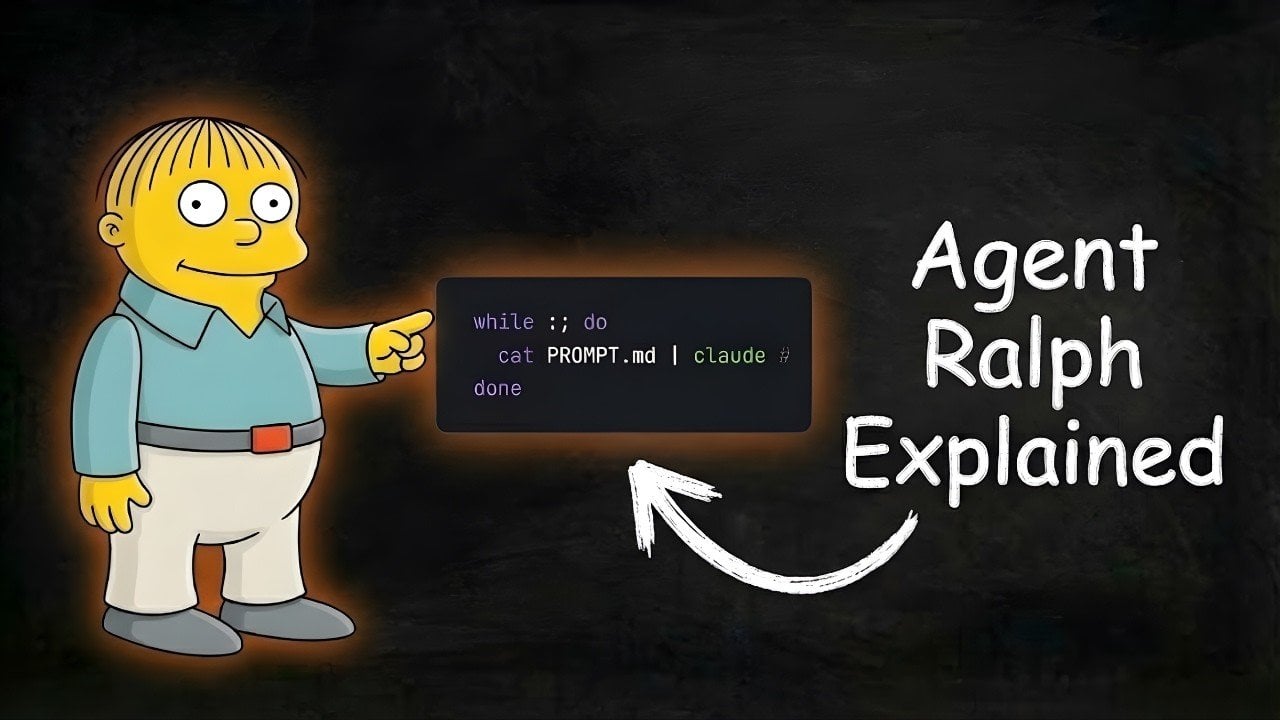
Claude Code & Ralph Wigum : Let Your Code Improve Itself on Repeat
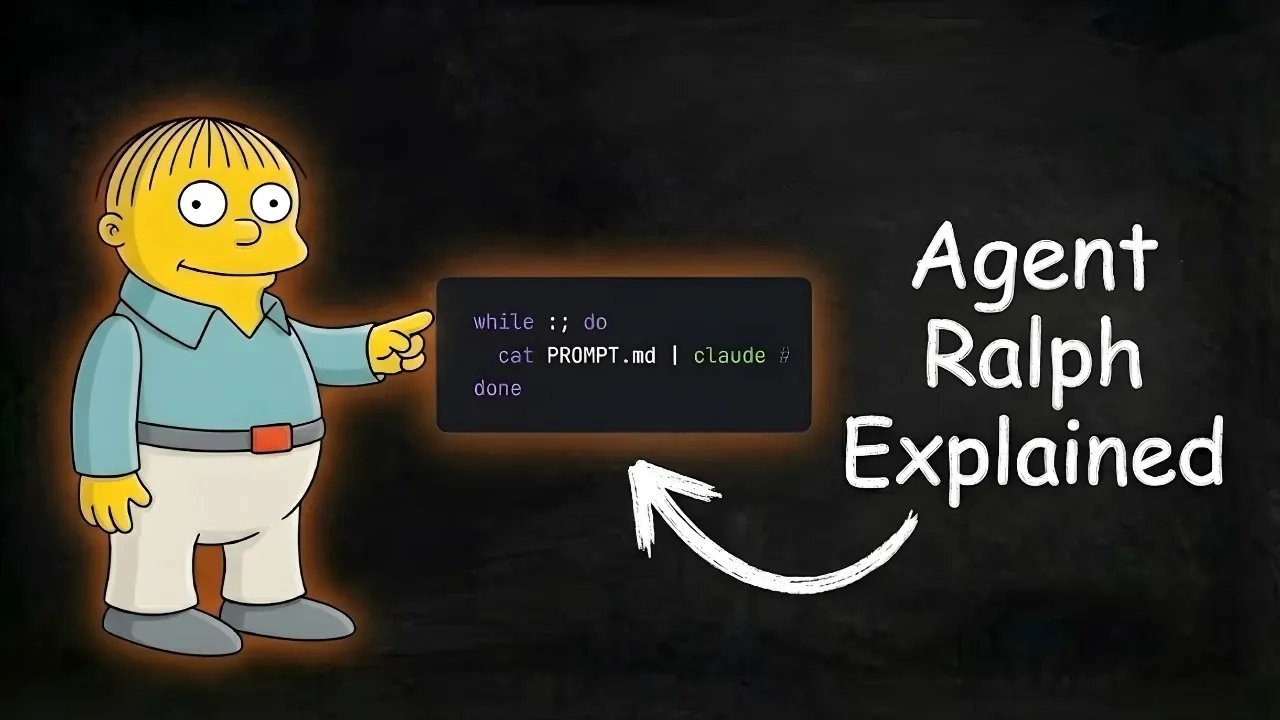
What if your code could write itself, refine itself, and improve continuously without you lifting a finger? Below, Prompt Engineering breaks down how the innovative “Ralph Wigum” approach combines a simple bash loop with the file system as memory to create an endlessly iterative coding process. This method promises to transform how developers tackle repetitive tasks and large-scale projects. By allowing AI to maintain continuity across iterations, Ralph Wigum eliminates the need for constant human intervention, offering a glimpse into a future where coding workflows are faster, smarter, and more autonomous. But with such power comes questions about its limitations and risks, can this approach truly deliver on its bold promises?
In this guide, you’ll uncover the mechanics behind Ralph Wigum and why it’s being hailed as a fantastic option for tasks like test coverage generation, large-scale refactoring, and greenfield projects. You’ll also explore how this method shifts the focus from micromanaging every detail to achieving clearly defined outcomes, freeing developers to concentrate on creative and strategic challenges. Whether you’re intrigued by the idea of AI-driven autonomy or cautious about the potential pitfalls, this breakdown will leave you rethinking what’s possible in the world of coding. The implications are as exciting as they are complex, what role will you play in this evolving landscape?
What is Ralph Wigum and Why is It Important?
TL;DR Key Takeaways :
- Ralph Wigum introduces a streamlined AI coding workflow using bash loops and the file system as memory, allowing continuous iteration with minimal human intervention.
- It automates repetitive tasks like test coverage generation, large-scale refactoring, and documentation updates, allowing developers to focus on strategic goals.
- The approach relies on iterative refinement, where the AI builds upon previous outputs stored in the file system to achieve predefined objectives efficiently.
- Key limitations include security risks, lack of high-level design insight, unsuitability for exploratory tasks, and potential high computational costs.
- Best practices for implementation include defining clear goals, limiting iterations, monitoring progress, and focusing on tasks that benefit from automation and refinement.
Ralph Wigum addresses a persistent inefficiency in traditional AI coding workflows: the frequent need for manual input and intervention. Conventional systems often lose context between iterations, requiring users to re-enter instructions or manually guide the process. Ralph Wigum eliminates this bottleneck by automating the iterative process. Using a bash loop, it feeds prompts to the AI while storing outputs in the file system for reference. This allows the AI to maintain continuity, refine its work, and build upon previous iterations without external guidance.
This approach is particularly valuable for tasks that benefit from iterative refinement. Examples include generating comprehensive test coverage, performing large-scale code refactoring, or automating documentation updates. By shifting the focus from micromanaging individual steps to achieving defined outcomes, Ralph Wigum introduces a new paradigm in AI development that emphasizes autonomy and efficiency.
How Does Ralph Wigum Work?
The mechanics of Ralph Wigum are both straightforward and impactful, relying on a combination of automation and persistent memory:
- A bash loop continuously feeds prompts to the AI, instructing it to analyze and build upon existing files.
- The file system acts as a persistent memory, storing outputs from the AI and allowing it to reference prior iterations for continuity.
- Through iterative refinement, the AI evaluates its progress and adjusts its approach to meet predefined objectives.
For example, in a greenfield project, the AI might begin by creating a basic code structure. With each iteration, it refines the architecture, adds functionality, and resolves errors. This process reduces the need for constant human oversight, allowing you to focus on strategic goals rather than managing every detail. The simplicity of the bash loop combined with the AI’s ability to self-improve creates a powerful tool for tackling complex coding challenges.
Claude Code & Ralph Wiggum Equals Infinite Coding
Advance your skills in AI coding loops by reading more of our detailed content.
- Ralph AI Coding Plugin : Helps Claude Finish Any Task Effeciently
- AutoClaude Setup Guide for Faster Builds in 2026
- How to Automate Code Reviews with Anthropic’s Claude Code AI
- Inside the AI Funding Loop Linking Microsoft, Nvidia, and OpenAI
- OpenAI Codex 5.2: Faster AI Coding & Prototyping with Safer
- Using Self-Checking Loops GPT-5.2 Hits 75% on ARC-AGI
- How to Create Seamless Video Loops with Midjourney 7 AI Video
- How to Fix AI Coding Errors & Issues in 3 Simple Steps
- How to use AI Copilot in Microsoft’s Loop collaboration platform
- OpenAI Horizon Alpha: Open Source ChatGPT-5 AI Model Details
Key Use Cases for Ralph Wigum
Ralph Wigum is particularly effective in scenarios where tasks are clearly defined, measurable, and benefit from iterative refinement. Some of the most notable applications include:
- Greenfield Projects: Automating the development of new systems based on well-defined specifications, allowing faster delivery of functional prototypes.
- Large-Scale Refactoring: Transforming legacy codebases, such as migrating from monolithic architectures to microservices or adopting modern programming paradigms.
- Test Coverage Generation: Creating comprehensive test suites to improve software reliability and maintainability, reducing the risk of undetected bugs.
- Batch Operations: Automating repetitive tasks like documentation updates, code cleanup, or data processing, freeing up valuable time for developers.
These use cases highlight the versatility of Ralph Wigum in addressing a wide range of coding challenges. By automating repetitive and time-consuming tasks, it allows developers to focus on higher-level objectives and innovation.
Limitations and Risks
While Ralph Wigum offers numerous advantages, it is not without its limitations. Understanding these challenges is essential to ensure its effective implementation:
- Security Risks: AI-generated code may inadvertently introduce vulnerabilities, particularly in applications where security is critical.
- Architectural Limitations: The AI lacks the strategic insight needed for high-level design decisions, such as selecting the most suitable architecture for a project.
- Exploratory Tasks: Tasks requiring creative problem-solving or undefined success criteria are less suited to this approach, as the AI relies on clear objectives.
- Cost Concerns: High iteration counts can lead to significant computational expenses, especially for resource-intensive tasks or large-scale projects.
These limitations underscore the importance of defining clear objectives, monitoring progress, and carefully assessing the suitability of Ralph Wigum for specific tasks. By doing so, you can mitigate risks and maximize the benefits of this innovative approach.
Best Practices for Implementation
To fully use the potential of Ralph Wigum while minimizing its risks, consider the following best practices:
- Define Clear Goals: Establish measurable success criteria to guide the AI’s iterations and ensure alignment with your objectives.
- Limit Iterations: Set boundaries on the number of iterations to control costs and prevent unnecessary computational cycles.
- Monitor Progress: Regularly review the AI’s outputs to verify that they meet your expectations and adjust the process as needed.
- Focus on Repetitive Tasks: Use Ralph Wigum for tasks that require iterative refinement, rather than simple, one-off solutions that do not benefit from automation.
By adhering to these guidelines, you can harness the power of Ralph Wigum to streamline your coding workflows, improve efficiency, and achieve your development goals more effectively.
A New Era in AI Development
Ralph Wigum represents a fantastic shift in the field of AI programming, emphasizing outcome-driven development over step-by-step micromanagement. By automating repetitive tasks and allowing continuous refinement, this approach enables developers to focus on strategic decision-making and creative problem-solving. While challenges such as security risks and computational costs remain, Ralph Wigum offers a compelling vision for the future of AI development. It paves the way for autonomous systems to work tirelessly toward achieving your goals, freeing you to tackle the most complex and innovative aspects of your projects.
Media Credit: Prompt Engineering
Latest Geeky Gadgets Deals
Disclosure: Some of our articles include affiliate links. If you buy something through one of these links, Geeky Gadgets may earn an affiliate commission. Learn about our Disclosure Policy.