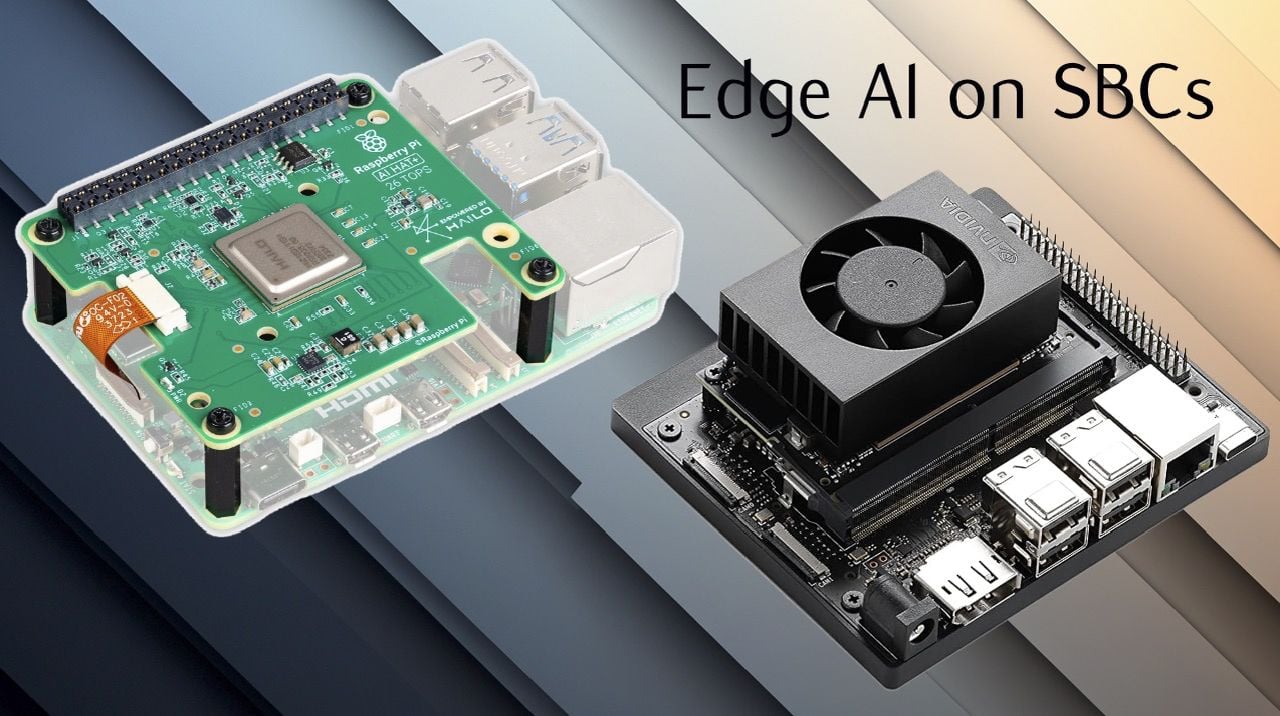
Raspberry Pi vs Hailo-8 vs Jetson Orin Nano : Edge AI Price, Power & Speed Compared
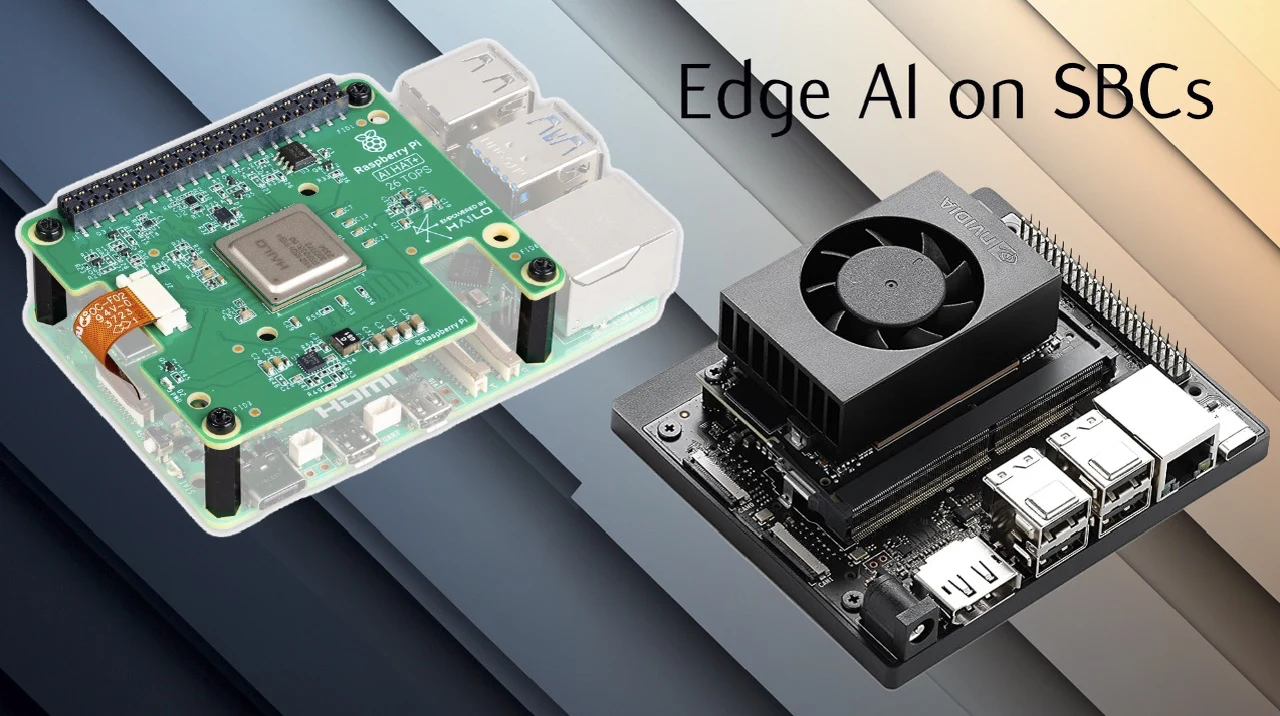
What if your next AI-driven project could process data in real-time, without relying on the cloud, all while maintaining lightning-fast speeds and ironclad privacy? As edge AI continues to transform industries, from autonomous drones to smart cameras, the choice of hardware becomes a critical decision. But not all devices are created equal. The Raspberry Pi 5, the Hailo-8 neural accelerator, and the NVIDIA Jetson Orin Nano each bring distinct strengths and trade-offs to the table. Whether you’re a hobbyist exploring IoT or a developer tackling industrial-grade AI, the stakes are high: choose the wrong setup, and you might sacrifice performance, energy efficiency, or even your budget.
This comprehensive comparison of edge AI hardware, Joyce Lin will help you navigate these choices with confidence. You’ll uncover how each contender handles real-time AI inference, balances power consumption, and meets the demands of diverse applications. Is the Raspberry Pi 5’s affordability enough to outweigh its limitations? Can the Hailo-8 accelerator transform the Pi into a real-time powerhouse? And does the Jetson Orin Nano’s raw performance justify its complexity? By the end, you’ll have a clear understanding of which solution aligns best with your goals, whether you’re building a smart home system or pushing the boundaries of robotics. The answer might surprise you.
What is Edge AI and Why It Matters
TL;DR Key Takeaways :
- Edge AI enables local data processing, reducing latency, enhancing privacy, and making sure reliable performance in low-connectivity environments, making it essential for real-time applications like robotics and smart cameras.
- The Raspberry Pi 5 is affordable and user-friendly but limited in processing power, making it suitable for non-real-time tasks like educational projects and basic IoT applications.
- Pairing the Raspberry Pi 5 with the Hailo-8 neural accelerator significantly boosts AI performance, achieving 77 FPS with low latency and energy efficiency, ideal for real-time applications like home security and automation systems.
- The NVIDIA Jetson Orin Nano delivers top-tier performance with 157 FPS and ultra-low latency, making it suitable for industrial-grade applications like robotics and advanced analytics, though it requires higher power and technical expertise.
- Choosing the right hardware depends on your project’s requirements, budget, and expertise, with trade-offs between cost, performance, and usability across the three configurations.
Edge AI enables devices to process data locally, eliminating the need for constant communication with cloud servers. This capability is critical for applications requiring real-time decision-making, such as autonomous drones, smart cameras, and robotics. By processing data on-site, you can reduce delays caused by network latency, mitigate the risk of data breaches, and maintain uninterrupted functionality even in low-connectivity environments.
Real-time AI inference, which involves processing data frame by frame, demands hardware that balances power, speed, and efficiency. The ability to handle these tasks effectively is what sets edge AI solutions apart, making them indispensable for industries where split-second decisions are crucial.
The Hardware Contenders
Three distinct hardware setups were evaluated for their ability to handle edge AI workloads effectively. Each offers unique strengths and trade-offs, making them suitable for different applications:
- Raspberry Pi 5: A versatile and affordable microcomputer popular among hobbyists and developers. While it is widely used for general-purpose computing, its limited processing power makes it less suitable for demanding real-time AI tasks.
- Raspberry Pi 5 + Hailo-8 Accelerator: By integrating the Hailo-8 neural accelerator, this setup significantly enhances the Raspberry Pi’s AI processing capabilities. It becomes a strong contender for real-time applications, offering a balance of performance and energy efficiency.
- NVIDIA Jetson Orin Nano: Designed for industrial-grade AI, this device features a dedicated GPU and tensor cores, offering exceptional performance. However, it comes with higher costs and a more complex setup process.
Edge AI Showdown: Raspberry Pi vs Hailo-8 vs Jetson Orin Nano

Below are more guides on Edge AI from our extensive range of articles.
- Microsoft Edge Copilot AI Mode: A Guide to Its New 2025 AI Tools
- Edge AI Intel Arc A380E Graphics Card from ADLINK’s
- Edge AI vs Cloud AI what are the differences and why they matter
- The Role of Cloud Computing in Shaping Edge AI Technology
- Palit Pandora Edge AI System Transforming Robotics & Retail
- 5 AI Browser Features in Microsoft Edge’s New Copilot Mode
- Edge AI Computing New ASUS IoT’s New Tinker Board 3
- MSI MS-C906 ultra-low-power fanless mini PC Edge AI
- Tokay Lite no-code Edge AI camera with TensorFlow Lite support
- How the Jetson Orin Nano Transforms Edge AI Development $249
Performance Comparison
To evaluate these setups, key metrics such as processing speed, latency, power consumption, and thermal stability were analyzed. Each configuration demonstrates distinct performance characteristics:
- Raspberry Pi 5: Achieves around 5 frames per second (FPS) for AI tasks, with high latency and a tendency to overheat without additional cooling. It is best suited for non-real-time applications like dashboards, educational projects, or basic IoT tasks.
- Raspberry Pi 5 + Hailo-8: With the Hailo-8 accelerator, this setup delivers approximately 77 FPS with low latency in the tens of milliseconds. It consumes just 5 watts of power and maintains stable temperatures around 40°C, making it ideal for real-time AI tasks where energy efficiency is critical.
- NVIDIA Jetson Orin Nano: Offers top-tier performance with 157 FPS and ultra-low latency of about 7 milliseconds. However, it requires 13 watts of power and relies on active cooling to maintain stability, making it more power-intensive and better suited for industrial-grade applications.
Use Cases and Applications
Each hardware configuration has unique strengths, making them suitable for specific edge AI applications. Understanding these use cases can help you determine which setup aligns best with your project’s requirements:
- Raspberry Pi 5: Best for general-purpose tasks that don’t require real-time processing, such as basic analytics, educational experiments, or simple IoT projects. Its affordability and ease of use make it a great starting point for beginners.
- Raspberry Pi 5 + Hailo-8: Ideal for real-time applications like home security systems, smart cameras, and automation systems where low latency and energy efficiency are critical. This setup strikes a balance between performance and cost, making it suitable for small to medium-scale projects.
- NVIDIA Jetson Orin Nano: Tailored for industrial-grade applications, including robotics, advanced retail analytics, and safety-critical systems. Its superior performance makes it indispensable for high-stakes projects, though it requires a higher budget and technical expertise.
Challenges in Setup and Usability
Ease of setup is a crucial factor when choosing edge AI hardware, as it directly impacts the time and effort required to get your system operational. The Raspberry Pi 5 and its Hailo-8-enhanced version are relatively straightforward to configure, making them accessible to beginners and hobbyists. Their user-friendly setup process allows you to focus on developing applications rather than troubleshooting hardware.
In contrast, the NVIDIA Jetson Orin Nano requires more advanced technical knowledge. Its firmware configuration and setup process can be complex, potentially deterring less experienced users. However, for seasoned developers working on high-stakes projects, the additional effort is often justified by its superior performance and advanced capabilities. This trade-off highlights the importance of aligning your technical expertise with the complexity of the hardware you choose.
Making the Right Choice
Selecting the right hardware for edge AI depends on your specific requirements, budget, and technical expertise. If you’re seeking an affordable option for non-real-time tasks, the Raspberry Pi 5 is a practical choice. For a balance of performance and cost, the Raspberry Pi 5 with the Hailo-8 accelerator offers an excellent solution for real-time applications. Meanwhile, the NVIDIA Jetson Orin Nano is the go-to option for industrial-grade workloads, provided you’re prepared to navigate its complexity.
By weighing the trade-offs between cost, performance, and usability, you can make an informed decision that aligns with your edge AI goals. Whether you’re building a smart home system, developing robotics, or exploring AI-driven analytics, understanding these hardware options ensures you’re equipped to meet the demands of your application.
Media Credit: Joyce Lin
Filed Under: AI, Guides, Hardware
Latest Geeky Gadgets Deals
Disclosure: Some of our articles include affiliate links. If you buy something through one of these links, Geeky Gadgets may earn an affiliate commission. Learn about our Disclosure Policy.