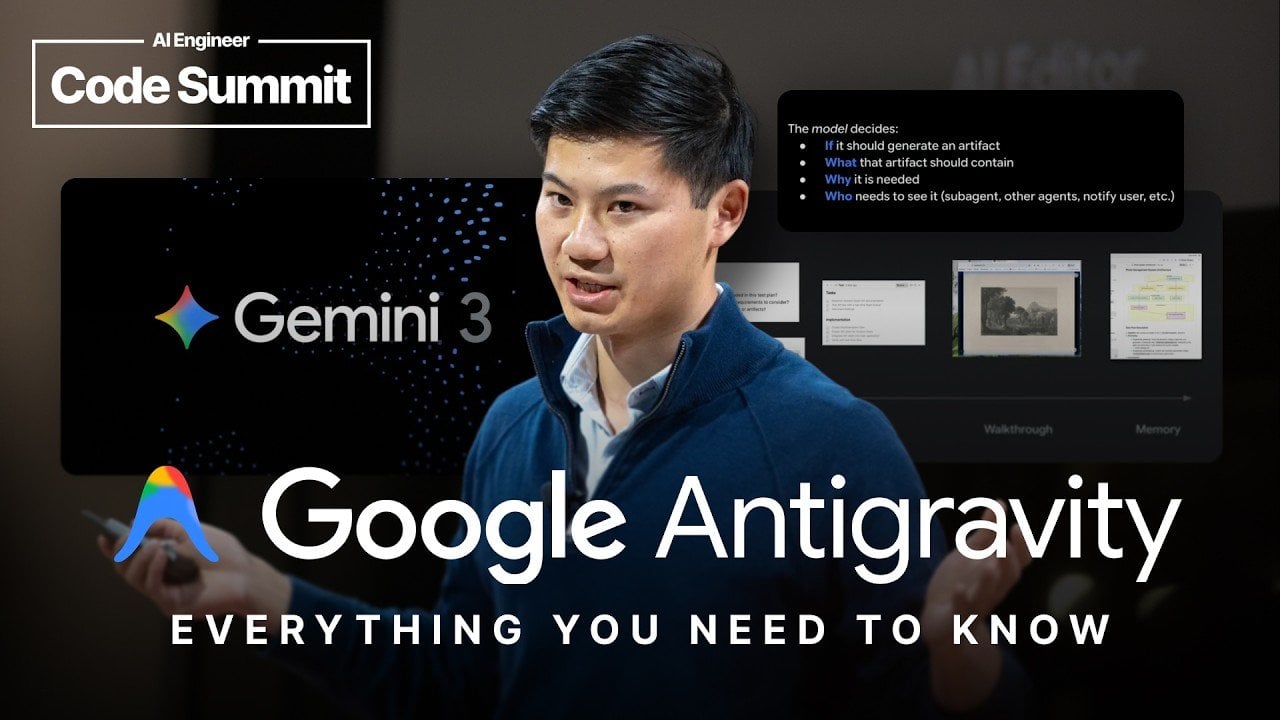
Google Antigravity : Everything You Need to Know for 2026
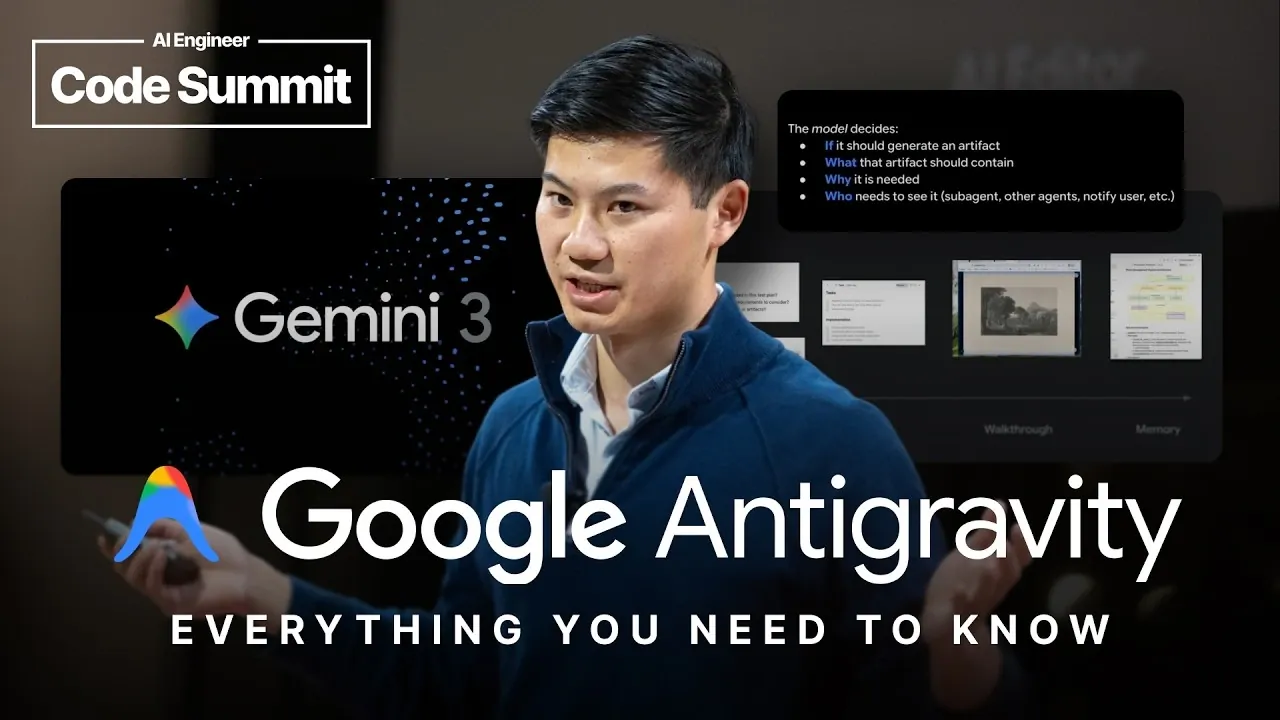
What if the future of software development wasn’t just about writing better code, but about reshaping the very relationship between humans and machines? With Google DeepMind’s new platform, Anti-gravity, this vision is no longer a distant possibility, it’s here. Powered by the advanced Gemini 3 AI model, Anti-gravity introduces an “agent-first” philosophy that redefines how developers collaborate with artificial intelligence. Imagine an Integrated Development Environment (IDE) where AI agents don’t just assist but actively co-create, autonomously managing complex workflows while providing dynamic, visual feedback to keep you in control. This isn’t just an evolution of tools; it’s a revolution in how we build the future.
In this overview, AI Engineer explain how Anti-gravity’s innovative features—from its intelligent AI Editor to its agent-controlled browser, are setting a new standard for productivity and creativity in software development. You’ll discover how its seamless integration of automation and manual control fosters a collaborative environment where human expertise and AI capabilities amplify one another. Whether it’s the dynamic artifacts that bring clarity to AI outputs or the multimodal functionality that adapts to diverse project needs, Anti-gravity offers a glimpse into a world where limitations dissolve, and possibilities expand. Could this be the moment where software development truly defies gravity?
Google DeepMind’s Anti-gravity IDE
TL;DR Key Takeaways :
- Google DeepMind’s “Anti-gravity” is an AI-powered Integrated Development Environment (IDE) designed with an “agent-first” philosophy to enhance developer productivity and collaboration with AI agents.
- The platform features three core components: an AI Editor for intelligent coding assistance, an Agent Manager for task coordination, and an Agent-Controlled Browser for autonomous web interactions.
- Dynamic visual feedback through “artifacts” like plans, diagrams, and screen recordings improves communication and collaboration between developers and AI agents.
- Powered by the advanced Gemini 3 AI model, Anti-gravity excels in instruction-following, multimodal functionality, and browser integration for seamless and versatile development processes.
- Anti-gravity balances AI-driven automation with manual control, fostering a collaborative environment that redefines software development by allowing greater efficiency, precision, and innovation.
Core Features of Anti-gravity
Anti-gravity is built on three foundational components, each tailored to enhance your development experience and optimize collaboration with AI agents:
- AI Editor: The AI Editor is an intelligent workspace that offers advanced features such as rapid autocomplete, contextual agent-sidebars, and seamless integration with the agent manager. These tools allow you to work collaboratively with AI agents directly within your coding environment, allowing faster and more efficient development cycles.
- Agent Manager: Acting as a centralized control hub, the agent manager provides oversight of multiple agents, tracks tasks, and manages notifications. It offers a high-level view of agent activities, moving beyond traditional code diffs to deliver a comprehensive understanding of progress and task execution.
- Agent-Controlled Browser: This feature enables agents to interact autonomously with web applications, execute JavaScript, and verify tasks using screen recordings. By allowing agents to retrieve and validate information independently, this browser functionality enhances their ability to complete tasks with precision and reliability.
Artifacts: Dynamic Visual Feedback for Enhanced Collaboration
A standout feature of Anti-gravity is its introduction of artifacts, dynamic, visual representations of outputs generated by AI agents. These artifacts include plans, diagrams, and screen recordings, serving as tangible feedback tools that bridge the gap between you and the AI agents. By providing clear and actionable visual outputs, artifacts improve communication, making it easier to monitor progress, refine tasks, and iterate efficiently. This feature ensures that you remain informed and in control throughout the development process.
Google Antigravity with Kevin Hou, Google DeepMind
Take a look at other insightful guides from our broad collection that might capture your interest in Google DeepMind.
- Google DeepMind Jules 3.0 AI Update Will Change How You Code
- Google DeepMind’s Gemini 3.0 Pro: Features, Benefits and Impact
- Gemini 3 Pro Support in Antigravity, Google DeepMind’s Agent IDE
- Google DeepMind AlphaProof AI solves advanced reasoning
- Google DeepMind CEO Demis Hassabis Unveils AGI Roadmap
- Google DeepMind Gemini CLI 3.0 & GenKit Extension Framework
- Google DeepMind’s Gemini Agent : Autonomous Al Coding Agent
- How Google DeepMind Uses Video Games to Train Advanced AI
- Google DeepMind CEO explains more about AlphaFold 3
- Google DeepMind Launches Pomelli : Simplifying Marketing for
Gemini 3: The AI Engine Behind Anti-gravity
At the heart of Anti-gravity lies the Gemini 3 AI model, which drives its advanced capabilities and ensures a seamless development experience. Gemini 3 introduces several key enhancements that elevate the platform’s functionality:
- Instruction-Following and Reasoning: The AI excels at interpreting and executing complex instructions, allowing agents to manage intricate workflows with accuracy and efficiency.
- Multimodal Functionality: Anti-gravity supports text, images, and other media, allowing for richer and more versatile development processes. This multimodal capability ensures that the platform can adapt to diverse project requirements.
- Browser Integration: Agents can directly interact with web-based resources, retrieving and verifying contextual information to improve task accuracy and reliability.
These capabilities make Gemini 3 a cornerstone of Anti-gravity’s success, allowing developers to tackle complex challenges with the support of intelligent and adaptive AI agents.
Seamless Integration of Automation and Manual Control
Anti-gravity is designed to strike a balance between AI-driven automation and manual workflows, making sure that you retain control over your projects while benefiting from the efficiency of AI. The AI Editor allows you to intervene and make adjustments whenever necessary, while the agent manager coordinates tasks across multiple projects to maintain smooth operations. This integration fosters a collaborative environment where human expertise and AI capabilities complement each other, resulting in faster and more accurate development outcomes.
Collaboration Driving Continuous Improvement
The development of Anti-gravity reflects a close partnership between DeepMind’s research and product teams. This collaboration ensures that the platform evolves continuously, incorporating advancements in AI capabilities and user experience. By using Anti-gravity internally, Google engineers and researchers contribute to its refinement, driving innovation and practical enhancements. This iterative approach ensures that the platform remains at the forefront of AI-driven software development.
Redefining the Future of Software Development
Anti-gravity represents a significant leap forward in the evolution of AI tools for software development. Its ability to empower AI agents to autonomously handle increasingly complex tasks positions it as a fantastic platform in the industry. By integrating advanced AI models, multimodal functionality, and dynamic feedback mechanisms, Anti-gravity offers a glimpse into the future of AI-powered productivity. It redefines how you approach software development, allowing you to achieve greater efficiency, precision, and innovation in your projects.
Media Credit: AI Engineer
Latest Geeky Gadgets Deals
Disclosure: Some of our articles include affiliate links. If you buy something through one of these links, Geeky Gadgets may earn an affiliate commission. Learn about our Disclosure Policy.