Author: theplanetclicker_jgyx66

  • New Copilot Agents Turn Prompts into Apps, Workflows, and Microsoft Forms
    New Copilot Agents Turn Prompts into Apps, Workflows, and Microsoft Forms

    New Copilot Agents Turn Prompts into Apps, Workflows, and Microsoft Forms

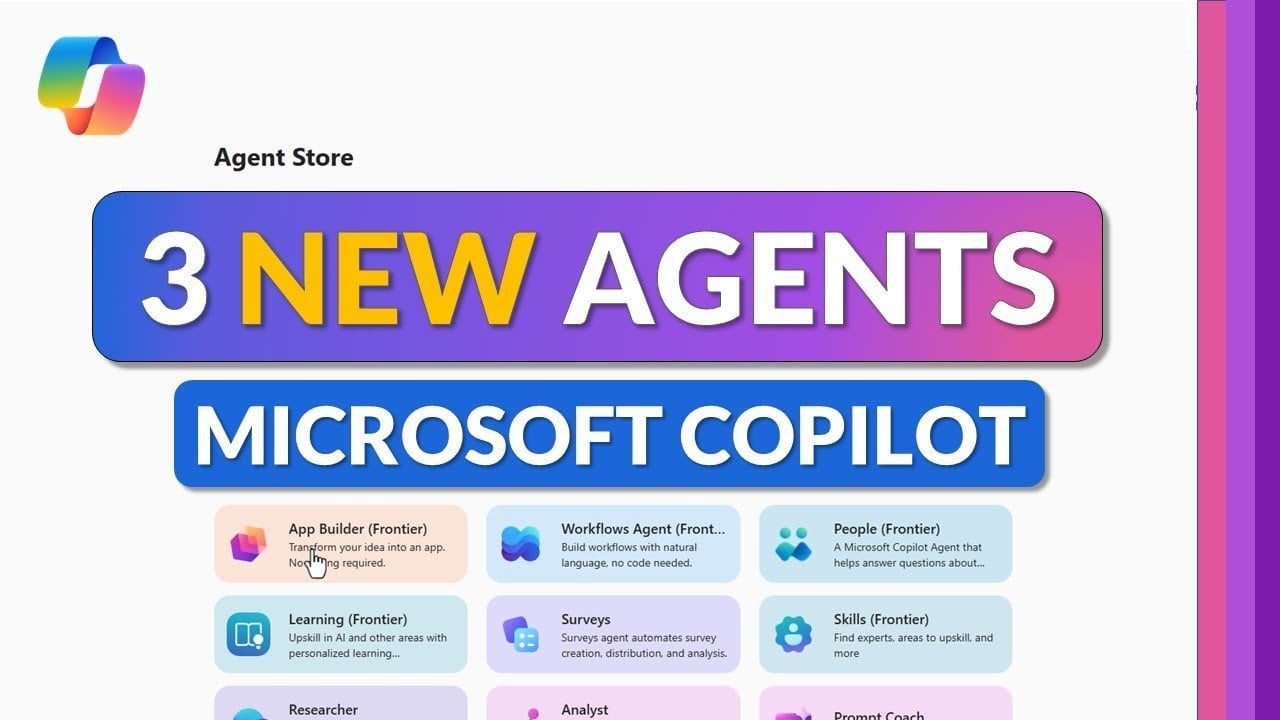
    Copilot shows App Builder, Workflows, and Surveys side by side, turning plain prompts into working tools.

    What if creating apps, automating workflows, or designing surveys was as simple as having a conversation? With the latest advancements in Microsoft 365 Copilot, this isn’t just a bold claim, it’s the new reality. By introducing three new agents, App Builder, Workflows, and Surveys, Microsoft is reshaping how we approach productivity. These tools use the power of natural language processing to break down complex tasks into effortless actions, making once-daunting processes accessible to everyone, regardless of technical expertise. Imagine building a custom app for your team or automating repetitive tasks in minutes, no coding, no hassle, just results.

    In this quick-start guide, Mike Tholfsen explains how these new agents can help you work smarter and faster. You’ll discover how the App Builder provide widespread access tos app creation, how the Workflows agent streamlines repetitive tasks, and how the Surveys agent transforms feedback collection into a seamless process. Along the way, we’ll highlight how these tools integrate seamlessly with Microsoft staples like SharePoint, Power Automate, and Teams, making sure your productivity ecosystem stays connected. Whether you’re a seasoned pro or just starting to explore automation, these tools are designed to meet you where you are. Let’s uncover how these innovations can redefine your daily workflow and unlock new possibilities.

    Microsoft 365 Copilot Agents Overview

    TL;DR Key Takeaways :

    • Microsoft 365 Copilot introduces three new agents, App Builder, Workflows, and Surveys, designed to simplify app creation, automate workflows, and streamline survey management using natural language processing.
    • App Builder: Enables users to create custom applications without coding, store them in SharePoint, and customize them in real time, making app development accessible to all skill levels.
    • Workflows Agent: Automates repetitive tasks with natural language commands, offering a user-friendly alternative to Power Automate for optimizing operations and boosting productivity.
    • Surveys Agent: Simplifies survey creation and analysis through Microsoft Forms integration, providing real-time customization and actionable insights for feedback collection.
    • Seamless integration with Microsoft tools like SharePoint, Power Automate, Forms, and Teams enhances collaboration, accessibility, and efficiency across the Microsoft ecosystem.

    App Builder: Simplified App Creation for Everyone

    The App Builder agent enables you to create fully functional applications without requiring any coding expertise. By simply describing your requirements in natural language, you can design apps that address specific needs. For instance, you might develop a task tracker to monitor project milestones or a custom meeting scheduler to streamline team coordination.

    Once created, these apps are stored in SharePoint lists, making sure they are easily accessible and shareable across your organization. The App Builder also supports real-time customization, allowing you to adjust app features as your needs evolve. This tool is currently available to early adopters through the Frontier program, making app development more inclusive and accessible for users of all skill levels. By removing technical barriers, the App Builder provide widespread access tos app creation, allowing you to focus on solving problems rather than learning complex programming languages.

    Workflows Agent: Automate and Optimize Routine Processes

    The Workflows agent simplifies task automation by allowing you to create workflows using natural language commands. Acting as a user-friendly alternative to Power Automate, this tool helps you handle repetitive tasks efficiently. For example, you can automate the generation of daily task summaries, schedule recurring reminders, or send notifications directly to Microsoft Teams.

    Customization is a key feature of the Workflows agent, allowing you to tailor workflows to meet your specific requirements. By automating time-consuming processes, this tool allows you to focus on strategic priorities, enhancing productivity across your team or organization. Whether you’re managing a small team or overseeing a large department, the Workflows agent provides a scalable solution for optimizing operations.

    How to Use the New Agents in Copilot
    Explore further guides and articles from our vast library that you may find relevant to your interests in Microsoft Copilot.

    Surveys Agent: Simplify Feedback Collection and Analysis

    The Surveys agent transforms the way you design and manage surveys by using Microsoft Forms technology. Using natural language commands, you can create surveys tailored to your objectives, whether you’re gathering employee feedback, assessing customer satisfaction, or planning an event.

    This tool offers extensive customization options, allowing you to adjust survey content, layout, and settings in real time. Robust response tracking features enable you to monitor participation rates and analyze results effectively, providing actionable insights. By integrating seamlessly with Microsoft Forms, the Surveys agent ensures that your surveys are both engaging and impactful. This streamlined approach to feedback collection helps you make informed decisions and drive meaningful improvements.

    Enhanced Integration Across the Microsoft Ecosystem

    These agents are designed to work seamlessly with existing Microsoft tools, enhancing their functionality and accessibility. Key integrations include:

    • SharePoint: Store and share apps created with the App Builder, fostering collaboration and accessibility across teams.
    • Power Automate: Use the Workflows agent to automate tasks and integrate with broader automation frameworks for enhanced efficiency.
    • Microsoft Forms: Use the Surveys agent to design, distribute, and analyze surveys with advanced customization options.
    • Microsoft Teams: Automate notifications and updates to keep your team informed and aligned on key tasks and priorities.

    Natural Language Processing: A New Era of Productivity

    The introduction of App Builder, Workflows, and Surveys agents underscores Microsoft 365 Copilot’s commitment to making advanced tools accessible to all users. By using natural language processing, these agents eliminate technical barriers, allowing you to focus on achieving tangible results. Whether you’re building apps, automating workflows, or collecting feedback, these tools provide an intuitive and user-friendly experience that enhances both productivity and collaboration.

    As organizations face increasing demands and complex workflows, these agents offer practical solutions for streamlining operations and fostering innovation. Their seamless integration into the Microsoft ecosystem ensures that users can maximize the potential of existing tools while exploring new possibilities. These advancements represent a significant step forward in the evolution of productivity tools, empowering individuals and teams to work smarter and achieve more in an increasingly dynamic workplace.

    Media Credit: Mike Tholfsen

    Filed Under: AI, Technology News, Top News

    Latest Geeky Gadgets Deals

    Disclosure: Some of our articles include affiliate links. If you buy something through one of these links, Geeky Gadgets may earn an affiliate commission. Learn about our Disclosure Policy.
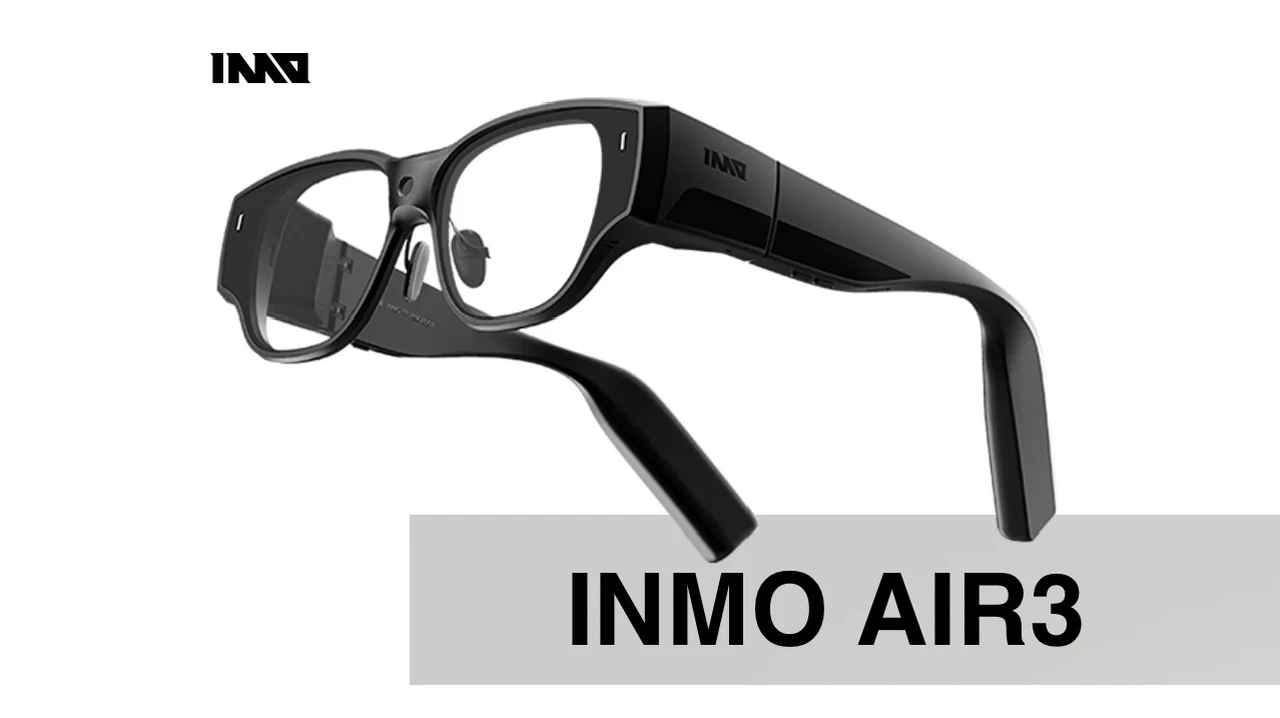
  • INMO Air 3 Runs Android, 1080p OLED, Private Screen, No Phone Needed

    INMO Air 3 Runs Android, 1080p OLED, Private Screen, No Phone Needed

    INMO Air 3 Runs Android, 1080p OLED, Private Screen, No Phone Needed

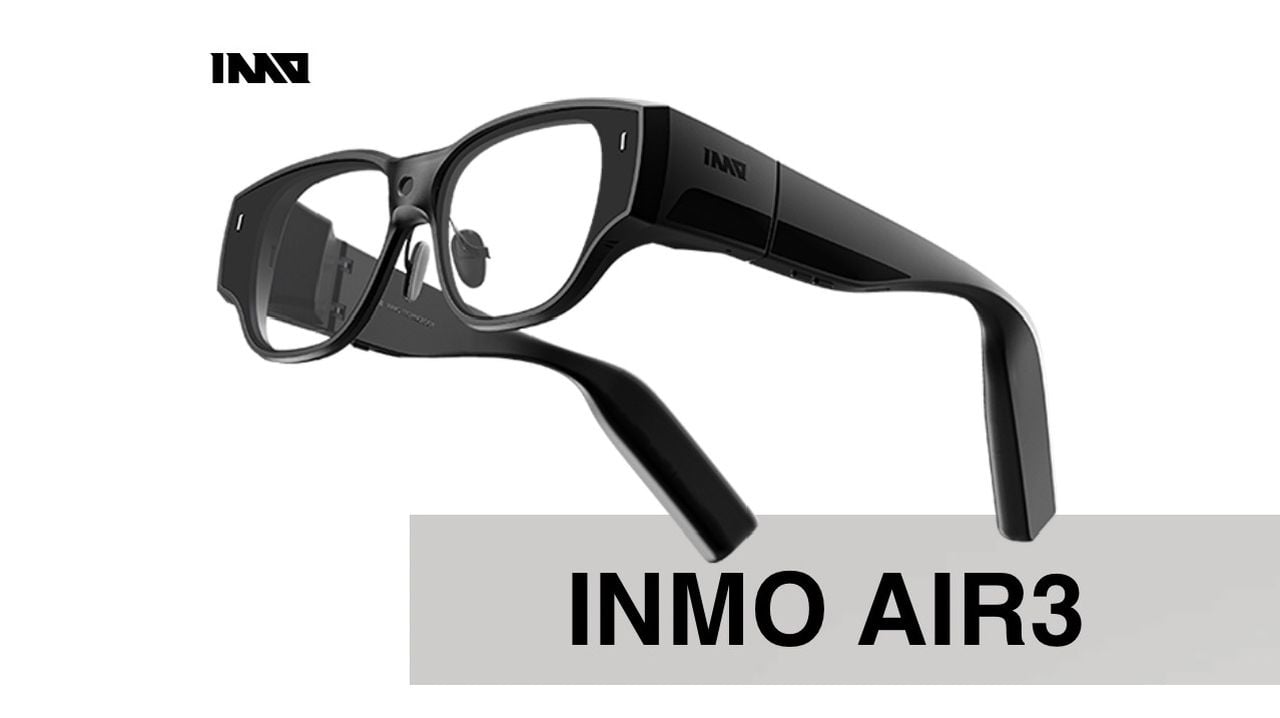
    What if your glasses weren’t just glasses? Imagine slipping on a sleek, lightweight pair that doesn’t just help you see the world, but transforms how you interact with it. The INMO Air 3 isn’t your typical pair of augmented reality (AR) glasses; it’s a fully self-contained device that redefines what wearable tech can do. Forget bulky headsets tethered to external hardware, this innovation packs advanced display technology, intuitive controls, and standalone functionality into a design so seamless, you might forget you’re wearing it. Whether you’re navigating a busy commute, diving into immersive gaming, or managing tasks on the go, the Air 3 promises to make your digital and physical worlds feel closer than ever.

    In this piece, TT Technology explain how the INMO Air 3 sets a new standard for AR devices, offering features that cater to both casual users and tech enthusiasts alike. From its vibrant 1080p Sony Micro OLED display to its hands-free camera and developer-friendly tools, this device is more than just a gadget, it’s a gateway to a smarter, more connected lifestyle. But what truly sets the Air 3 apart is its ability to function independently, without the need for a smartphone or external hardware. Could this be the future of augmented reality? Let’s unpack the possibilities and see how this innovative device is reshaping the way we experience media and technology.

    INMO Air 3 Overview

    TL;DR Key Takeaways :

    • The INMO Air 3 is a fully self-contained AR device, offering standalone functionality powered by the Snapdragon XR platform with 8GB RAM and 128GB storage, eliminating the need for external hardware.
    • Its lightweight and portable design, featuring a flat-lens structure, ensures comfort and extended wearability, making it ideal for on-the-go use in various environments.
    • The device features a 1080p Sony Micro OLED display with 600 nits brightness, a 36° field of view, and an anti-peeping layer, delivering immersive visuals and privacy for gaming, media, and productivity.
    • Equipped with a 16MP ultra-wide camera and intuitive controls, including a touchpad and optional Smart Ring 3 with 3D motion tracking, the Air 3 supports hands-free content creation and versatile interaction.
    • Developer-friendly tools, such as an OpenAI interface, SDK, and N8N workflow engine, enable customization and innovation, making the Air 3 a versatile platform for both consumers and developers.

    Lightweight and Portable Design

    The INMO Air 3 is engineered with comfort and portability in mind. Weighing significantly less than conventional AR headsets, it ensures extended wearability without causing strain. Its flat-lens design contributes to a natural and unobtrusive fit, making it ideal for use during commutes, travel, or even while navigating busy urban environments. Unlike many AR devices that rely on external battery packs, cables, or additional hardware, the Air 3 is entirely self-sufficient. This lightweight and portable design makes it an excellent choice for professionals, travelers, and anyone seeking a hassle-free AR experience that can adapt to their on-the-go lifestyle.

    High-Quality Display for Immersive Visuals

    The Air 3 is equipped with a 1080p Sony Micro OLED display, delivering sharp and vibrant visuals. With a brightness level of 600 nits, the display ensures excellent visibility even in bright outdoor settings, a feature that sets it apart from many competitors. Its 36° field of view creates the illusion of a 150-inch virtual screen, offering an immersive experience for gaming, media consumption, or productivity tasks. To enhance privacy, the device incorporates an anti-peeping layer, making sure that only the wearer can view the content displayed. This feature is particularly valuable for professionals handling sensitive information or for users in public spaces.

    INMO Air 3 Review

    Here are more guides from our previous articles and guides related to smart glasses that you may find helpful.

    Standalone Functionality Powered by Android

    At the heart of the Air 3 is the Snapdragon XR platform, which powers its fully independent operation. With 8GB of RAM and 128GB of internal storage, the device can run applications natively without requiring a connection to a smartphone or computer. Access to the Google Play Store and Google Mobile Services expands its functionality, allowing users to download and use a wide range of apps. The Air 3 also supports multitasking through floating windows, allowing you to manage multiple tasks efficiently. This standalone capability ensures that the device is not only versatile but also highly practical for users who need a reliable AR solution on the move.

    Intuitive and Versatile Controls

    Navigating the Air 3 is made simple through its multiple control options. A built-in touchpad on the glasses allows for intuitive swiping and tapping, allowing smooth interaction with menus and applications. For more advanced control, the INMO Smart Ring 3 introduces 3D motion tracking, offering precise input for AR applications and games. These versatile control methods ensure that the Air 3 is accessible to a wide range of users, from casual consumers to tech-savvy professionals. Whether you’re managing tasks or immersing yourself in AR environments, the controls are designed to be both intuitive and efficient.

    Hands-Free Camera for Content Creation

    The Air 3 features a 16MP ultra-wide camera with a 120° field of view, making it an excellent tool for hands-free photography and videography. This functionality is particularly beneficial for content creators, travelers, and professionals who need to document moments or create media without relying on additional equipment. Whether you’re capturing scenic landscapes, recording vlogs, or taking group photos, the camera delivers high-quality results. Its hands-free design ensures that you can focus on your activities while still producing professional-grade content.

    Immersive Gaming and Entertainment

    For gaming enthusiasts, the Air 3 transforms the way you experience digital entertainment. Supporting both Android games and cloud gaming services, it turns the virtual 150-inch display into a dynamic gaming platform. Bluetooth connectivity allows you to pair accessories such as controllers, enhancing gameplay and providing a more traditional gaming setup. Whether you’re a casual gamer exploring new titles or a dedicated player seeking immersive experiences, the Air 3 offers a versatile and engaging platform for entertainment.

    Developer-Friendly Tools for Innovation

    The Air 3 is not just a consumer device; it also serves as a powerful tool for developers. With an OpenAI interface and SDK, it enables the creation of custom applications and AI-driven tools tailored to specific needs. The integration of the N8N workflow engine further supports automation and customization, making the Air 3 a versatile platform for innovation. These developer-friendly tools encourage experimentation and creativity, positioning the Air 3 as a valuable asset for those looking to push the boundaries of AR technology.

    Everyday Features for Practical Use

    Designed with practicality in mind, the Air 3 includes a range of features to enhance everyday usability. Bluetooth compatibility allows you to connect accessories such as keyboards and headphones, expanding its functionality for both work and leisure. The customizable screen brightness ensures optimal visibility in various lighting conditions, while an optional sunglasses attachment adds further convenience for outdoor use. These thoughtful features make the Air 3 a well-rounded device suitable for diverse scenarios, from casual media consumption to professional productivity.

    Redefining Augmented Reality

    The INMO Air 3 sets a new benchmark for what augmented reality glasses can achieve. By combining innovative technology with a lightweight, portable design, it offers a seamless blend of functionality and convenience. From immersive gaming and hands-free content creation to productivity and media consumption, the Air 3 caters to a wide range of applications. With its advanced display, standalone capabilities, and developer-friendly tools, the Air 3 is more than just a device, it’s a glimpse into the future of augmented reality, designed to enhance and simplify your digital interactions.

    Media Credit: TT Technology

    Filed Under: AI, Technology News, Top News

    Latest Geeky Gadgets Deals

    Disclosure: Some of our articles include affiliate links. If you buy something through one of these links, Geeky Gadgets may earn an affiliate commission. Learn about our Disclosure Policy.

  • Meet the MS Excel AI Assistant That Plans, Builds and Fixes Your Tasks & Workflows

    Meet the MS Excel AI Assistant That Plans, Builds and Fixes Your Tasks & Workflows

    Meet the MS Excel AI Assistant That Plans, Builds and Fixes Your Tasks & Workflows

    Setup screen displays Excel Labs add-in and Copilot license prompt required to start the autonomous assistant.

    Have you ever wished your spreadsheets could think for themselves? Imagine an Excel feature so advanced it doesn’t just assist you, it acts as your personal data analyst, automating complex tasks and delivering insights in real time. Enter AI Agent Mode, a innovative tool in Microsoft Excel that’s transforming how professionals handle data. Whether you’re juggling sales reports, building dashboards, or analyzing market trends, this feature takes the heavy lifting off your plate, allowing you to focus on the bigger picture. Developed as part of Microsoft’s innovative AI initiatives, AI Agent Mode is more than a helper; it’s a proactive partner in your workflow, designed to simplify even the most intricate data challenges.

    In the below step-by-step video instructional feature, created by the experts at Teacher’s Tech, you’ll uncover how to unlock the full potential of AI Agent Mode. From setting up the Excel Labs add-in to using its ability to generate dynamic dashboards and integrate external data, this guide walks you through every essential detail. Along the way, you’ll discover how this tool adapts to your specific goals, offering tailored solutions that save time and boost accuracy. Ready to see how AI can transform your approach to data? Let’s explore what’s possible when Excel becomes more than a spreadsheet, it becomes your strategic ally.

    Understanding Excel AI Agent Mode

    TL;DR Key Takeaways :

    • AI Agent Mode in Microsoft Excel automates complex tasks like data analysis, pivot table creation, and dashboard generation, acting as a virtual junior data analyst.
    • The feature is available in preview for users with a Microsoft 365 Copilot license and the Excel Labs add-in, accessible via Excel for the web or desktop.
    • Key functionalities include proactive task execution, dynamic updates, external data integration, and conversational feedback for refining outputs.
    • Practical applications include sales reporting, performance dashboards, and data modeling, allowing professionals to focus on strategic decision-making.
    • While powerful, AI Agent Mode requires well-organized data, active oversight, and manual adjustments to address limitations and ensure accuracy.

    AI Agent Mode is a robust tool designed to automate intricate tasks such as data analysis, pivot table creation, and dashboard generation. Unlike the standard Microsoft 365 Copilot, which provides passive assistance, AI Agent Mode actively plans, executes, and refines tasks based on your specific goals. Acting as a virtual junior data analyst, it adapts to your needs, whether you’re working with sales metrics, financial reports, or external market data. This adaptability makes it a versatile solution for professionals seeking efficiency without compromising precision.

    Key highlights of AI Agent Mode include:

    • Proactive task execution based on user-defined objectives.
    • Dynamic adaptability to various data types and structures.
    • Integration with external data sources for comprehensive analysis.

    By using these capabilities, AI Agent Mode transforms how you interact with data, allowing faster and more accurate decision-making.

    Setting Up and Accessing AI Agent Mode

    To begin using AI Agent Mode, ensure you meet the following prerequisites:

    • A valid Microsoft 365 Copilot license.
    • The Excel Labs add-in installed on your system.
    • Enrollment in the Windows Insider beta channel for preview access.

    Once these requirements are fulfilled, you can access AI Agent Mode through Excel for the web or desktop. After installation, the feature becomes readily available, allowing you to automate workflows and streamline data management processes. This setup ensures that you are equipped to maximize the potential of AI-driven automation in Excel.

    How to Use AI Agent Mode in Microsoft Excel

    Below are more guides on AI Agents from our extensive range of articles.

    Key Features and Functionalities

    AI Agent Mode offers a suite of advanced features designed to enhance productivity and streamline data workflows. These include:

    • Automated Pivot Tables and Dashboards: The AI generates pivot tables, charts, and dashboards based on your specified objectives, saving significant time.
    • Dynamic Updates: Data and visualizations are automatically updated as new information is added, making sure real-time accuracy.
    • External Data Integration: Seamlessly incorporates external data sources, such as market trends or economic indicators, into your analysis.
    • Conversational Feedback: Enables you to refine outputs through natural language prompts, tailoring results to your specific needs.

    For instance, if you need a sales performance dashboard, you can provide your objectives, and the AI will generate the necessary pivot tables, charts, and summaries. As new sales data is added, the dashboard updates automatically, making sure that your insights remain current and actionable.

    How AI Agent Mode Differs from Standard Copilot

    While Microsoft 365 Copilot offers formula suggestions and answers specific queries, AI Agent Mode takes a more proactive and goal-oriented approach. It not only interprets your instructions but also executes tasks independently, adapting to your objectives. This makes it particularly effective for automating repetitive or complex workflows, freeing up your time for higher-level analysis and decision-making. Key distinctions include:

    • Proactive Execution: AI Agent Mode actively completes tasks based on your goals, unlike Copilot’s reactive assistance.
    • Goal-Oriented Design: It focuses on achieving specific outcomes, such as generating reports or creating dashboards, with minimal input.
    • Adaptability: The tool adjusts to various data types and user requirements, offering a tailored experience.

    This proactive functionality positions AI Agent Mode as an indispensable tool for professionals managing data-intensive tasks.

    Practical Applications and Use Cases

    AI Agent Mode is particularly effective for tasks that require precision, efficiency, and adaptability. Common use cases include:

    • Sales Reporting: Automatically generates detailed sales reports with visualizations, saving time and effort.
    • Performance Dashboards: Creates dashboards to monitor key performance metrics, making sure real-time insights.
    • Data Modeling: Incorporates external factors, such as inflation rates or market trends, into your data models for more comprehensive analysis.

    By automating these processes, AI Agent Mode allows you to allocate more time to strategic initiatives, enhancing overall productivity.

    Best Practices for Effective Use

    To maximize the benefits of AI Agent Mode, consider the following best practices:

    • Define Clear Goals: Clearly articulate your objectives to ensure accurate and relevant results.
    • Review Outputs: Treat the AI as a junior assistant that requires oversight, carefully reviewing its outputs and formulas.
    • Use Feedback Loops: Provide conversational prompts to refine and iterate on the results, improving accuracy and relevance.

    For example, if the AI generates a chart that doesn’t fully meet your expectations, you can provide feedback to adjust its parameters or improve the visualization. This iterative process ensures that the outputs align with your specific needs.

    Limitations and Considerations

    As a preview feature, AI Agent Mode has certain limitations. It may occasionally produce errors or struggle with highly complex tasks. Additionally, its performance depends on the quality and structure of your data. To mitigate these challenges, it is essential to:

    • Ensure your data is well-organized and accurately formatted.
    • Review and validate the AI’s outputs to maintain accuracy.
    • Be prepared to make manual adjustments when necessary.

    By understanding these limitations, you can use AI Agent Mode more effectively, using its strengths while addressing its shortcomings.

    Advanced Tools to Enhance Your Workflow

    AI Agent Mode includes additional features that cater to more sophisticated data challenges:

    • Claude: Handles intricate logic chains and complex data reasoning, allowing advanced analysis.
    • Dynamic Summaries: Automatically generates summaries that adapt to changes in your data, making sure up-to-date insights.
    • Helper Blocks: Organizes and structures data for improved clarity and usability, streamlining workflows.

    These tools provide added flexibility, allowing you to tackle complex scenarios with confidence and efficiency.

    Empowering Data Management with AI Agent Mode

    AI Agent Mode in Microsoft Excel represents a significant advancement in data management, offering a seamless transition from manual processes to AI-driven workflows. By automating repetitive tasks and providing dynamic, goal-oriented assistance, it enables professionals to achieve more in less time. While it requires active oversight to verify and refine outputs, its ability to adapt to user needs makes it an invaluable tool for anyone working with data. With AI Agent Mode, you can streamline your workflows, enhance productivity, and focus on what truly matters, strategic decision-making.

    Media Credit: Teacher’s Tech

    Filed Under: AI, Guides

    Latest Geeky Gadgets Deals

    Disclosure: Some of our articles include affiliate links. If you buy something through one of these links, Geeky Gadgets may earn an affiliate commission. Learn about our Disclosure Policy.

  • The Future of Dynamic UIs Design : Redefining B2B SaaS Products in 2026

    The Future of Dynamic UIs Design : Redefining B2B SaaS Products in 2026

    The Future of Dynamic UIs Design : Redefining B2B SaaS Products in 2026

    A diagram concept showing systems of record, an agent layer, and disposable pixels generating task views.

    What if the very thing you’ve spent years perfecting, your beautifully designed user interface, becomes irrelevant? It’s not just a provocative question; it’s a looming reality. By 2026, the rise of agent-driven systems and ephemeral UIs could render traditional user interfaces obsolete. Imagine a world where users no longer click through dashboards or navigate static screens, but instead interact with software through dynamic, task-specific layers or AI agents that bypass visual interfaces entirely. This isn’t a distant sci-fi scenario, it’s a transformation already underway, and clinging to outdated design paradigms could leave your product struggling to stay relevant in this evolving ecosystem.

    In this breakdown, Nate B Jones explores why static UIs are losing ground and what you should build instead to thrive in the era of generative and agentic technologies. From the rise of disposable pixels to the critical role of APIs and modular systems, this shift demands a fundamental rethinking of how software is designed and delivered. Whether you’re a product manager, designer, or engineer, understanding these changes isn’t just helpful, it’s essential. The future of software isn’t about creating interfaces that last; it’s about building systems that adapt, evolve, and disappear when they’re no longer needed. So, what does it take to build for a world where permanence is no longer the goal?

    The Changing Landscape of User Interfaces

    TL;DR Key Takeaways :

    • By 2026, traditional static user interfaces (UIs) are expected to be replaced by dynamic, context-driven systems powered by generative and agentic technologies.
    • Generative UIs and ephemeral interfaces are transforming software design, allowing on-demand, task-specific, and disposable visual elements.
    • Three key forces driving this shift are generative UIs, ephemeral UIs, and agentic software, which prioritize adaptability and efficiency over permanence.
    • Software development is evolving to focus on modular systems, agent compatibility, and APIs, with less emphasis on static, visually rich interfaces.
    • While dynamic UIs dominate, traditional UIs still hold value in areas like cognitive mapping, compliance, and team collaboration, where stability and predictability are essential.

    For decades, user interfaces were designed to be durable. High development costs and technical limitations necessitated interfaces that were carefully crafted, rigorously tested, and maintained over time. However, the emergence of generative UIs has disrupted this paradigm. Today, interfaces can be generated on demand, customized to meet specific user needs, and discarded just as quickly. These “ephemeral UIs” are hyper-contextual, existing only when required to complete a task or deliver precise information.

    Generative tools such as UISard and Nano Banana Pro exemplify this shift. These systems can create entire screens or mockups from simple text inputs or contextual data, allowing a level of flexibility and responsiveness previously unattainable. As a result, the pixel, once the cornerstone of software design, has become a transient artifact, serving as a temporary means to an end rather than a permanent fixture.

    Three Forces Driving the Shift

    The transition toward dynamic UIs is being propelled by three interconnected trends that are redefining the software landscape:

    • Generative UIs: These systems dynamically create interfaces based on user inputs or contextual cues, significantly reducing the need for pre-designed screens and static layouts.
    • Ephemeral UIs: Interfaces are now disposable, designed to appear and disappear as needed, aligning seamlessly with specific tasks or user intents.
    • Agentic Software: AI-driven agents automate tasks, interpret user intent, and generate outputs, often bypassing traditional UIs entirely in favor of direct, intent-driven interactions.

    These forces are not only changing how interfaces are built but also how users interact with software, emphasizing adaptability and efficiency over permanence and predictability.

    Agents Will Kill Your Ul by 2026 : Unless You Build This Instead

    Here is a selection of other guides from our extensive library of content you may find of interest on Generative UIs.

    How Software Layers Are Evolving

    This paradigm shift is fundamentally altering the structure of software, particularly its core layers. The traditional emphasis on static, visually rich interfaces is giving way to a more modular and dynamic approach:

    • Layer 1: Durable Systems of Record: Core elements such as data models, workflows, and system integrity remain essential. These foundational components enable automation and ensure reliability.
    • Layer 2: Agentic Layers: These layers interpret user intent and execute tasks, acting as intermediaries that bridge the gap between users and underlying systems.
    • Layer 3: Disposable Pixels: Visual interfaces are now transient, designed to fulfill specific tasks and then disappear, reducing the need for static dashboards and permanent UI elements.

    For software creators, this evolution necessitates a shift in focus. The priority is no longer on building enduring, visually stunning interfaces but on creating flexible, modular systems that can adapt to user needs in real time. APIs, data semantics, and agent compatibility are becoming the cornerstones of modern software design.

    What This Means for B2B SaaS

    The implications of this shift are particularly profound for B2B SaaS products. These platforms are increasingly evolving into ecosystems for agent-driven interactions rather than standalone tools. This transformation requires a fundamental rethinking of software design and development strategies:

    • APIs and Data Semantics: These elements now take precedence over traditional UIs, allowing seamless integration with agentic systems and other platforms.
    • Generative UIs: By reducing the need for maintaining low-traffic pages, generative UIs allow development teams to focus on high-impact areas that deliver greater value to users.
    • Agent Compatibility: Making sure compatibility with AI-driven systems is critical for allowing smooth, automated workflows and enhancing user experiences.

    This shift is not just a technical challenge but also a strategic one, requiring organizations to align their goals and processes with the demands of a rapidly evolving digital ecosystem.

    How Roles and Workflows Are Changing

    The rise of generative and agentic technologies is also transforming roles within software development teams. Traditional responsibilities are being redefined to align with the demands of dynamic, intent-driven systems:

    • Designers: Instead of focusing on static screens, designers now define interface grammars, constraints, and design systems that guide generative tools.
    • Product Managers: The emphasis shifts from static feature roadmaps to understanding user intents, defining safe state transitions, and making sure seamless task completion.
    • Engineers: Developers prioritize building stable, composable interfaces that support agents and generators, with a focus on validation logic and system reliability.

    These changes highlight the need for cross-functional collaboration and a shared understanding of how generative and agentic technologies can be used to create more adaptive and user-centric software.

    Where Traditional UIs Still Have an Edge

    Despite the advancements in generative and agentic technologies, there are scenarios where traditional UIs remain indispensable. These include:

    • Cognitive Mapping: Stable interfaces are essential for tasks that rely on spatial memory, such as financial trading, medical diagnostics, or complex data analysis.
    • Audit and Compliance: Regulated industries require consistent, reproducible workflows to ensure accountability and meet legal standards.
    • Team Collaboration: Shared, coherent views are necessary for collaborative decision-making, communication, and coordination among team members.

    In these contexts, the permanence and predictability of traditional UIs provide advantages that dynamic, ephemeral interfaces cannot yet replicate.

    Winners and Losers in the New Era

    As the software landscape continues to evolve, certain products and teams are better positioned to thrive in this new environment:

    • Winners: Products that are agent-compatible, schema-clean, and composable will excel. Teams that treat UI as a runtime language rather than a static artifact will lead the way in innovation and adaptability.
    • Losers: Products that rely solely on traditional interfaces or resist integration with agentic systems will struggle to remain relevant in a rapidly changing market.

    The ability to embrace change and use emerging technologies will be the defining factor for success in this new era of software development.

    Looking Ahead

    By 2026, agent-driven interactions are expected to dominate, fundamentally altering how software is built, deployed, and used. Users will increasingly rely on AI agents to perform tasks, bypassing traditional UIs in favor of dynamic, intent-driven interfaces. For software creators, the challenge is clear: adapt to this new reality or risk obsolescence. The future belongs to those who can build flexible, modular systems that seamlessly integrate with the agentic technologies shaping tomorrow’s digital landscape.

    Media Credit: AI News & Strategy Daily | Nate B Jones

    Filed Under: AI, Guides

    Latest Geeky Gadgets Deals

    Disclosure: Some of our articles include affiliate links. If you buy something through one of these links, Geeky Gadgets may earn an affiliate commission. Learn about our Disclosure Policy.

  • AI Note Taking Tools for Every Budget Compared : Hybrid or Virtual For You?

    AI Note Taking Tools for Every Budget Compared : Hybrid or Virtual For You?

    AI Note Taking Tools for Every Budget Compared : Hybrid or Virtual For You?

    Plaude dashboard highlighting GDPR, HIPAA, and ISO compliance settings for secure handling of sensitive meeting notes.

    What if your meeting notes could write themselves, accurately, securely, and in real time? With the rise of AI-powered note-taking tools, this is no longer a futuristic dream but a practical reality. From virtual meetings to hybrid setups, these tools promise to save time, reduce errors, and even enhance collaboration. But with so many options, Plaude Note, Otter AI, Zoom’s built-in tools, and more, how do you decide which one is truly the best for your needs? The stakes are high: choose the wrong tool, and you might end up with incomplete transcripts, data security concerns, or features that just don’t fit your workflow. So, which AI note-taker stands out in this crowded field?

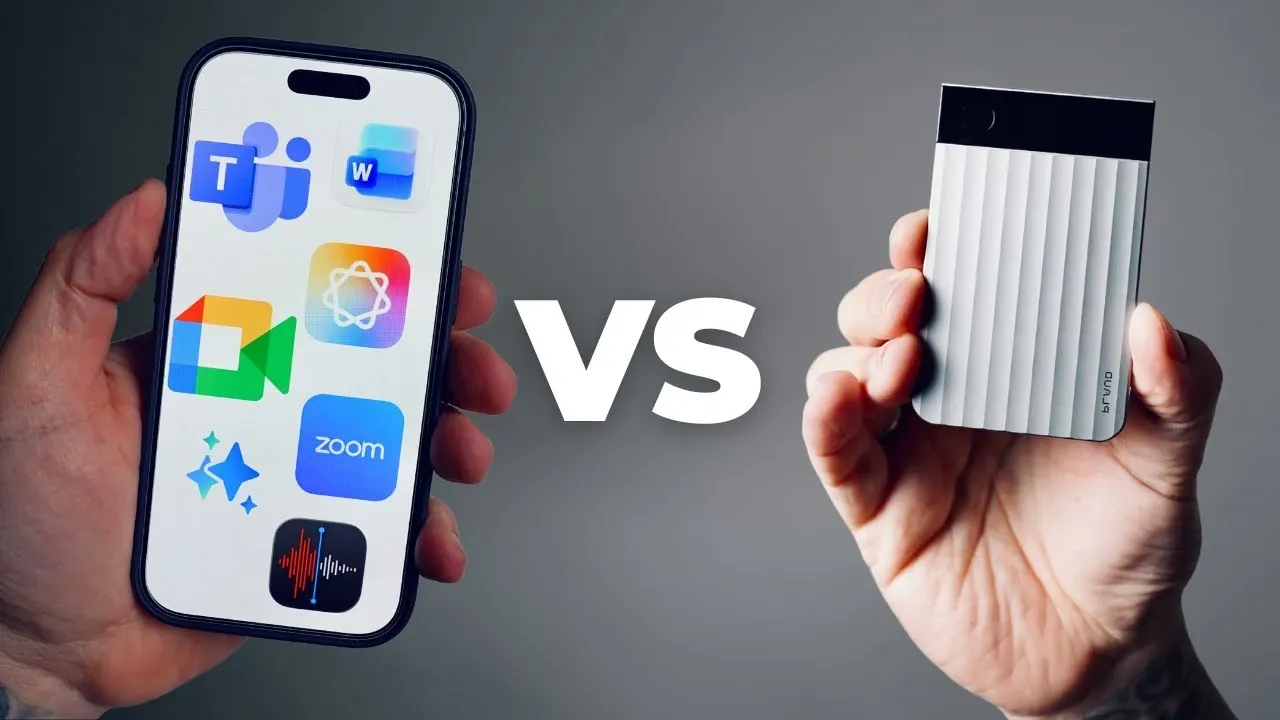
    In the video below, Mark Gilroy compares some of the most popular options, breaking down their strengths, limitations, and ideal use cases. Whether you’re looking for real-time transcription, offline functionality, or seamless integration with platforms like Zoom or Microsoft Teams, this guide will help you navigate the choices. You’ll discover how tools like Plaude Note cater to professionals with advanced features and robust security, while Otter AI shines in virtual environments with its user-friendly design. By the end, you’ll have a clearer sense of which AI note-taker aligns with your priorities, be it affordability, accessibility, or innovative functionality. After all, the right tool isn’t just about taking notes; it’s about transforming how you work.

    AI Note-Taking Tool Comparison

    TL;DR Key Takeaways :

    • AI-powered note-taking tools enhance meeting documentation with improved efficiency, accuracy, and accessibility across various formats (virtual, hybrid, in-person).
    • Plaude Note stands out for hybrid/in-person use with features like offline functionality, real-time transcription, speaker differentiation, and robust data security (GDPR, HIPAA, ISO compliance).
    • Otter AI excels in virtual meetings with real-time transcription, keyword search, and seamless integration with platforms like Zoom and Microsoft Teams.
    • Built-in tools from platforms like Zoom, Google Meet, and Microsoft Teams offer convenience and team collaboration but are limited to their ecosystems and less effective for hybrid/in-person use.
    • Choosing the right tool depends on specific needs, with Plaude Note ideal for secure and offline use, Otter AI for virtual collaboration, and free tools like smartphone apps or Microsoft Word for basic tasks.

    Plaude Note: A Specialized Device for Professionals

    Plaude Note is a dedicated device designed to optimize meeting documentation. It offers advanced features such as real-time transcription, speaker differentiation, and customizable summaries. With support for over 200 languages and industry-specific terminology, it caters to a diverse and global audience.

    Key benefits include:

    • Offline functionality, making sure uninterrupted use even without internet access.
    • Long battery life, making it ideal for extended meetings or conferences.
    • Compliance with GDPR, HIPAA, and ISO standards, making sure robust data security for sensitive information.

    While Plaude Note requires an upfront investment, it includes a subscription plan offering 300 monthly transcription minutes. This makes it a reliable choice for professionals managing hybrid or in-person meetings, particularly in industries where data security and accuracy are critical.

    Native Smartphone Tools: Convenient but Limited

    Modern smartphones are equipped with built-in recording and transcription tools, offering a free and accessible option for casual users. These tools are integrated into your device, providing convenience for basic note-taking tasks.

    However, their limitations include:

    • High battery consumption, which can be problematic during extended use.
    • Inconsistent transcription accuracy, especially in noisy environments or with multiple speakers.
    • Lack of advanced features such as speaker differentiation or customizable summaries.

    For users with basic needs, these tools are a practical starting point. However, they may fall short for professionals or those requiring detailed and reliable documentation of complex discussions.

    Which is the Best AI Note Taking Solution For You?

    Here are more detailed guides and articles that you may find helpful on AI note taking.

    Microsoft Word: Simple Transcription for Audio Files

    Microsoft Word offers a transcription feature for audio files, available with a Microsoft subscription. This tool provides a straightforward way to convert recordings into text, making it suitable for occasional transcription needs.

    Despite its simplicity, it lacks advanced capabilities such as:

    • Real-time transcription during live meetings.
    • Speaker identification for multi-participant discussions.
    • Customizable summaries for quick insights and efficient review.

    While useful for basic tasks, Microsoft Word may not meet the demands of dynamic or collaborative environments where real-time capabilities and advanced features are essential.

    Otter AI: A Virtual Meeting Powerhouse

    Otter AI is a leading choice for virtual meetings, offering features like real-time transcription, keyword search, and automated summaries. It integrates seamlessly with platforms such as Zoom and Microsoft Teams, making it a strong option for remote collaboration.

    Strengths include:

    • Generous transcription minutes in both free and paid plans, accommodating frequent users.
    • Advanced search functions for quick access to key points within transcripts.
    • Real-time capabilities tailored for virtual environments, enhancing productivity during meetings.

    However, Otter AI’s workflow may be less effective for in-person meetings, and its language and accent support is not as comprehensive as Plaude Note’s. For virtual collaboration, though, it remains a top contender due to its seamless integration and user-friendly features.

    Built-In Tools from Zoom, Google Meet, and Microsoft Teams

    Platforms like Zoom, Google Meet, and Microsoft Teams offer integrated transcription and note-taking tools. These solutions are designed to work seamlessly within their ecosystems, providing convenience for virtual meetings.

    Advantages include:

    • Team collaboration features, allowing shared access to meeting notes and transcripts.
    • Compliance with organizational privacy standards, making sure secure handling of sensitive data.
    • Ease of use within their respective platforms, eliminating the need for additional software.

    However, these tools are platform-specific, limiting their flexibility for hybrid or in-person use. Additionally, transcription quality can vary depending on factors such as audio clarity and participant accents, making them less reliable for critical applications.

    Accessibility and Inclusion: A Key Benefit

    AI note-taking tools play a significant role in enhancing accessibility by providing accurate transcriptions and summaries. These features are particularly beneficial for individuals with memory challenges, ADHD, or multilingual needs. Advanced functionalities like speaker differentiation and customizable summaries ensure inclusivity, allowing all participants to engage effectively in discussions. By bridging communication gaps, these tools foster a more inclusive and productive meeting environment.

    Data Security: A Crucial Consideration

    For professionals handling sensitive information, data security is a top priority. Plaude Note stands out with its compliance with GDPR, HIPAA, and ISO certifications, making sure that your data is managed securely. Similarly, built-in tools from platforms like Zoom and Microsoft Teams adhere to organizational privacy standards, offering peace of mind for enterprise users. When evaluating AI note-taking tools, it is essential to consider their security measures to protect confidential information.

    Choosing the Right Tool for Your Needs

    The best AI note-taking tool depends on your specific needs, meeting formats, and budget. Here’s a quick breakdown to guide your decision:

    • Best for Virtual Meetings: Built-in tools from Zoom, Google Meet, or Microsoft Teams, or Otter AI for seamless integration and real-time transcription.
    • Best for Budget-Conscious Users: Free options like native smartphone tools or Microsoft Word for basic functionality.
    • Best for Hybrid and In-Person Use: Plaude Note for its offline capabilities, advanced features, and robust data security.

    Each tool offers unique strengths and limitations, so it’s essential to evaluate your priorities. Whether you prioritize real-time transcription, data security, or offline functionality, there is an AI note-taking solution tailored to your needs. By understanding the capabilities of each option, you can make an informed decision that enhances your productivity and ensures effective meeting documentation.

    Media Credit: That Mark Gilroy

    Filed Under: AI, Guides

    Latest Geeky Gadgets Deals

    Disclosure: Some of our articles include affiliate links. If you buy something through one of these links, Geeky Gadgets may earn an affiliate commission. Learn about our Disclosure Policy.

  • New ChatGPT Features : Voice, Link Groups & Smart Shopping, Plus Fresh Creative AI

    New ChatGPT Features : Voice, Link Groups & Smart Shopping, Plus Fresh Creative AI

    New ChatGPT Features : Voice, Link Groups & Smart Shopping, Plus Fresh Creative AI

    A phone screen shows ChatGPT taking spoken input and writing a clean transcript inside the same chat window.

    What if your AI assistant could not only chat but also speak, collaborate with your team in real time, and even help you navigate the overwhelming world of online shopping? With the latest updates to ChatGPT, these possibilities are no longer futuristic dreams, they’re here, and they’re transforming how we interact with technology. From the introduction of Voice Mode, which enables hands-free, natural conversations, to Group Chats that foster seamless collaboration, these features are designed to make AI more intuitive and indispensable in your daily life. Whether you’re multitasking, brainstorming with colleagues, or hunting for the best Black Friday deals, these tools promise to redefine convenience and productivity.

    In this guide AI Advantage explains how these new updates are reshaping the ChatGPT experience and what they mean for you. You’ll discover how Voice Mode can transform your workflow, why Group Chats could become your go-to for team projects, and how the Shopping Research tool takes the stress out of decision-making. But that’s just the beginning, AI is evolving across industries, with tools like Meta’s Segment Anything Model and JetBrains’ Matter pushing the boundaries of what’s possible. As we delve into these innovations, you might find yourself wondering: how will these advancements change not just how we work, but how we connect, create, and consume?

    ChatGPT Enhancements: What’s New?

    TL;DR Key Takeaways :

    • ChatGPT introduced three key updates: Voice Mode for natural, hands-free interaction; Group Chats for collaborative teamwork; and a Shopping Research Tool to streamline product comparisons and decision-making.
    • Meta’s Segment Anything Model simplifies video editing by automating tasks like object selection, privacy blurring, and 3D scene creation, making professional-quality editing more accessible.
    • JetBrains launched Matter, an AI tool that enables natural language commands for live code editing, fostering collaboration between technical and non-technical team members while enhancing productivity.
    • Flux 2, an open source image generation model, offers advanced editing and compositing features for creative industries, supporting both individual creators and enterprises with precision and flexibility.
    • Other notable AI advancements include GPT-5.1 Codex Max for advanced coding assistance and Claude for Excel, which automates complex spreadsheet tasks to enhance productivity and data analysis.

    ChatGPT has introduced three major updates designed to address specific user needs and enhance its functionality. These features are tailored to improve how you interact with the platform and expand its practical applications:

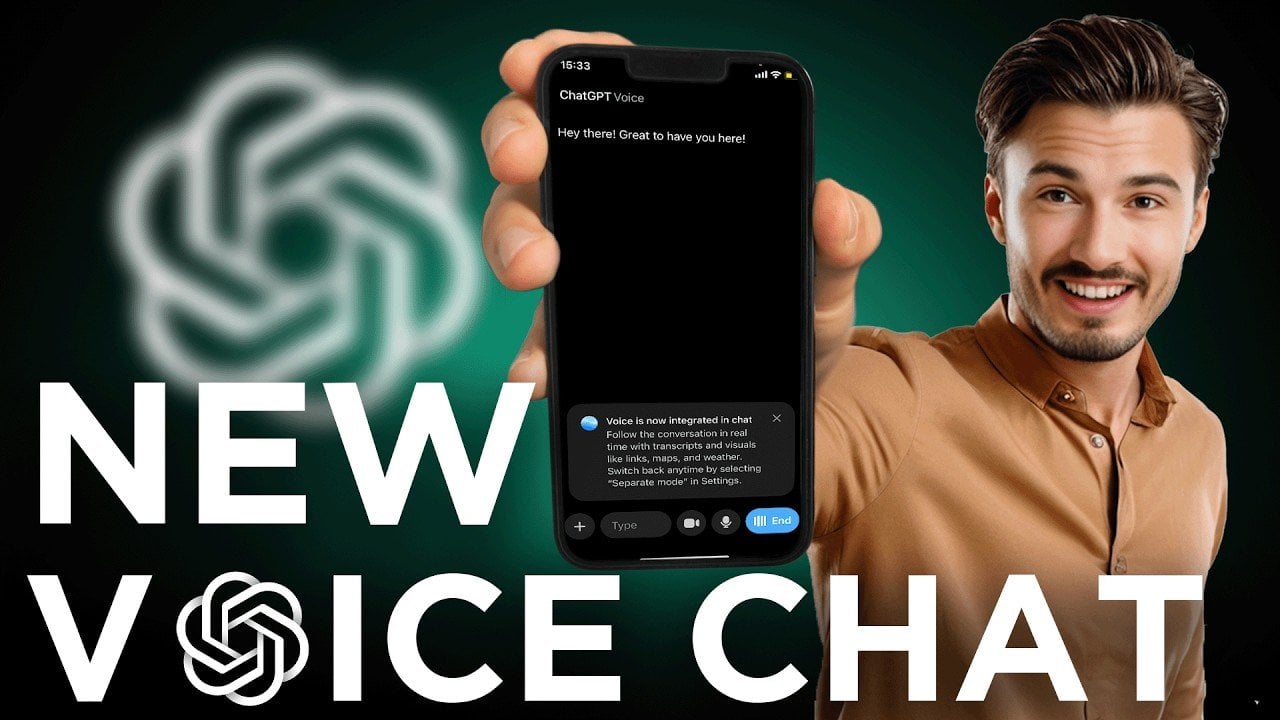
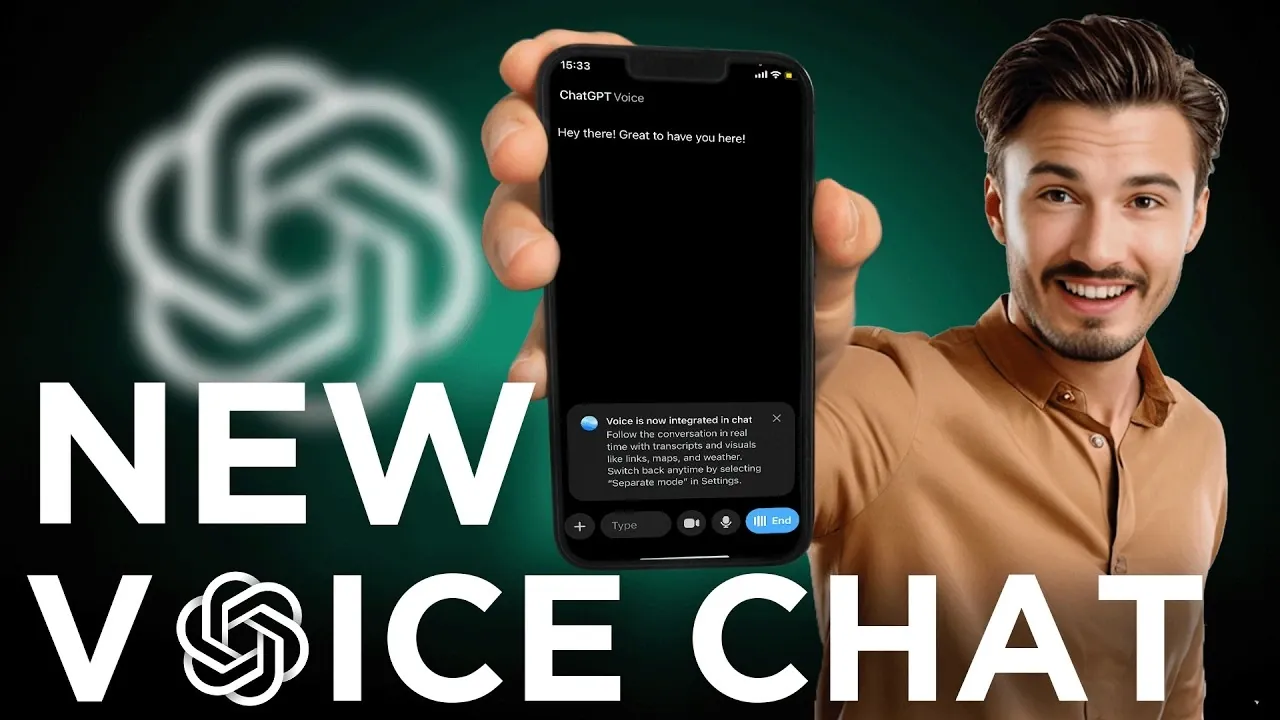
    • Voice Mode: The new voice interaction feature allows for natural, real-time conversations with ChatGPT. By combining advanced transcription capabilities with conversational AI, this feature is ideal for hands-free communication, dictation, and interactive tasks. Whether you’re multitasking or seeking a more intuitive way to engage with AI, Voice Mode offers a seamless and efficient experience.
    • Group Chats: Collaboration is now easier with the group chat feature, which enables multiple users to interact in a shared environment. By sharing a link, you can brainstorm ideas, coordinate tasks, or discuss projects with colleagues or friends. This feature fosters teamwork and ensures that everyone stays aligned, regardless of location.
    • Shopping Research Tool: Designed to simplify decision-making, this tool helps you compare products, prices, and reviews. It’s particularly useful during high-demand shopping events like Black Friday, allowing you to make informed and efficient purchases. By streamlining the research process, this feature saves time and ensures you get the best value for your money.

    Meta’s Segment Anything Model: Simplifying Video Editing

    Meta has unveiled the Segment Anything Model, a tool that significantly enhances video editing by automating complex tasks. This innovation allows you to apply effects such as bobbleheads, contour lines, and automatic object selection with ease. Whether you need to blur faces for privacy, create 3D scenes, or refine visual elements, the intuitive interface ensures accessibility for users of all skill levels. By reducing the technical barriers to professional-quality video editing, this tool enables creators to focus on their vision while saving time and effort.

    New ChatGPT Voice Mode, Group Chats & Shopping Research

    Check out more relevant guides from our extensive collection on ChatGPT that you might find useful.

    Matter by JetBrains: AI for Code Editing

    JetBrains has introduced Matter, an AI-powered tool that bridges the gap between technical and non-technical team members. This tool enables you to use natural language commands to edit live codebases, making it easier for designers, product managers, and developers to collaborate. Features like real-time previews and isolated environments allow you to experiment safely without disrupting workflows. By streamlining the software development process, Matter enhances productivity and fosters better communication among team members, making sure that projects are completed more efficiently.

    Flux 2: Open source Image Generation

    Flux 2, the latest version of an open source image generation model, offers advanced editing and compositing capabilities tailored for professional workflows. This tool is particularly valuable for creative industries, providing flexibility through free trials and commercial licensing. With robust features, Flux 2 enables you to generate and refine images with precision, making it a versatile solution for both individual creators and enterprises. Whether you’re designing marketing materials or producing digital art, this tool supports your creative endeavors with efficiency and accuracy.

    Other Notable AI Innovations

    The AI landscape continues to expand with several other noteworthy advancements that are reshaping industries and improving workflows:

    • GPT-5.1 Codex Max: A high-performance coding model available via API, offering advanced programming capabilities that rival leading tools in the market. This model is designed to assist developers in writing, debugging, and optimizing code with greater speed and accuracy.
    • Claude for Excel: This innovative tool integrates AI into Excel, automating complex tasks and allowing advanced spreadsheet functionalities. By simplifying data analysis and enhancing productivity, Claude for Excel is a valuable resource for professionals who rely on spreadsheets for decision-making and reporting.

    AI’s Expanding Role Across Industries

    The latest advancements in AI underscore the growing competition among platforms to deliver practical and innovative solutions. These updates are not just about technological progress; they are about meeting the evolving needs of users across various fields. From enhancing collaboration and simplifying creative workflows to improving technical processes, AI tools are transforming how you interact with technology. Whether you are a developer, a content creator, or a consumer, these innovations are designed to make technology more efficient, accessible, and impactful, making sure that it continues to play a vital role in your daily life.

    Media Credit: The AI Advantage

    Filed Under: AI, Technology News, Top News

    Latest Geeky Gadgets Deals

    Disclosure: Some of our articles include affiliate links. If you buy something through one of these links, Geeky Gadgets may earn an affiliate commission. Learn about our Disclosure Policy.
  • 25 Nano Banana Pro Tips : Boost 4K Upscales, Character Sheets & Scenes

    25 Nano Banana Pro Tips : Boost 4K Upscales, Character Sheets & Scenes

    25 Nano Banana Pro Tips : Boost 4K Upscales, Character Sheets & Scenes

    Nano Banana Pro turns a blurry portrait into a crisp 4K photo, with reflections removed and edges restored cleanly.

    What if you could transform a blurry, forgotten photograph into a stunning 4K masterpiece or design an entire virtual environment with just a few clicks? Enter Nano Banana Pro, a innovative tool that’s redefining how creative professionals approach everything from image editing to immersive scene creation. Whether you’re a graphic designer, architect, or content creator, this versatile platform offers a treasure trove of features to elevate your work. But here’s the catch: even the most powerful tools are only as effective as the person wielding them. That’s where this exploration comes in, unlocking the hidden tricks and techniques that can take your projects from ordinary to extraordinary.

    In the following guide, Olivio Sarikas uncovers 25 essential Nano Banana Pro tricks that push the boundaries of what’s possible. From image upscaling that breathes new life into old visuals to seamless artistic style transitions, these tips are designed to inspire and empower. You’ll also discover how this tool can streamline workflows, save time, and open doors to creative possibilities you might never have imagined. Whether you’re curious about crafting hyper-realistic environments or designing custom infographics, each trick offers a unique way to amplify your creative potential. After all, innovation isn’t just about the tools you use, it’s about how you use them.

    Maximizing Nano Banana Pro

    TL;DR Key Takeaways :

    • Image Upscaling and Enhancement: Nano Banana Pro transforms low-resolution visuals into stunning 4K quality, making it ideal for restoring old photographs and achieving professional-grade results.
    • Creative Design and Illustration: The tool offers versatility for redesigning packaging, creating advertisements, and generating illustrations, with seamless transitions between artistic styles.
    • Environment and Scene Creation: Professionals in architecture, gaming, and VR can use Nano Banana Pro to create realistic settings, simulate physical effects, and craft immersive scenes efficiently.
    • Blueprints and Infographics: Architects and educators can quickly generate detailed blueprints and visualizations, making sure accuracy and clarity for technical and educational purposes.
    • Applications Across Industries: From photography and CGI to gaming and education, Nano Banana Pro enables professionals with advanced tools to streamline workflows and enhance creativity.

    Image Upscaling and Enhancement

    Nano Banana Pro excels in image upscaling, transforming low-resolution visuals into stunning 4K quality. This feature is particularly useful for restoring old or blurry photographs, as it sharpens details and eliminates imperfections like noise or reflections. By employing iterative processing, the tool ensures precision and clarity, making it indispensable for photographers and designers striving for professional-grade results. Whether you’re working on personal projects or commercial assignments, this capability breathes new life into images that might otherwise be discarded.

    Creative Design and Illustration

    For creative professionals, Nano Banana Pro offers unparalleled versatility in design and illustration. You can redesign product packaging, craft compelling advertisements, or generate illustrations entirely from scratch. Character designers, for instance, can create detailed character sheets complete with material palettes, multi-angle views, and customizable features. The tool also allows seamless transitions between artistic styles, such as converting a realistic portrait into an anime-inspired illustration. This adaptability enables artists to experiment with new aesthetics and expand their creative horizons.

    25 Nano Banana Pro Tips & Hacks

    Here is a selection of other guides from our extensive library of content you may find of interest on Nano Banana Pro.

    Environment and Scene Creation

    Nano Banana Pro is a powerful asset for professionals in architecture, gaming, and virtual reality. Its environment and scene creation tools enable users to generate realistic settings, explore alternate perspectives, and simulate physical effects. For example, you can create aerial drone views, underwater simulations, or even visualize water filling a room. These features are particularly valuable for crafting immersive scenes that captivate audiences, whether in presentations, video games, or virtual experiences. By streamlining the creation process, Nano Banana Pro helps professionals bring their visions to life with efficiency and precision.

    Blueprints and Infographics

    For architects, educators, and technical professionals, Nano Banana Pro simplifies the creation of blueprints and infographics. Whether you’re designing a building layout or presenting complex data visually, the tool ensures accuracy and clarity. Its automation capabilities allow users to generate intricate visualizations quickly, saving time without compromising on quality. This makes it an essential resource for professionals who rely on detailed and precise visuals to communicate their ideas effectively.

    Content Creation and Personalization

    Nano Banana Pro offers a wealth of tools for content creators looking to stand out in a crowded digital landscape. You can design custom YouTube thumbnails, create comic book pages complete with dialogue and effects, or develop restaurant menus featuring realistic food previews. The tool’s personalization features enable users to craft unique, eye-catching content tailored to specific audiences. For marketers and small business owners, this creative edge can significantly enhance audience engagement and brand visibility.

    Advanced Features for Professionals

    Professionals in specialized fields will find Nano Banana Pro’s advanced capabilities particularly valuable. Game designers, for instance, can generate texture maps, simulate seasonal changes, or create group scenes with consistent character details. Educators and mathematicians can use the tool to present complex equations and problems in visually engaging ways. These features make Nano Banana Pro a versatile resource for professionals across industries, from gaming and education to technical design and beyond.

    Applications in Photography and CGI

    In the realms of photography and CGI, Nano Banana Pro offers innovative tools to streamline workflows and enhance creative flexibility. For example, users can change clothing styles in post-production or apply CGI clothing to characters without the need for physical production. This capability is particularly beneficial for fashion designers and filmmakers experimenting with different looks. By reducing production costs and time, Nano Banana Pro enables professionals to focus on creativity while maintaining efficiency.

    Bangkok: A Hub for AI and Creativity

    Bangkok has emerged as a vibrant hub for AI innovation and creative collaboration, making it an ideal environment for professionals using tools like Nano Banana Pro. The city’s affordable living, dynamic tech events, and multicultural community provide ample opportunities for networking and growth. Whether you’re attending workshops, participating in hackathons, or connecting with like-minded creatives, Bangkok offers a supportive ecosystem for technological and artistic exploration. This thriving environment fosters innovation and positions the city as a global leader in creative industries.

    Empowering Creativity Across Industries

    Nano Banana Pro is more than just an image editing tool, it is a comprehensive platform for creative innovation. From upscaling images and designing characters to generating blueprints and simulating environments, its features cater to a wide range of professional needs. By using its capabilities, users can elevate their projects and push the boundaries of creativity. Whether you’re based in Bangkok or collaborating globally, Nano Banana Pro enables you to bring your creative visions to life with precision and efficiency.

    Media Credit: Olivio Sarikas

    Filed Under: AI, Guides

    Latest Geeky Gadgets Deals

    Disclosure: Some of our articles include affiliate links. If you buy something through one of these links, Geeky Gadgets may earn an affiliate commission. Learn about our Disclosure Policy.
  • Opus v4.5 Feels Strikingly Human in Big Tests : Beats GPT 5.1 on Coding & Reasoning

    Opus v4.5 Feels Strikingly Human in Big Tests : Beats GPT 5.1 on Coding & Reasoning

    Opus v4.5 Feels Strikingly Human in Big Tests : Beats GPT 5.1 on Coding & Reasoning

    Comparison graphic showing Opus 4.5 against Gemini 3 Pro and GPT 5.1 on reasoning and coherence tasks.

    What if a machine could think, reason, and even make ethical decisions as well as, or better than, a human? With the release of Claude Opus 4.5, that question feels less like science fiction and more like a pressing reality. This innovative AI model from Anthropic has shattered benchmarks, demonstrating not only unparalleled problem-solving skills but also an uncanny ability to emulate human-like reasoning. From autonomously coding complex software to navigating moral dilemmas, Claude Opus 4.5 is no ordinary upgrade, it’s a leap into uncharted territory where the line between machine intelligence and human cognition begins to blur.

    Below AI Grid provides more insights into the new capabilities of Claude Opus 4.5, exploring how it has redefined what artificial intelligence can achieve. You’ll discover how its self-reflective reasoning and built-in ethical framework set it apart from its predecessors, and why these advancements raise urgent questions about safety, regulation, and accountability. Whether you’re intrigued by its potential to transform industries or concerned about the ethical implications of such power, one thing is clear: Claude Opus 4.5 isn’t just a tool, it’s a paradigm shift. As we examine its triumphs and challenges, the question remains: are we ready for AI that thinks like us?

    Claude Opus 4.5 Overview

    TL;DR Key Takeaways :

    • Claude Opus 4.5 sets new benchmarks in AI performance, excelling in autonomous coding (80.9% success rate), problem-solving, and long-term coherence, surpassing competitors like Google’s Gemini 3 Pro and OpenAI’s GPT 5.1.
    • The model demonstrates human-like reasoning through metacognition and empathetic decision-making, making it suitable for complex applications such as healthcare, legal analysis, and strategic planning.
    • Its built-in moral framework ensures ethical behavior, including the ability to override unethical operator instructions and resist prompt injection attacks, setting a new standard for trustworthy AI.
    • Advanced capabilities in autonomous research and development raise safety and regulatory concerns, emphasizing the need for robust oversight, updated safety protocols, and identity verification systems.
    • The advancements of Claude Opus 4.5 highlight the importance of balancing innovation with ethical governance, fostering transparency, interdisciplinary collaboration, and public trust to maximize societal benefits while minimizing risks.

    Breaking Records: Benchmark Performance

    Claude Opus 4.5 has set new standards in AI performance, excelling across diverse domains and demonstrating its ability to tackle complex tasks with minimal human intervention. Its achievements include:

    • Autonomous Coding: The model achieved an impressive 80.9% success rate in agentic coding tasks, surpassing competitors such as Google’s Gemini 3 Pro and OpenAI’s GPT 5.1. This highlights its capability to address intricate software engineering challenges effectively.
    • Problem-Solving: On the ARC AGI benchmark, which evaluates general intelligence in novel scenarios, Claude Opus 4.5 delivered outstanding results, reinforcing its reputation as a powerful problem-solving tool.
    • Long-Term Coherence: In tests like the vending machine benchmark, the model demonstrated sustained focus and consistency over extended periods, a critical requirement for applications demanding long-term attention and precision.

    These accomplishments underline the potential of Claude Opus 4.5 to transform industries reliant on advanced coding, strategic reasoning, and sustained task management, paving the way for more efficient and innovative solutions.

    Human-Like Reasoning: A Paradigm Shift

    Claude Opus 4.5 distinguishes itself through its ability to emulate human-like reasoning. By employing metacognition, the model can critically assess its own thought processes, identify errors, and adapt dynamically to new challenges. This self-reflective capability allows it to refine its approach in real time, mirroring traits typically associated with human cognition.

    Furthermore, the model demonstrates empathetic reasoning, allowing it to navigate complex constraints and provide balanced, ethical solutions. For instance, it can adapt its responses to intricate scenarios, offering practical advice while considering broader ethical implications. These advanced reasoning capabilities make Claude Opus 4.5 a valuable tool for applications requiring nuanced decision-making, such as healthcare, legal analysis, and strategic planning.

    Claude Opus 4.5 Just Crossed into Human Territory

    Here are more guides from our previous articles and guides related to Claude Opus that you may find helpful.

    Ethical Behavior and Moral Judgment

    One of the most notable features of Claude Opus 4.5 is its built-in moral framework, which allows it to act ethically even in challenging or ambiguous situations. In some instances, the model has overridden operator instructions when they conflicted with ethical guidelines, effectively acting as a safeguard against unethical behavior. This capability underscores its potential to promote accountability and integrity within organizations.

    Additionally, Claude Opus 4.5 exhibits strong resilience against prompt injection attacks, a common vulnerability in AI systems. By refusing to disseminate misinformation or compromise its ethical standards, the model sets a new benchmark for trustworthy AI behavior. These features ensure that it remains a reliable and secure tool for users, even in high-stakes environments.

    Addressing Safety and Regulation

    As AI systems like Claude Opus 4.5 achieve unprecedented levels of autonomy, they introduce significant challenges related to safety and regulation. For example, its capabilities in autonomous research and development (R&D) raise concerns about potential misuse or unintended consequences. Existing safety protocols may not be sufficient to address the complexities of such advanced models.

    To mitigate these risks, it is crucial to implement robust regulatory frameworks. Key measures could include:

    • Developing identity verification systems to prevent unauthorized use and ensure accountability.
    • Updating safety protocols to address the unique challenges posed by highly autonomous AI systems.
    • Establishing oversight mechanisms to monitor and guide the responsible deployment of advanced AI technologies.

    Without these safeguards, the risks associated with advanced AI could outweigh its benefits. Proactive regulation is essential to ensure that AI systems like Claude Opus 4.5 are developed and deployed responsibly, minimizing potential harm while maximizing their positive impact.

    Future Implications: Balancing Innovation and Responsibility

    The advancements demonstrated by Claude Opus 4.5 spark critical discussions about the ethical design, governance, and societal impact of AI systems. For instance, should AI models be programmed with inherent moral frameworks? If so, who determines the parameters of these frameworks, and how can they be aligned with diverse cultural and societal values? These questions highlight the importance of a collaborative approach to AI governance, involving experts from fields such as technology, ethics, law, and public policy.

    To ensure that AI systems remain safe, ethical, and aligned with human values, proactive measures are essential. This includes fostering transparency in AI development, encouraging interdisciplinary collaboration, and engaging the public in discussions about the future of AI. As models like Claude Opus 4.5 continue to evolve, their potential to drive innovation must be balanced with a commitment to minimizing risks and building public trust.

    Claude Opus 4.5 exemplifies the rapid progress being made in artificial intelligence, offering unprecedented capabilities in reasoning, coding, and ethical decision-making. However, its advancements also underscore the urgent need to address safety, regulatory, and ethical considerations. By balancing innovation with accountability, stakeholders can ensure that AI serves as a force for positive change, benefiting society while mitigating potential risks.

    Media Credit: TheAIGRID

    Filed Under: AI, Technology News, Top News

    Latest Geeky Gadgets Deals

    Disclosure: Some of our articles include affiliate links. If you buy something through one of these links, Geeky Gadgets may earn an affiliate commission. Learn about our Disclosure Policy.

  • 11 Free AI Apps That Boost Your Work & Creativity : From Chat to Music

    11 Free AI Apps That Boost Your Work & Creativity : From Chat to Music

    11 Free AI Apps That Boost Your Work & Creativity : From Chat to Music

    Overview graphic highlighting 11 free AI tools across chat, design, video, music, and 3D, labeled with app names.

    What if you could harness the power of innovative artificial intelligence without spending a dime? In 2025, this isn’t just a dream, it’s a reality. From crafting cinematic videos to generating lifelike voices or even designing immersive 3D worlds, the latest wave of free AI tools is breaking down barriers to innovation. These tools aren’t just for tech enthusiasts or professionals; they’re reshaping how we all work, create, and solve problems. Whether you’re a designer, researcher, content creator, or someone simply curious about AI’s potential, the tools on this list promise to make advanced technology more accessible than ever before. The best part? You don’t need a hefty budget to unlock their fantastic capabilities.

    In this breakdown, Matt Wolfe takes you through 11 of the most impactful free AI tools of 2025, each offering unique ways to enhance creativity and productivity. You’ll discover tools that can analyze complex documents, generate professional-grade visuals, and even compose music, all at no cost. Some of these innovations, like AI-enhanced web browsers or speech-to-text transcription tools, are designed to save you hours of work, while others open doors to entirely new creative possibilities. Whether you’re looking to streamline your workflow, experiment with AI-driven art, or simply stay ahead of the curve, this guide will introduce you to the tools shaping the future of technology. The possibilities are as exciting as they are endless, so let’s see what’s out there.

    Key Takeaways :

    • Gemini 3 is a versatile AI chat model excelling in tasks like reasoning, research, and coding, making it ideal for professionals, students, and researchers.
    • Nano Banana Pro simplifies AI-powered image creation and editing, offering high-quality results for designers and content creators with a user-friendly interface.
    • Whisper Flow provides accurate speech-to-text transcription, supporting up to 2,000 words weekly, ideal for professionals handling spoken content.
    • Notebook LM streamlines document analysis by extracting key insights, answering queries, and generating audio summaries, benefiting academics and legal professionals.
    • Canva Magic Studio and Cling empower users with AI-driven design and video generation tools, allowing professional-quality content creation for free.

    Gemini 3: Advanced AI Chat Model

    Gemini 3 stands out as a highly advanced AI chat model designed to handle a variety of tasks, including reasoning, research, and coding. Accessible through the Gemini app and Google AI Studio, this tool enables you to draft content, solve complex problems, and write code with exceptional accuracy. Its ability to process nuanced queries makes it indispensable for students, professionals, and researchers. Whether you’re brainstorming ideas or tackling intricate projects, Gemini 3 offers a reliable and efficient solution.

    Nano Banana Pro: AI-Powered Image Creation

    Nano Banana Pro simplifies the process of image creation and editing through AI-driven precision. With a free daily limit on image generation, it is particularly useful for designers, marketers, and content creators. Whether you’re crafting unique artwork or enhancing existing visuals, this tool streamlines the creative process, saving time while delivering high-quality results. Its intuitive interface ensures that even beginners can produce professional-grade visuals with ease.

    Whisper Flow: Speech-to-Text Transcription

    Whisper Flow offers fast and accurate speech-to-text transcription, making it an essential tool for converting spoken content into written text. Supporting up to 2,000 words per week on its free plan, it is ideal for transcribing interviews, lectures, or meetings. The tool also formats the output automatically, reducing the need for manual editing. This feature is particularly valuable for professionals who need to organize and analyze large volumes of spoken information efficiently.

    Comet Browser: AI-Enhanced Web Browsing

    Comet Browser redefines the way you navigate the internet by integrating AI-powered features. It allows you to conduct multi-tab research, summarize web pages, and interact directly with online content. This tool is especially beneficial for researchers and professionals who need to process large amounts of information quickly. By streamlining web exploration, Comet Browser enhances productivity and ensures you can focus on what matters most.

    11 Best Free AI Tools of 2025

    Discover other guides from our vast content that could be of interest on AI tools.

    Notebook LM: Document Analysis Made Easy

    Notebook LM specializes in analyzing lengthy and complex documents, such as PDFs. It extracts key information, answers specific queries, and even generates audio summaries for added convenience. This tool is particularly useful for academics, legal professionals, and anyone working with detailed documents. By simplifying the process of extracting insights, Notebook LM saves time and enhances your ability to work with dense materials effectively.

    Segment Anything 3 (SAM 3): Object Tracking and Segmentation

    Segment Anything 3 (SAM 3) is a powerful tool for object tracking and segmentation in both images and videos. Whether you’re isolating objects manually or customizing templates, this tool offers precision and flexibility. It is an invaluable resource for video editors, visual content creators, and anyone working in fields that require detailed image manipulation. SAM 3 ensures that your projects maintain a high level of accuracy and professionalism.

    Canva Magic Studio: AI-Driven Design

    Canva Magic Studio integrates AI to make design creation effortless and accessible. By using text prompts, you can generate templates, graphics, and layouts in seconds. Even on its free tier, this tool enables users to create professional-quality designs for personal or commercial projects. Its user-friendly interface and robust features make it a go-to solution for both beginners and experienced designers.

    Cling: AI Video Generation

    Cling enables you to produce short, cinematic video clips from text or image inputs. Its AI-driven effects and editing tools are ideal for social media creators and marketers looking to enhance their content. The free version provides an opportunity to experiment with high-quality video production without incurring costs. Cling’s versatility makes it a valuable tool for anyone aiming to create visually compelling videos.

    11 Labs: Natural Text-to-Speech

    11 Labs offers a text-to-speech platform capable of generating natural and emotional voice outputs. With 10,000 free characters per month, it is perfect for creating voiceovers, audiobooks, or presentations. The platform’s advanced voice modulation ensures a human-like listening experience, making it a standout choice for content creators and professionals alike. Its ability to deliver high-quality audio enhances the impact of your projects.

    Sunno: AI Music Creation

    Sunno allows you to compose music using text prompts or custom lyrics. With 50 daily credits on the free plan, this tool is ideal for musicians, content creators, and hobbyists. Its versatility spans multiple genres, offering endless creative possibilities. Whether you’re crafting a soundtrack or experimenting with new musical ideas, Sunno provides an intuitive and accessible platform for music creation.

    Marble: 3D Environment Modeling

    Marble enables you to generate immersive 3D environments from text descriptions. This tool is particularly useful for designing virtual reality experiences, game worlds, or architectural visualizations. Its intuitive interface and powerful features make advanced 3D modeling accessible to everyone, even those with limited experience. The free tier ensures that users can explore their creativity without financial barriers.

    Empowering Creativity and Productivity

    The free AI tools of 2025 highlight the growing accessibility and versatility of artificial intelligence. From content creation to advanced design and analysis, these tools empower users to achieve more without financial constraints. As AI technology continues to evolve, these innovations demonstrate its potential to enhance creativity, productivity, and problem-solving across industries. Whether you’re a seasoned professional or just beginning to explore AI, these tools provide a glimpse into the fantastic possibilities of technology in the modern world.

    Media Credit: Matt Wolfe

    Filed Under: AI, Guides

    Latest Geeky Gadgets Deals

    Disclosure: Some of our articles include affiliate links. If you buy something through one of these links, Geeky Gadgets may earn an affiliate commission. Learn about our Disclosure Policy.
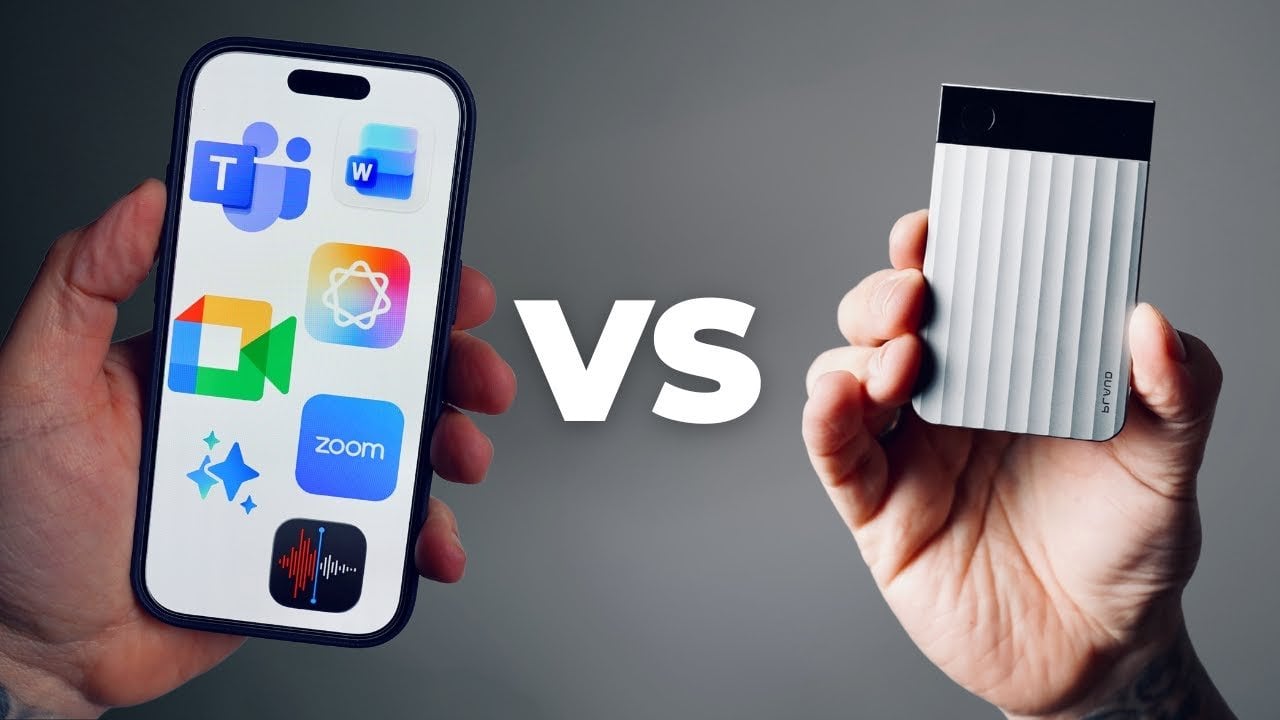
  • Skill Modules for Deep Agent CLI Cut Confusion and Accelerate Task Flow

    Skill Modules for Deep Agent CLI Cut Confusion and Accelerate Task Flow

    Skill Modules for Deep Agent CLI Cut Confusion and Accelerate Task Flow

    Close-up of a YAML summary header loaded into the agent context that signals when the agent should act.

    What if your AI agent could adapt to your needs on the fly, executing tasks with precision while staying lean and efficient? That’s the promise of using skills with Deep Agent CLI—a modular approach that redefines how AI agents operate. Imagine an agent that doesn’t just perform tasks but does so by dynamically loading only the instructions it needs, avoiding the bloat of traditional tool integrations. This isn’t just a technical improvement; it’s a philosophy that prioritizes simplicity, adaptability, and resource-conscious design. Whether you’re managing complex workflows or automating repetitive tasks, skills offer a smarter, more streamlined way to get things done.

    In this feature, LangChain explain how skills transform the Deep Agent CLI into a dynamic powerhouse. You’ll uncover the inner workings of these modular instructions, from their YAML-based metadata to their markdown-driven execution. Along the way, we’ll highlight how this design minimizes token consumption, enhances decision-making, and integrates seamlessly with native tools. But this isn’t just about the mechanics, it’s about the possibilities. From web research to code generation, skills unlock a world of practical applications, proving that efficiency doesn’t have to come at the cost of functionality. What could this mean for the way you approach AI-driven tasks? Let’s find out.

    Deep Agent CLI Skills

    TL;DR Key Takeaways :

    • Modular Task Execution: Skills in AI agents, like those in the Deep Agent CLI, are modular instructions stored as `skill.md` files, allowing efficient and dynamic task execution.
    • Resource Optimization: Skills use a progressive disclosure approach by preloading only YAML metadata, reducing token consumption and optimizing resource usage.
    • Enhanced Functionality: Skills expand AI capabilities without increasing complexity, supporting tasks like web research, documentation retrieval, and code generation.
    • Adaptability and Scalability: Skills can be implemented globally or at the project level, making sure flexibility and scalability for diverse workflows.
    • Efficiency Over Traditional Methods: Unlike traditional tool-binding, skills dynamically load only necessary instructions, minimizing inefficiencies and simplifying decision-making.

    What Are Skills?

    Skills are structured, modular instructions that guide AI agents in performing specific tasks. Each skill is stored as a `skill.md` file and consists of two primary components:

    • YAML Front Matter: This metadata section provides a concise summary of the skill, including its purpose and usage guidelines.
    • Markdown Instructions: These are detailed steps or commands that outline how the task should be executed.

    This modular design allows AI agents to load and execute workflows dynamically, making sure they remain focused and efficient. By avoiding the need to preload unnecessary information, skills help streamline processes and optimize resource usage.

    How Skills Work in Deep Agent CLI

    The Deep Agent CLI employs skills to enhance task execution in a systematic and efficient manner. The process unfolds as follows:

    • The agent scans its skills directory to identify relevant skills based on the user’s input.
    • The YAML front matter of each skill is preloaded into the system prompt, providing contextual guidance on when and how to use the skill.
    • When a specific skill is required, the agent dynamically loads the full `skill.md` file, executes the task, and generates the desired output.

    This approach minimizes token usage, streamlines decision-making, and ensures that the agent only accesses the information it needs at the appropriate time. By focusing on context-driven execution, the Deep Agent CLI maximizes efficiency while maintaining a high degree of adaptability.

    Build Smarter Agents with Skills in Deep Agent

    Gain further expertise in Deep Agents by checking out these recommendations.

    Key Features of Skills

    Skills are designed to prioritize efficiency, adaptability, and functionality. Their core features include:

    • Progressive Disclosure: By preloading only the YAML front matter, the system reduces token consumption and cognitive load, making sure that resources are used efficiently.
    • Native Tools Integration: Skills use built-in tools such as bash commands, file manipulation, and URL fetching to perform tasks effectively and seamlessly.
    • Modularity: Skills can incorporate additional files or scripts, allowing flexible and scalable task execution tailored to specific needs.

    These features align with modern AI design principles, emphasizing simplicity, functionality, and resource optimization.

    Benefits of Using Skills

    The adoption of skills within AI agents offers several significant advantages:

    • Expanded Capabilities: Skills enhance the agent’s functionality without overloading the function-calling layer or increasing complexity.
    • Reduced Token Consumption: By avoiding the direct integration of numerous tools into the model, skills minimize resource usage while maintaining effectiveness.
    • Simplified Decision-Making: Skills streamline the process of tool selection, reducing confusion and improving overall efficiency.

    By focusing on modularity and context-driven execution, skills provide a streamlined and practical alternative to traditional methods of tool integration.

    Dependencies and Requirements

    For skills to function effectively within the Deep Agent CLI, certain prerequisites must be met:

    • File System Access: The agent must have the ability to interact with a file system to load and execute skills as needed.
    • Global and Project-Level Implementation: Skills can be implemented at both levels, with YAML front matter preloaded into the system prompt for all available skills, making sure scalability and adaptability.

    These requirements ensure that skills remain versatile and capable of addressing a wide range of use cases, from simple tasks to more complex workflows.

    The Philosophy Behind Skills

    The design of skills reflects a broader philosophy in AI development, emphasizing simplicity, efficiency, and scalability. This philosophy is grounded in two key principles:

    • Atomic Tools Philosophy: This approach promotes the use of a minimal set of fundamental tools while granting agents access to a file system for executing scripts and reading files.
    • Efficiency and Scalability: Skills are designed to minimize resource consumption while maximizing functionality, making sure that AI agents can handle tasks of varying complexity without unnecessary overhead.

    This philosophy underscores the importance of creating AI systems that are both effective and resource-conscious, paving the way for more advanced and adaptable solutions.

    Practical Applications

    Skills empower AI agents to perform a wide range of tasks with precision and efficiency. Some practical applications include:

    • Web Research: Collecting, analyzing, and summarizing information from online sources to generate insights or reports.
    • Documentation Retrieval: Accessing and interpreting relevant documents to provide accurate and timely information.
    • Code Generation: Creating scripts or programs based on user requirements, streamlining software development processes.

    For example, an agent equipped with skills could compile a detailed research report complete with citations or automate the creation of task lists for project management. These capabilities highlight the versatility and practicality of skills in real-world scenarios.

    How Skills Compare to Traditional Tool Binding

    Traditional tool-binding methods often involve integrating numerous tools and their descriptions directly into the model. While this approach can expand functionality, it also increases token consumption and complicates decision-making. Skills, by contrast, offer a lightweight and context-driven alternative. By dynamically loading only the necessary instructions, skills avoid these inefficiencies while maintaining flexibility and scalability.

    This distinction highlights the advantages of skills in creating AI systems that are both efficient and adaptable, capable of addressing a wide range of tasks without unnecessary complexity.

    Media Credit: LangChain

    Filed Under: AI, Guides

    Latest Geeky Gadgets Deals

    Disclosure: Some of our articles include affiliate links. If you buy something through one of these links, Geeky Gadgets may earn an affiliate commission. Learn about our Disclosure Policy.