
• Nano Banana AI Prompt Writing Framework for Amazing Results

    Nano Banana AI Prompt Writing Framework for Amazing Results

    Nano Banana AI Prompt Writing Framework for Amazing Results

    Nano Banana reuse prompt settings for consistent product photos across campaigns.

    Have you ever stared at a blank screen, trying to craft the perfect AI prompt, only to feel like you’re overcomplicating something that should be simple? For anyone who’s dabbled in prompt engineering, especially for tools like Google’s Nano Banana Pro, you know the struggle is real. Too much detail, and the output feels chaotic. Too little, and it misses the mark entirely. But what if I told you that you can hand over the reins to AI itself, letting it write the prompts? With a few structured inputs and some clever automation, discover how AI can streamline the creative process in ways you hadn’t imagined. Goodbye frustration, hello efficiency.

    In this guide D-Squared shares how Nano Banana Pro’s AI-driven system redefines what’s possible in prompt engineering. From using five essential inputs to generating tailored, reusable prompts, this approach is a fantastic option for anyone looking to create polished visuals without the guesswork. You’ll learn how AI balances simplicity and precision, why automation doesn’t mean sacrificing creativity, and how this tool adapts to everything from e-commerce to social media campaigns. Whether you’re a curious beginner or a seasoned pro, this exploration will leave you rethinking how you approach creative workflows. Because sometimes, the best way to master a tool is to let it teach you.

    Nano Banana Pro Prompt Creation

    TL;DR Key Takeaways :

    • Advancements in AI automation, like Google’s Nano Banana Pro, simplify prompt engineering by focusing on five essential inputs: Purpose, Audience, Subject, Brand Guidelines, and Reference Images.
    • Traditional prompt engineering’s complexity is replaced by a streamlined approach emphasizing simplicity and precision, making sure consistent and professional-quality visuals.
    • Nano Banana Pro generates three prompt variations (literal, creative, premium) in JSON format, allowing seamless integration, reusability, and adaptability for various creative tasks.
    • Built-in editing tools allow users to refine AI-generated visuals, balancing automation with manual adjustments for polished and personalized results.
    • The system’s versatility supports applications in e-commerce, social media, and marketing campaigns, enhancing efficiency and maintaining brand consistency across projects.

    Traditional prompt engineering often involves creating overly detailed and complex instructions to guide AI models toward specific outputs. While this approach may appear thorough, it frequently leads to inconsistent or suboptimal results. Modern AI models like Nano Banana Pro prioritize clarity and context over verbosity. This shift requires users to rethink their approach to structuring prompts, emphasizing simplicity and precision to achieve the best outcomes. By moving away from excessive detail, users can harness the full potential of AI to generate visuals that align with their creative goals.

    The Five Essential Inputs for Effective Prompts

    Nano Banana Pro introduces a more structured and efficient approach to prompt engineering by focusing on five key inputs. These inputs provide the necessary context for generating tailored and effective prompts:

    • Purpose: Clearly define the intended use of the image, such as for advertisements, social media posts, or website banners. This ensures the AI aligns the visual tone and composition with the specific application.
    • Audience: Identify the target demographic, whether it’s luxury consumers, Gen Z, or a niche market. This helps the visuals resonate with the intended viewers and enhances their impact.
    • Subject: Specify the primary focus of the image, such as a product, a person, or a fictional character. This directs the AI’s attention to the central element of the composition, making sure clarity and relevance.
    • Brand Guidelines: Include details like preferred color schemes, fonts, and overall style to maintain consistency with your brand identity. This input is critical for businesses aiming to reinforce their visual branding.
    • Reference Images: While optional, providing reference visuals can help the AI align its outputs with your existing content, making sure a cohesive look across projects and campaigns.

    These inputs form the foundation for creating prompts that are not only precise but also adaptable to various creative needs.

    Nano Banana Pro Prompts Guide

    Uncover more insights about Nano Banana Pro in previous articles we have written.

    How the System Works

    Once the five essential inputs are provided, the AI processes them to generate three distinct prompt variations: literal, creative, and premium. These variations are formatted in JSON, a standardized structure that ensures compatibility with Nano Banana Pro. The JSON format also assists seamless integration into workflows, allowing users to manage and reuse prompts with ease.

    For recurring tasks, such as creating a series of product images, the same prompt structure can be adapted for different items. This adaptability ensures consistent quality and style across all visuals, saving both time and effort. By using this system, users can focus on refining their creative vision while the AI handles the technical aspects of prompt generation.

    Refining the Outputs

    Even with AI-generated prompts, some adjustments may be necessary to achieve the desired results. Nano Banana Pro includes built-in editing tools that allow users to tweak elements such as lighting, background, and composition without rewriting the original prompt. This flexibility ensures that the final image meets exact specifications, offering a balance between automation and creative control. By combining automated efficiency with manual refinement, users can produce visuals that are both polished and personalized.

    Automation and Reusability

    A standout feature of Nano Banana Pro is its emphasis on automation and reusability. By saving workflows as GPT projects, users can easily replicate them for similar tasks in the future. This capability is particularly beneficial for teams, as the system can be shared and used collaboratively. Whether working on a social media campaign or an e-commerce catalog, this approach simplifies the process while maintaining professional standards.

    Automation also reduces the time spent on repetitive tasks, allowing users to focus on more strategic aspects of their projects. By reusing and adapting existing workflows, teams can ensure consistency across campaigns and achieve a higher level of efficiency.

    Real-World Applications

    The streamlined system offered by Nano Banana Pro is versatile and can be applied to a wide range of creative projects. Here are some practical examples:

    • E-commerce: Generate product images that align with your brand’s aesthetic and appeal to your target audience, enhancing the overall shopping experience.
    • Social Media: Create engaging visuals tailored to specific platforms and demographics, increasing audience engagement and brand visibility.
    • Marketing Campaigns: Develop visuals that adhere to strict brand guidelines, making sure consistency across all promotional materials and channels.

    These applications demonstrate the system’s ability to adapt to various industries and creative needs, making it a valuable tool for businesses and individuals alike.

    Addressing Watermarks

    While Nano Banana Pro excels at generating high-quality visuals, some outputs may include watermarks. Removing these watermarks is a straightforward process using tools like Canva or similar editing software. This additional step ensures that your final images are clean and ready for use, further enhancing their usability. By addressing this minor limitation, users can fully use the system’s capabilities to produce professional-grade visuals.

    Streamlining Creative Processes with AI

    By using AI automation and focusing on five essential inputs, Nano Banana Pro simplifies the process of prompt engineering. This approach not only saves time but also ensures that the generated visuals meet professional standards. Whether you’re creating product images, social media content, or marketing materials, this system makes high-quality image generation accessible and efficient. With features like automation, reusability, and built-in editing tools, users can achieve consistent, polished results without the complexities of traditional prompt engineering.

    Media Credit: D-Squared

    Filed Under: AI, Guides

    Latest Geeky Gadgets Deals

    Disclosure: Some of our articles include affiliate links. If you buy something through one of these links, Geeky Gadgets may earn an affiliate commission. Learn about our Disclosure Policy.
  • Olares One : All-in-One AI Mini PC Specifically Designed to Run Local AI Models

    Olares One : All-in-One AI Mini PC Specifically Designed to Run Local AI Models

    Olares One : All-in-One AI Mini PC Specifically Designed to Run Local AI Models

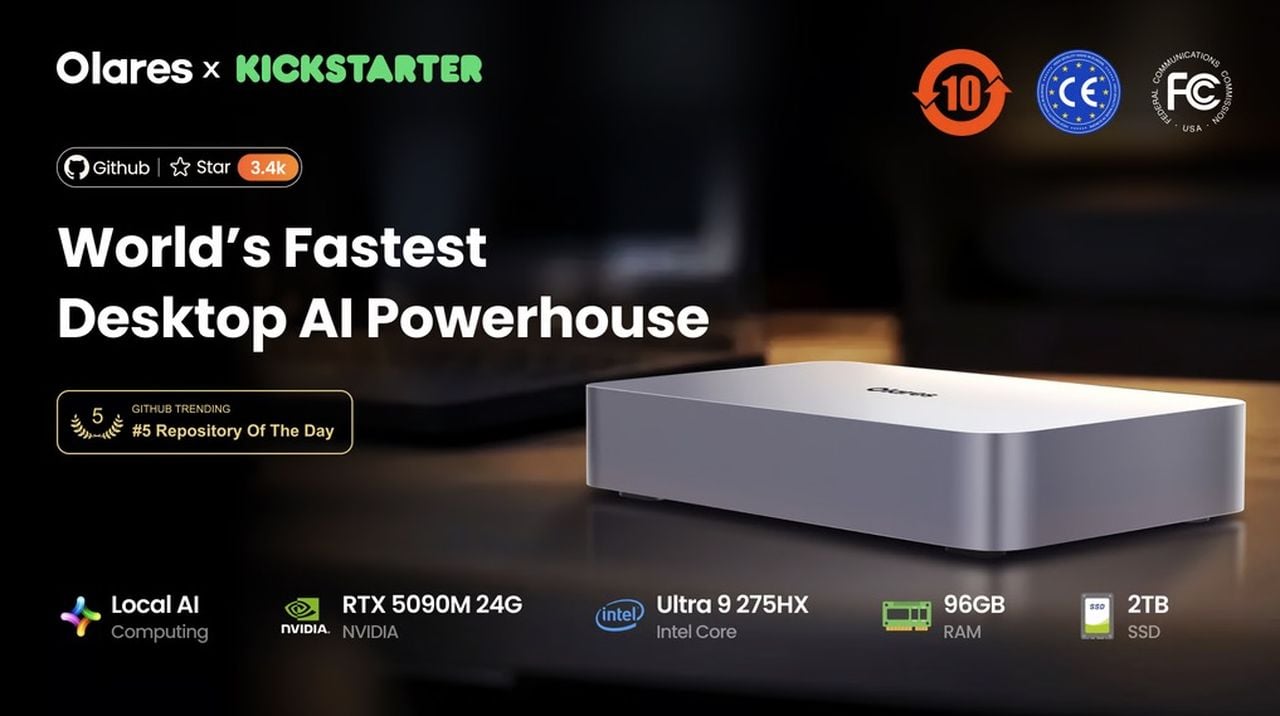
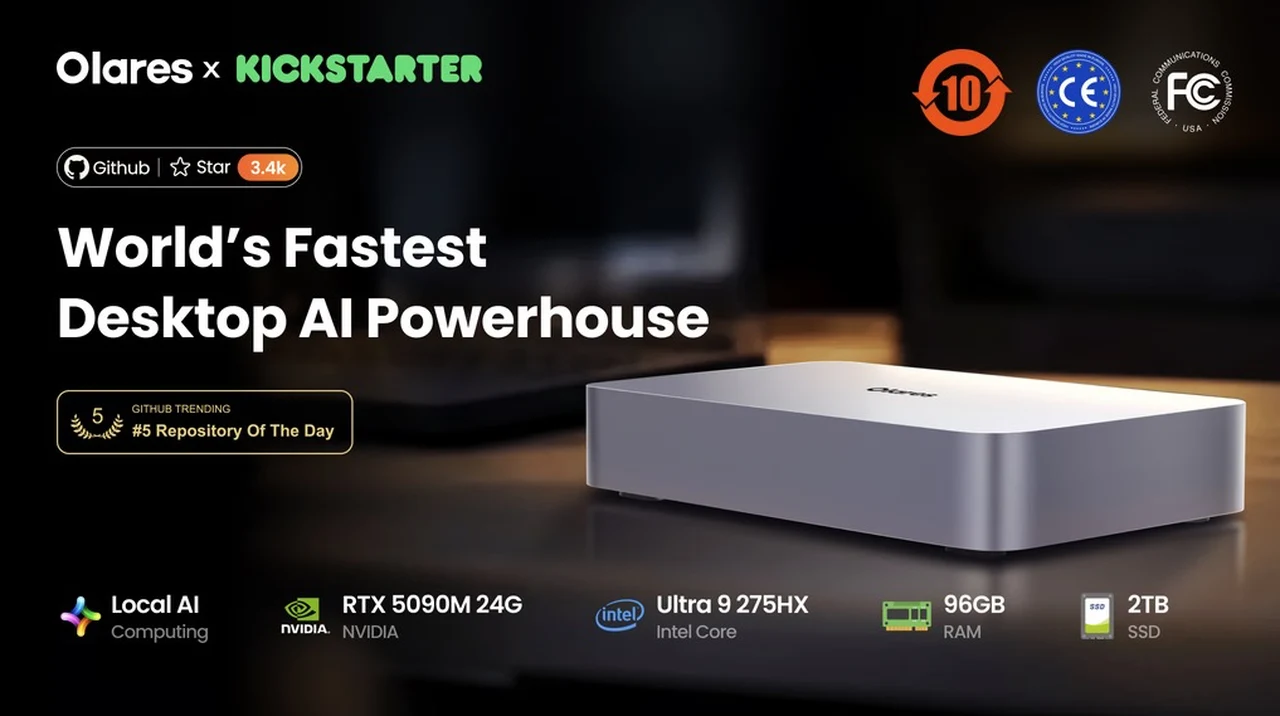
    Meet Olares One, a portable AI computer with an RTX 5090 24GB and GDDR7, giving you private, fast workflows anywhere.

    Imagine walking into your favorite coffee shop, laptop in hand, ready to tackle your latest AI project. But instead of relying on a cloud service or a bulky workstation back home, you pull out a sleek, portable box that holds the power of a high-performance AI rig. Bold claim? Not anymore. The Olares One, a compact yet formidable device, is redefining how we approach AI processing. With its Intel Core Ultra 9 processor, Nvidia RTX 5090 GPU, and a design optimized for portability, this little powerhouse lets you train models, process data, or even manage a home server, all while sipping your latte. It’s a fantastic option for developers, tech enthusiasts, and professionals who crave freedom without compromising performance.

    But what makes the Olares One truly stand out isn’t just its hardware. It’s the promise of local data handling, enhanced privacy, and the ability to work seamlessly from virtually anywhere. In this deep dive, Alex Ziskind explores how this device bridges the gap between innovative performance and portability, offering features like open source software, advanced cooling, and secure remote access. Whether you’re curious about its AI capabilities, intrigued by its versatility as a home server, or simply wondering if it can handle your day-to-day workflows, the Olares One might just be the portable solution you didn’t know you needed. After all, who says serious AI work can’t happen from a cozy corner table at your neighborhood café?

    Olares One : Portable AI Power

    TL;DR Key Takeaways :

    • The Olares One is a portable, high-performance AI processing device that emphasizes local data handling, reducing reliance on cloud services while making sure privacy and efficiency.
    • Equipped with an Intel Core Ultra 9 275HX processor, Nvidia RTX 5090 GPU with 24GB VRAM, 96GB memory, and a 2TB SSD, it handles demanding AI tasks like text generation, image processing, and video rendering seamlessly.
    • Its open source software stack, Kubernetes orchestration, and user-friendly dashboard streamline AI workflows, while robust security features like multi-factor authentication and VPN support ensure data protection.
    • The device offers versatility beyond AI, functioning as a home server, supporting gaming, and allowing efficient GPU resource allocation for various workloads.
    • With a compact design, remote accessibility, and transparent performance benchmarks, the Olares One is ideal for professionals seeking a portable, customizable, and privacy-focused solution for AI and other applications.

    Powerful Hardware for Advanced AI Tasks

    At the heart of the Olares One lies a powerful combination of the Intel Core Ultra 9 275HX processor and the Nvidia RTX 5090 GPU with 24GB of VRAM. This hardware configuration ensures seamless performance for intensive AI workloads, such as text generation, image processing, and video rendering. With 96GB of memory and a 2TB SSD, the device is equipped to handle large datasets and complex workflows without performance bottlenecks. The inclusion of GDDR7 memory further enhances speed and efficiency, outperforming many competitors in specific AI benchmarks. The Olares One also features a comprehensive range of connectivity options, including:

    • Thunderbolt 5
    • HDMI
    • USB
    • Ethernet
    • Power ports

    Its advanced cooling system ensures quiet operation, even under heavy workloads, making it suitable for environments like coffee shops or shared workspaces. This combination of power and portability allows you to tackle demanding AI tasks wherever you go.

    Streamlined Software for AI Workflows

    The Olares One runs on an open source software stack, offering the flexibility to customize workflows according to your specific needs. Integrated Kubernetes orchestration simplifies the deployment and management of AI models and applications, while a user-friendly dashboard provides real-time monitoring of GPU, CPU, and memory usage. This ensures that you can maintain optimal system performance with ease.

    Security is a central focus of the Olares One, featuring:

    • Multi-factor authentication
    • VPN support
    • Secure remote access via a personal URL

    These measures safeguard your data, making sure privacy and protection even when accessing the device remotely. This combination of streamlined software and robust security features makes the Olares One an ideal choice for professionals handling sensitive data.

    Olares One Review by Alex Ziskind

    Discover other guides from our vast content that could be of interest on local AI.

    Versatility Beyond AI

    The Olares One is not limited to AI processing; it also serves as a versatile home server. It supports applications like Jellyfin for media storage and developer tools for coding and collaboration. Its GPU sharing modes—app-exclusive, memory slicing, and time slicing, allow you to allocate resources efficiently based on your workload, making sure maximum productivity.

    The device is compatible with large language models such as Olama and GPT OSS, making it a valuable tool for developers working on advanced AI projects. While the 24GB VRAM may limit its ability to handle some of the largest models, the Olares One compensates by offloading tasks to the CPU when necessary. This balance of hardware and software optimization ensures that the device remains a reliable choice for a wide range of applications.

    Transparent Performance Comparisons

    One of the standout features of the Olares One is its commitment to performance transparency. Detailed comparisons with other devices, such as the Mac Studio and Nvidia DJX Spark, are readily available, allowing you to make informed decisions based on real-world benchmarks. While the Olares One excels in many AI tasks, its limitations with larger models are clearly outlined, making sure that you have realistic expectations about its capabilities.

    Portability and Remote Accessibility

    The compact and lightweight design of the Olares One makes it highly portable, allowing you to work from virtually anywhere, whether it’s your home, a coworking space, or a coffee shop. Remote access is seamless, allowing you to connect to the device from any PC, phone, or tablet. Secure connections ensure that your data remains protected, no matter where you are. This combination of portability and remote accessibility makes the Olares One a practical solution for professionals on the move.

    Open source and Privacy-First Design

    The Olares One places a strong emphasis on local data processing, reducing dependence on cloud services and giving you full control over your data. Its open source code, available on GitHub, allows you to customize the software to meet your specific requirements. This transparency not only fosters trust but also encourages community-driven improvements, making sure that the device continues to evolve to meet the needs of its users.

    Additional Features for Enhanced Usability

    Beyond its AI capabilities, the Olares One offers a range of additional features that enhance its usability. It supports gaming, with the ability to run titles like Doom, and provides Windows server functionality for broader applications. The device also simplifies workflows with automatic AI model management, which handles downloads and configurations, saving you time and effort. An app marketplace further expands its functionality, offering access to a wide array of AI tools and server applications.

    The Olares One is a comprehensive solution for professionals seeking a powerful, portable, and secure device for AI processing and beyond. Its combination of advanced hardware, open source software, and user-friendly design ensures that it meets the demands of modern workflows while maintaining a focus on privacy and efficiency. Whether you’re an AI developer, a tech enthusiast, or someone in need of a reliable home server, the Olares One delivers the performance and versatility you require.

    Media Credit: Alex Ziskind

    Filed Under: AI, Hardware, Top News

    Latest Geeky Gadgets Deals

    Disclosure: Some of our articles include affiliate links. If you buy something through one of these links, Geeky Gadgets may earn an affiliate commission. Learn about our Disclosure Policy.

  • OpenAI Codex 5.2: Blend Design, Product, and Engineering into One Fast Loop

    OpenAI Codex 5.2: Blend Design, Product, and Engineering into One Fast Loop

    OpenAI Codex 5.2: Blend Design, Product, and Engineering into One Fast Loop

    OpenAI Codex 5.2 guiding a mixed team through code review, design tweaks, and test feedback.

    What if writing code wasn’t just for engineers anymore? Imagine a world where a UX designer tweaks an interface, a business analyst generates actionable insights, or a junior developer contributes to a major project, all without needing years of programming expertise. Below Nate B Jones breaks down how OpenAI’s Codex 5.2 is making this a reality. By transforming artificial intelligence into a true collaborative partner, Codex is not only helping developers write better code but also empowering non-technical professionals to step into roles once thought out of reach. The result? Teams are working faster, smarter, and more creatively than ever before, all while breaking down traditional barriers between disciplines.

    Learn more about the new ways Codex 5.2 is reshaping workflows and redefining what it means to collaborate in an AI-driven era. From allowing small teams to punch above their weight to helping junior professionals develop skills on the job, Codex is leveling the playing field across industries. But it’s not just about automation, it’s about fostering innovation and adaptability in a rapidly evolving workplace. Whether you’re curious about how AI can enhance cross-functional teamwork or wondering what challenges still lie ahead, this guide offers a closer look at the possibilities and implications of Codex 5.2. As AI continues to blur the lines between roles, the question isn’t just what you can do with it, but how far it can take you.

    Codex 5.2 Overview

    TL;DR Key Takeaways :

    • Codex 5.2 by OpenAI enhances collaboration by allowing both technical and non-technical professionals to contribute effectively, breaking traditional role boundaries and fostering cross-functional teamwork.
    • The AI tool drives workflow evolution by automating repetitive tasks, streamlining processes, and encouraging faster iteration cycles, promoting agility and innovation across industries.
    • Codex enables small teams and junior professionals by providing widespread access to access to advanced capabilities, allowing them to achieve competitive results and accelerate skill development.
    • Challenges in AI integration, such as memory system limitations and making sure safety and alignment, require ongoing attention to maximize the effectiveness and trustworthiness of tools like Codex.
    • The adoption of Codex is reshaping professional roles, emphasizing adaptability, problem-solving, and AI proficiency, while unlocking new possibilities through emergent capabilities like multi-agent system orchestration.

    How Codex Enhances Collaboration

    Codex 5.2 is far more than a tool for generating code; it is a versatile platform that fosters collaboration across diverse roles. For developers, it acts as a reliable assistant, reviewing code, identifying errors, and suggesting improvements. This streamlines processes, reduces bottlenecks, and enhances overall productivity. However, its impact extends well beyond technical tasks.

    Non-technical professionals, such as designers and business analysts, are increasingly using Codex to perform tasks traditionally outside their expertise. For example:

    • UX designers: Codex assists in implementing interface updates, eliminating the need for extensive coding knowledge.
    • Business analysts: It analyzes complex datasets and generates actionable insights to inform strategic decisions.

    By bridging the gap between ideation and execution, Codex enables teams with diverse skill sets to collaborate more effectively. This capability makes it an indispensable tool for modern organizations seeking to enhance cross-functional teamwork.

    Driving Workflow Evolution with AI

    The integration of AI tools like Codex is fundamentally altering how teams operate. Faster iteration cycles allow organizations to transition seamlessly from prototyping to deployment, fostering agility and innovation. This shift is breaking down traditional role boundaries, encouraging engineers, designers, and product managers to collaborate through shared AI-driven platforms.

    Organizations adopting Codex must rethink their workflows to fully capitalize on its potential. AI tools are allowing teams to operate with greater efficiency and creativity, driving innovation across industries such as healthcare, finance, and technology. By automating repetitive tasks and streamlining complex processes, Codex enables teams to focus on high-value activities, accelerating progress and fostering a culture of innovation.

    Codex 5.2 : How OpenAI Got Non-Engineers Shipping Real Code

    Take a look at other insightful guides from our broad collection that might capture your interest in OpenAI Codex.

    Empowering Small Teams and Junior Professionals

    Codex 5.2 is particularly impactful for small teams and junior professionals, leveling the playing field in competitive industries. By automating routine tasks and providing real-time guidance, it accelerates learning and enhances productivity. For instance:

    • Junior engineers: Codex enables them to contribute to meaningful projects while rapidly developing their skills through hands-on experience.
    • Small teams: With Codex, they can achieve results comparable to those of larger organizations, overcoming resource limitations.

    This widespread access of capabilities underscores the importance of adaptability and continuous learning in an AI-driven workplace. By empowering individuals and smaller groups, Codex fosters a more inclusive and dynamic professional environment.

    Addressing Challenges in AI Integration

    While Codex 5.2 offers numerous advantages, its integration into workflows is not without challenges. Key areas requiring attention include:

    • Memory systems: Current solutions, such as summarization and file-based memory, face limitations in handling long-running tasks. Developing more robust memory systems is essential for sustained performance.
    • Safety and alignment: Making sure that AI systems align with user intentions and adhere to ethical guidelines is critical for building trust and reliability.

    Addressing these challenges is vital as AI tools like Codex continue to evolve. Organizations must prioritize ethical considerations and invest in research to enhance the safety and effectiveness of AI systems.

    Redefining Careers in an AI-Driven World

    The growing integration of AI tools is reshaping professional roles and career trajectories. Traditional job titles are becoming less relevant as skills such as problem-solving, adaptability, and the ability to use AI effectively take precedence. Codex provide widespread access tos access to complex tasks, allowing individuals from diverse backgrounds to contribute meaningfully to projects.

    In this evolving landscape, professionals must embrace AI as a tool to enhance their capabilities. Staying open to learning and adapting to new technologies will be critical for career growth and long-term success. By fostering a mindset of continuous improvement, individuals can thrive in an environment where AI is a driving force for change.

    Emergent Capabilities of Codex

    Codex 5.2 exhibits remarkable emergent properties, such as the ability to bootstrap multi-agent systems and solve intricate problems using simple tools. By using general-purpose interfaces like Unix shells, Codex enables users to orchestrate complex workflows with minimal input. These capabilities demonstrate the combinatorial power of AI when paired with versatile platforms, unlocking new possibilities for innovation across industries.

    The ability of Codex to adapt and address diverse challenges highlights its potential as a fantastic tool. From automating routine tasks to allowing new innovations, Codex is redefining what is possible in the realm of artificial intelligence.

    Implications for AI Adoption

    The adoption of AI tools like Codex is driving a shift from static, linear processes to dynamic, adaptive thinking. Organizations and individuals must remain curious, flexible, and open to using AI to address evolving challenges. This mindset is essential for staying competitive in a rapidly changing world where AI capabilities are advancing at an unprecedented pace.

    By embracing AI as a collaborative partner, teams can unlock new levels of productivity and creativity. Codex exemplifies how AI tools can empower users, foster collaboration, and drive innovation, paving the way for a future where technology and human ingenuity work hand in hand.

    Media Credit: AI News & Strategy Daily

    Filed Under: AI, Technology News, Top News

    Latest Geeky Gadgets Deals

    Disclosure: Some of our articles include affiliate links. If you buy something through one of these links, Geeky Gadgets may earn an affiliate commission. Learn about our Disclosure Policy.

  • Inside China’s “Impossible” AI Breakthrough & What It Means for Global AI Power

    Inside China’s “Impossible” AI Breakthrough & What It Means for Global AI Power

    Inside China’s “Impossible” AI Breakthrough & What It Means for Global AI Power

    Researchers in China test an extreme ultraviolet light source at 13.5 nm for future chip fabrication.

    What if one of the most tightly guarded technological monopolies in the world was suddenly challenged? In a recent video, AI Grid breaks down China’s reported progress in developing a prototype for EUV lithography, a feat long considered out of reach due to its extreme complexity and the dominance of Dutch company ASML. This breakthrough, if fully realized, could disrupt the global semiconductor industry and redefine the balance of power in artificial intelligence development. With the U.S. and its allies relying on export controls to maintain their edge, China’s advancements raise urgent questions about whether these restrictions have inadvertently fueled innovation rather than containment. The stakes are enormous, and the implications ripple far beyond technology into geopolitics and global security.

    In this overview, we’ll explore the profound significance of EUV lithography and why it’s the linchpin of innovative AI systems. You’ll discover how China’s efforts to achieve semiconductor independence could accelerate its dominance in AI research, potentially reshaping the global technological landscape. But this isn’t just a story of innovation, it’s also a cautionary tale about the risks of an unchecked AI race and the fragility of existing power structures. Whether you’re fascinated by the science behind EUV technology or concerned about its geopolitical ramifications, this breakdown will leave you questioning how prepared the world is for such a seismic shift.

    China’s EUV Breakthrough

    TL;DR Key Takeaways :

    • China has reportedly developed a prototype EUV lithography machine, a critical technology for producing advanced semiconductor chips, challenging ASML’s monopoly and U.S.-led export controls.
    • EUV lithography enables nanometer-scale precision in chip manufacturing, essential for powering AI systems and advancing AI development.
    • China’s progress in EUV technology, achieved through reverse engineering and expertise from former ASML engineers, marks a significant step toward semiconductor independence, though challenges remain in commercial scalability.
    • Successful commercialization of EUV technology could reduce China’s reliance on Western supply chains, accelerate its AI innovation, and reshape global power dynamics in technology and AI leadership.
    • The geopolitical and economic implications of China’s advancements highlight the urgency for Western nations to reassess strategies, address gaps in AI safety governance, and foster international collaboration to maintain global stability.

    What is EUV Lithography and Why Does It Matter?

    EUV lithography is a cornerstone of modern semiconductor manufacturing, allowing the production of chips with nanometer-scale precision. These chips are essential for powering AI systems, from machine learning algorithms to specialized AI processors.

    Key features of EUV lithography include:

    • Use of light with a wavelength of 13.5 nanometers, allowing intricate and compact chip designs.
    • Highly specialized optical systems requiring extreme precision and engineering expertise.
    • Exclusive production by ASML, making it a strategic asset in the global technology ecosystem.

    The strategic importance of EUV technology has led to strict export controls, particularly targeting China. These restrictions aim to limit China’s ability to produce innovative chips, thereby slowing its technological progress and maintaining Western dominance in advanced technologies.

    China’s Progress in EUV Technology

    Chinese researchers have reportedly developed a prototype EUV lithography machine capable of generating the required wavelength of light. While this prototype has not yet produced functional chips, its operational status represents a critical milestone in China’s technological journey.

    This progress has been achieved through:

    • Using expertise from former ASML engineers who contributed essential knowledge.
    • Reverse engineering of key components to replicate the technology’s functionality.
    • Overcoming technical barriers, though challenges remain in refining precision optics and achieving commercial scalability.

    Although still in its early stages, this development underscores China’s determination to close the technological gap and establish itself as a leader in semiconductor innovation.

    China’s “Impossible” AI Breakthrough Explained

    Advance your skills in EUV Lithography by reading more of our detailed content.

    Strategic Implications for Semiconductor Independence

    If China successfully commercializes EUV lithography, it could fundamentally alter the global semiconductor industry. Achieving self-sufficiency in chip manufacturing would allow China to:

    • Reduce its reliance on Western technology and supply chains, enhancing its technological sovereignty.
    • Domestically produce advanced AI chips, accelerating its AI development and innovation capabilities.
    • Neutralize the impact of export controls designed to limit its technological progress.

    Experts project that China could achieve commercial chip production using EUV technology by 2028–2030, significantly ahead of earlier estimates. This accelerated timeline highlights the urgency for Western nations to reassess their strategies and maintain their competitive edge in the semiconductor sector.

    Geopolitical and Economic Ramifications

    The potential success of China’s EUV technology has profound geopolitical and economic implications. The U.S. and its allies have long relied on their technological superiority to maintain leadership in military, economic, and AI capabilities. A shift in this balance could:

    • Weaken the West’s influence in global technology and innovation ecosystems.
    • Accelerate China’s rise as a dominant player in AI and other advanced fields, reshaping global power dynamics.
    • Expose the limitations of export controls, which may have inadvertently driven China to innovate independently.

    This development also raises critical questions about the effectiveness of current policies in a rapidly evolving technological landscape. As China progresses, Western nations may need to explore alternative strategies to maintain their competitive edge while fostering global stability.

    Implications for the Global AI Race

    China’s advancements in semiconductor technology could significantly influence the global AI race. With access to advanced AI chips, China could:

    • Accelerate its AI research and development, potentially surpassing Western efforts in key areas.
    • Shorten the timeline for achieving artificial general intelligence (AGI), a fantastic milestone in AI evolution.
    • Prioritize rapid progress, potentially overlooking safety and ethical considerations in the process.

    Unlike the U.S., where public discourse and regulatory frameworks are emerging, China’s AI development process is less transparent. This lack of transparency raises concerns about governance, accountability, and the potential risks of unchecked advancements in AI technologies.

    China’s Broader Push for Technological Sovereignty

    China’s efforts in EUV lithography are part of a broader strategy to achieve technological independence across critical sectors. This initiative extends to areas such as:

    • AI model development and deployment, making sure control over foundational technologies.
    • Satellite navigation systems and space technology, reducing reliance on foreign infrastructure.
    • Advanced telecommunications and quantum computing, positioning itself as a leader in next-generation technologies.

    By reducing its dependence on Western innovation, China aims to insulate itself from geopolitical pressures and establish self-sufficiency in key industries. This strategy not only strengthens its domestic capabilities but also diminishes the use of Western nations in international negotiations and economic partnerships.

    The Risks of a Global AI Arms Race

    The rapid pace of technological advancement brings inherent risks, particularly in the context of a global AI race driven by competition rather than collaboration. Such a race could:

    • Prioritize speed over safety, increasing the likelihood of unintended consequences and technological failures.
    • Exacerbate geopolitical tensions, as nations compete for dominance in AI capabilities and applications.
    • Undermine efforts to establish international governance frameworks for AI safety and ethical standards.

    Without global cooperation, the potential for misuse or unchecked advancements in AI grows, emphasizing the need for robust international standards and safeguards. Collaborative efforts will be essential to mitigate risks and ensure that AI technologies are developed responsibly and equitably.

    Shaping the Future of Global Technology

    China’s reported breakthrough in EUV lithography represents a pivotal moment in the global technological landscape. By advancing toward semiconductor independence, China challenges the existing balance of power and accelerates the global AI race. This development highlights the urgency of addressing gaps in AI safety governance and fostering international collaboration. As nations navigate this shifting dynamic, the stakes for technological leadership, ethical responsibility, and global stability have never been higher.

    Media Credit: TheAIGRID

    Filed Under: AI, Technology News, Top News

    Latest Geeky Gadgets Deals

    Disclosure: Some of our articles include affiliate links. If you buy something through one of these links, Geeky Gadgets may earn an affiliate commission. Learn about our Disclosure Policy.

  • TRON 2 Modular Humanoid Robot Officially Launches : Redefining the Core of Next-Gen Embodied Robotics

    TRON 2 Modular Humanoid Robot Officially Launches : Redefining the Core of Next-Gen Embodied Robotics

    TRON 2 Modular Humanoid Robot Officially Launches : Redefining the Core of Next-Gen Embodied Robotics

    A close view of TRON 2 branding highlighting its official launch and focus on embodied robotics for real environments.

    What if robots could not only think, but physically adapt in real time—reconfiguring their form, movement, and behavior to meet the demands of unpredictable environments? That ambition sits at the core of TRON 2, LimX Dynamics’ newly launched embodied robotics platform, now positioning itself as a foundational shift in how intelligent machines are designed and deployed.

    Rather than relying on fixed hardware roles or narrowly defined behaviors, TRON 2 combines embodied intelligence with modular physical configurations, allowing robots to sense, decide, and act with a level of flexibility closer to human intuition. Through real-time perception, low-latency control, and context-aware decision-making, TRON 2 moves beyond incremental upgrades and toward a genuinely adaptive robotics framework.

    TRON 2 Robotics Revolution

    TL;DR Key Takeaways :

    • TRON 2 is a next-generation embodied robotics platform built around modular physical configurations and AI-driven real-time adaptability.
    • It supports tri-form hardware setups, including dual-arm, wheeled-leg, and bipedal configurations, enabling rapid customization for different tasks.
    • Key capabilities include 7-DoF robotic arms, industry-leading motion control, low-latency teleoperation, and active safety boundaries.
    • An all-in-one VLA data platform streamlines data collection, training, inference, and deployment for faster development cycles.
    • TRON 2 is designed for real-world deployment across research, healthcare, manufacturing, and hazardous environments.

    TRON 2 is a modular embodied robotics platform designed to break free from single-purpose robot architectures. At its core, it integrates perception, motion, and decision-making into a unified system that can dynamically adapt to both physical terrain and task complexity.

    Unlike traditional robots that depend on rigid programming and fixed hardware layouts, TRON 2 supports flexible form factors, allowing it to operate as a dual-arm manipulator, a wheeled-leg mobile platform, or a bipedal system. This freedom of form enables developers and researchers to deploy the same core platform across multiple scenarios without redesigning from scratch.

    Key Innovations in TRON 2

    TRON 2 introduces a combination of hardware and software innovations that collectively redefine embodied robotics:

    • Tri-Form Modular Configuration: Freely configure dual-arm, wheeled-leg, or bipedal setups to match specific operational needs, from desktop manipulation to all-terrain mobility.
    • 7-DoF Dual Robotic Arms: Each arm features seven degrees of freedom with a 70cm reach—the largest workspace in its class—paired with a human-like spherical wrist for agile, precise motion.
    • Industry-Leading Motion Control: Advanced motion algorithms and a VLA motion library enable smooth, coordinated, multi-DoF manipulation with a 10kg dual-arm payload capacity.
    • Low-Latency Teleoperation: With approximately 100ms teleoperation latency, TRON 2 delivers responsive remote control suitable for research, training, and hazardous environments.
    • Active Safety Boundaries: Built-in collision prevention and dual redundant power systems ensure safe operation, automatically folding the arms into a protected position during power loss.
    • Full-Field Perception: Front-mounted vision systems cover the entire arm workspace, maintaining continuous visual awareness for precise manipulation and control.

    TRON 2 Officially Launches : Foundation of Embodied Robotics

    Take a look at other insightful guides from our broad collection that might capture your interest in humanoid robotics.

    Why TRON 2 Matters

    TRON 2 represents a shift away from narrowly specialized robots toward adaptable robotic systems capable of operating across multiple domains. Its ability to reconfigure both software and physical form allows organizations to deploy one platform across diverse use cases, reducing development overhead and increasing long-term flexibility.

    From precision desktop manipulation to all-terrain mobility, TRON 2’s embodied intelligence enables robots to respond intelligently to changing conditions rather than following static scripts. This adaptability is particularly valuable in environments where uncertainty is the norm.

    Applications Across Industries

    TRON 2’s modularity and embodied intelligence unlock a wide range of real-world applications:

    • Healthcare: Assistive robotics, rehabilitation support, and precision manipulation tasks benefit from safe human-robot collaboration and adaptive control.
    • Manufacturing: Dual-arm coordination, flexible payload handling, and rapid task reconfiguration improve productivity in dynamic production environments.
    • Education and Research: An out-of-the-box VLA development platform accelerates robotics research, data collection, and experimentation.
    • Disaster Response: Wheeled-leg and bipedal modes enable navigation across uneven terrain, stairs, and hazardous environments where traditional robots struggle.

    Challenges and Future Directions

    As with any advanced robotics platform, TRON 2 faces challenges related to data security, operational safety, and ethical deployment. Ensuring responsible use, protecting sensitive data, and addressing workforce impact will be essential as embodied robotics becomes more widespread.

    Looking forward, TRON 2 establishes a flexible foundation for future innovation. As perception models, motion planning, and learning systems continue to advance, platforms like TRON 2 are likely to play a central role in bridging the gap between laboratory robotics and reliable real-world deployment.

    The launch of TRON 2 marks an important step toward robots that are not only intelligent, but physically adaptable, collaborative, and ready for complex environments.

    Media Credit: LimX Dynamics

    Filed Under: AI, Technology News, Top News

    Latest Geeky Gadgets Deals

    Disclosure: Some of our articles include affiliate links. If you buy something through one of these links, Geeky Gadgets may earn an affiliate commission. Learn about our Disclosure Policy.

  • Gemini 3 Deep Research Visuals Update Rolls Out : Easily Builds Visuals

    Gemini 3 Deep Research Visuals Update Rolls Out : Easily Builds Visuals

    Gemini 3 Deep Research Visuals Update Rolls Out : Easily Builds Visuals

    Gemini 3 Deep Research presenting charts and code snippets within a structured research summary on screen.

    Imagine being able to transform dense, complex data into visually stunning, easily digestible insights, all in a matter of minutes. That’s exactly what Gemini AI’s latest update promises, and it’s already making waves in the world of deep research. Below AI Advantage breaks down how this update introduces innovative multimedia features, like interactive graphs, scatter plots, and embedded code, that elevate data analysis to a whole new level. But while these advancements are impressive, they also raise questions about accessibility and practicality, especially with some features locked behind the ultra plan. Is this a leap forward for AI-powered research, or does it create new barriers for users?

    In this overview, we’ll explore how Gemini’s new capabilities are reshaping the way professionals approach data aggregation and analysis. From visually enriched reports to its ability to uncover hidden patterns, Gemini is setting itself apart from competitors like ChatGPT. But there’s more to the story: we’ll also examine the update’s limitations, such as the absence of interactive simulations, and what that means for users tackling highly technical projects. Whether you’re a data scientist, academic researcher, or just curious about the future of AI, this breakdown will give you a closer look at how Gemini is redefining research, and where it still has room to grow.

    Gemini AI’s Multimedia Update

    TL;DR Key Takeaways :

    • Gemini AI’s latest update introduces advanced multimedia features, including visuals, graphs, and embedded code, available exclusively on the ultra plan, enhancing data presentation and analysis.
    • The tool consolidates data from diverse sources into cohesive, visually enriched reports, saving time and providing actionable insights for professionals in fields like data science and academic research.
    • Compared to ChatGPT, Gemini stands out with its ability to deliver detailed, visually enriched reports, making it more suitable for technical and complex data analysis.
    • Case studies, such as analyzing bed size correlations with divorce rates and AI advancements in gaming, highlight Gemini’s ability to present trends and insights effectively through visuals.
    • Despite its strengths, Gemini faces limitations, including the lack of interactive simulations and occasional data gaps, leaving room for further innovation and improvement.

    Redefining Standards in AI-Powered Research

    Gemini’s deep research tool is designed to simplify and enhance the process of gathering and analyzing information. Instead of requiring multiple manual searches, the tool consolidates data from diverse sources into a single, cohesive report. This approach not only saves time but also provides actionable insights, making it an invaluable resource for addressing complex topics. By using AI, Gemini enables you to uncover patterns and trends that might otherwise remain hidden, offering a level of depth and accessibility that distinguishes it from other tools.

    The tool’s ability to streamline research processes is particularly beneficial for professionals in fields such as data science, academic research, and technical analysis. By presenting data in a structured and visually enriched format, Gemini ensures that users can focus on interpreting findings rather than spending excessive time on data collection.

    Enhanced Multimedia Features in Gemini

    The latest update introduces a range of multimedia tools designed to improve data presentation and interpretation. These features include:

    • Visuals: Graphs, scatter plots, and custom matrices simplify the interpretation of complex datasets.
    • Embedded Code: Code snippets enable technical analysis directly within reports, catering to users with programming expertise.
    • Improved Clarity: Multimedia elements provide a more intuitive understanding of findings, making data more accessible to a broader audience.

    For example, scatter plots can visually represent correlations within datasets, while custom matrices offer a detailed view of relationships between variables. These tools are particularly valuable for professionals working with intricate datasets, as they allow for a more nuanced analysis. However, these advanced features are currently restricted to users on the ultra plan, potentially limiting their accessibility for some.

    Gemini 3 Deep Research Visuals

    Explore further guides and articles from our vast library that you may find relevant to your interests in Gemini 3.

    Gemini vs ChatGPT : A Comparative Analysis

    When compared to ChatGPT, Gemini sets itself apart through its ability to deliver visually enriched and detailed reports. While ChatGPT primarily relies on text-based outputs and sources such as Wikipedia, Gemini incorporates a broader range of data and multimedia elements to provide a more comprehensive analysis.

    For instance:

    • Gemini: Offers scatter plots, custom matrices, and embedded code for deeper and more technical analysis.
    • ChatGPT: Focuses on summarizing information in text form, which may lack the visual clarity needed for complex topics.

    This distinction makes Gemini a more robust tool for users who require in-depth insights, particularly in fields that demand detailed data visualization and technical precision. While ChatGPT excels in generating conversational responses and summarizing information, Gemini’s multimedia capabilities cater to a more specialized audience.

    Real-World Applications: Insights Through Case Studies

    Correlation Between Bed Size and Divorce Rates

    One intriguing analysis conducted by Gemini explored the correlation between bed sizes and divorce rates across various countries. The findings revealed a U-shaped relationship, suggesting that extremely narrow or wide beds might negatively impact marital stability. By using visuals and graphs, Gemini provided a clear and accessible representation of this trend, making the data easier to interpret. In contrast, a text-based analysis from ChatGPT lacked the same level of clarity and depth.

    AI Advancements in Gaming

    Another case study examined the progression of AI models in gaming, specifically their performance in playing Pokémon over a three-year period. Gemini’s visuals effectively highlighted improvements in AI performance, showcasing trends and milestones in a way that text alone could not achieve. However, the absence of interactive simulations limited the depth of analysis, underscoring an area where Gemini could further innovate to enhance its capabilities.

    Challenges and Opportunities for Improvement

    Despite its advancements, Gemini is not without its limitations. Key challenges include:

    • Absence of Interactive Simulations: The inability to create dynamic, interactive models restricts certain types of analysis, particularly in fields requiring real-time data manipulation.
    • Data Gaps: Both Gemini and ChatGPT occasionally fail to capture niche data points, such as specific benchmarks in AI performance or highly specialized datasets.

    These limitations highlight the importance of using multiple tools to achieve the most comprehensive insights. While Gemini excels in many areas, it is not a one-size-fits-all solution. Addressing these challenges could further solidify its position as a leading AI-powered research tool.

    Exploring the Future of AI-Driven Research

    Gemini’s latest update represents a significant step forward in the evolution of AI-driven research tools. By integrating multimedia elements such as visuals, graphs, and embedded code, it offers a more engaging and user-friendly experience compared to competitors like ChatGPT. These enhancements make Gemini particularly valuable for professionals who require detailed and visually enriched insights.

    However, the tool’s limitations, including the lack of interactive simulations and occasional data gaps, suggest that there is still room for growth. As a user, exploring Gemini’s capabilities alongside other tools can help you make informed decisions and maximize the value of your research efforts. By using its strengths and addressing its weaknesses, Gemini has the potential to continue shaping the future of AI-powered research.

    Media Credit: AI Advantage

    Filed Under: AI, Technology News, Top News

    Latest Geeky Gadgets Deals

    Disclosure: Some of our articles include affiliate links. If you buy something through one of these links, Geeky Gadgets may earn an affiliate commission. Learn about our Disclosure Policy.

  • NotebookLM Alternative Featuring GPT 5.2, Claude Sonnet 4.5 & Semantic Scholar Search

    NotebookLM Alternative Featuring GPT 5.2, Claude Sonnet 4.5 & Semantic Scholar Search

    NotebookLM Alternative Featuring GPT 5.2, Claude Sonnet 4.5 & Semantic Scholar Search

    AI outline and sentence suggestions turning notes into a structured paper with citations ready to insert.

    What if you could replace hours of tedious research and writing with a tool that not only simplifies your workflow but also adapts to your unique needs? For students buried under academic papers, researchers juggling complex data, or professionals striving for precision, the right AI tool can feel like a lifeline. While NotebookLM has gained attention for its capabilities, a new contender, Logically, is redefining the game. With its versatile AI models and customizable features, Logically doesn’t just assist, it transforms how you approach research and writing. Imagine uploading your documents, interacting with them directly, and generating polished drafts in record time, all in one seamless platform.

    In this breakdown, Universe of AI explore how Logically stands out as a powerful alternative to NotebookLM. You’ll uncover its advanced research modes, intuitive writing tools, and flexible customization options that cater to diverse workflows. Whether you’re searching for peer-reviewed papers, managing citations, or crafting a compelling narrative, Logically offers tools designed to enhance both productivity and precision. But what truly sets it apart? Read on to discover how this AI-powered platform goes beyond task completion to help you finish your work smarter, faster, and with confidence.

    AI Research and Writing Tool

    TL;DR Key Takeaways :

    • Logically is an AI-powered research and writing platform designed for students, researchers, and professionals, offering advanced tools for task completion and adaptability.
    • Key features include document upload and interaction, a chat-based research assistant, and access to multiple AI models like Gemini Flash, GPT 5.2, and Claude Sonnet 4.5.
    • Enhanced research capabilities include three search modes (Document Retrieval, Semantic Scholar, and Google Search) with customizable filters for precise results and inline citation support.
    • AI-powered writing tools provide features like AI-generated outlines, sentence suggestions, citation management, and seamless integration for efficient drafting and editing.
    • Logically offers extensive customization options, such as custom instructions, inline citation toggles, and search domain control, making it a versatile alternative to tools like NotebookLM.

    Core Features and Functionalities

    Logically offers a wide array of tools to support your research and writing endeavors. These features are designed to enhance productivity and ensure seamless integration into your workflow:

    • Document Upload and Interaction: Upload documents and interact with them directly, allowing efficient research and note-taking.
    • Chat-Based Research Assistant: Access academic articles and resources through an intuitive chat interface.
    • Multiple AI Models: Use advanced AI models such as Gemini Flash, GPT 5.2, and Claude Sonnet 4.5 to gain diverse insights and perspectives.

    These capabilities ensure that Logically provides reliable, well-rounded assistance tailored to your specific needs, whether you’re conducting in-depth research or drafting complex documents.

    Enhanced Research Capabilities

    Logically excels in research by offering three distinct search modes, each designed to cater to different requirements:

    • Document Retrieval: Quickly locate and analyze content within uploaded files, saving time and effort.
    • Semantic Scholar: Access a vast database of over 200 million peer-reviewed papers for comprehensive academic research.
    • Google Search: Expand your research scope by incorporating online resources beyond academic databases.

    To further refine your research, Logically provides customizable search filters, allowing you to narrow results based on:

    • Open-access availability
    • Fields of study
    • Publication types
    • Date ranges
    • Language preferences

    Additionally, Logically supports inline citations and integrates data sources directly into your work, making sure that your research is both credible and accurate. This combination of advanced search modes and customization options makes it an indispensable tool for tackling complex research projects.

    NotebookLM Alternative That Finishes Tasks Faster, Meet Logically

    Learn more about NotebookLM by reading our previous articles, guides and features :

    AI-Powered Writing Tools

    Logically’s writing tools are designed to simplify the drafting and editing process, allowing you to produce high-quality work with minimal effort. Key features include:

    • AI-Generated Outlines: Automatically structure essays, research papers, or notes to streamline the writing process.
    • Sentence Suggestions: Enhance clarity and precision in your writing with AI-driven recommendations.
    • Citation Management: Ensure academic integrity by generating properly formatted references.
    • Seamless Integration: Incorporate AI-generated outputs directly into your documents for a cohesive workflow.

    These tools are designed to adapt to your unique writing style and requirements, helping you achieve professional results efficiently. Whether you’re drafting academic papers or creative content, Logically provides the support you need to succeed.

    Customizable Features for Tailored Workflows

    Logically prioritizes user control by offering a variety of customization options to suit individual preferences. These features allow you to adapt the tool to your specific workflow:

    • Custom Instructions: Adjust AI responses to align with your unique needs and objectives.
    • Toggle Inline Citations: Enable or disable citations and data sources for flexible information presentation.
    • Search Domain Control: Include or exclude specific sources to focus your research on relevant materials.

    This high level of customization ensures that Logically remains a versatile and efficient tool, capable of meeting the demands of diverse users across various fields.

    Comparison with NotebookLM

    While NotebookLM offers valuable features, Logically distinguishes itself through its superior flexibility and comprehensive functionality. By integrating elements from tools like NotebookLM and Notion, Logically provides a more robust and adaptable workflow. Its advanced search capabilities, multiple AI models, and powerful writing tools make it a more versatile option for users seeking efficiency, accuracy, and customization. Whether you’re conducting research or drafting documents, Logically offers a seamless and effective solution.

    Who Can Benefit from Logically?

    Logically is designed to cater to a wide range of users, making it a valuable tool for various professions and academic pursuits:

    • Students: Simplify the process of researching and writing essays, reports, and academic papers.
    • Researchers: Access peer-reviewed papers, manage citations, and streamline complex research tasks.
    • Writers: Draft creative content or structured documents with the support of AI-driven tools.

    Whether you’re navigating intricate research topics or crafting detailed documents, Logically equips you with the tools and guidance necessary to achieve your goals effectively. Its adaptability and user-friendly design make it an essential resource for anyone looking to enhance their productivity and precision.

    Media Credit: Universe of AI

    Filed Under: AI, Technology News, Top News

    Latest Geeky Gadgets Deals

    Disclosure: Some of our articles include affiliate links. If you buy something through one of these links, Geeky Gadgets may earn an affiliate commission. Learn about our Disclosure Policy.

  • Gemini 3 vs GPT 5.2 vs Opus 4.5 : Everyday Ai Coding Performance Fully Tested

    Gemini 3 vs GPT 5.2 vs Opus 4.5 : Everyday Ai Coding Performance Fully Tested

    Gemini 3 vs GPT 5.2 vs Opus 4.5 : Everyday Ai Coding Performance Fully Tested

    Screenshot of a landing page built by GPT 5.2, highlighting weaker layout compared with Gemini 3 output.

    What if the AI model you’ve been waiting for doesn’t quite live up to the hype? With the release of GPT 5.2, OpenAI promised a leap forward in AI coding capabilities, but does it truly deliver? Positioned against heavyweights like Google’s Gemini 3 and Anthropic’s Opus 4.5, the stakes couldn’t be higher. After putting GPT 5.2 through its paces in real-world coding scenarios, I uncovered a mix of impressive strengths and surprising shortcomings. From generating functional code to struggling with advanced design tasks, this model left me with more questions than answers. Is ChatGPT 5.2 the future of AI coding, or just another incremental update? The truth might surprise you.

    In this detailed overview, Riley Brown shares the results of hands-on testing that reveal where ChatGPT 5.2 excels and where it falters. You’ll discover how it stacks up against its competitors in areas like design quality, speed, and versatility, and whether its seamless integration with OpenAI’s ecosystem is enough to justify its use. Whether you’re a developer seeking innovative tools or simply curious about the latest in AI innovation, this breakdown will give you the clarity you need to decide if GPT 5.2 is worth your attention. After all, the real question isn’t just how well it performs, it’s whether it’s the right tool for your unique needs.

    The Competitive Landscape of AI Coding Models

    TL;DR Key Takeaways :

    • GPT 5.2, OpenAI’s latest AI coding model, offers functional coding capabilities but lags behind competitors like Google’s Gemini 3 and Anthropic’s Opus 4.5 in design quality and performance.
    • Gemini 3 excels in design and visual precision, making it the preferred choice for projects requiring creativity and aesthetic refinement.
    • Opus 4.5 outperforms GPT 5.2 in speed, versatility, and handling complex coding tasks, offering faster and more reliable outputs.
    • GPT 5.2 integrates seamlessly with OpenAI’s ecosystem, providing a user-friendly experience for those already familiar with OpenAI tools.
    • The AI coding landscape is rapidly evolving, with future advancements expected to focus on improving design quality, performance, and general agent functionalities.

    The past year has been marked by significant advancements in AI coding technologies, with models like Gemini 3 and Opus 4.5 setting new benchmarks for performance and innovation. These models have redefined expectations for what AI can achieve in coding and software development.

    • Gemini 3: This model is celebrated for its exceptional design quality, advanced visual understanding, and ability to handle complex 3D simulations. It is a preferred choice for tasks that demand creativity, precision, and aesthetic refinement.
    • Opus 4.5: Known for its speed, versatility, and robust general agent capabilities, Opus 4.5 excels in software development and complex coding tasks. Its ability to deliver fast and accurate results makes it a standout option for developers.

    In response to these advancements, OpenAI introduced GPT 5.2, aiming to maintain its relevance and competitiveness in the AI coding space. However, the question remains: how does GPT 5.2 measure up against these industry leaders?

    Hands-On Testing of ChatGPT

    To assess ChatGPT 5.2’s capabilities, a series of tests were conducted on the Cursor platform, focusing on practical, real-world applications. These tests provided valuable insights into the model’s strengths and limitations.

    • Task 1: Building a Landing Page
      GPT 5.2 successfully generated functional code for a startup landing page. However, the design quality of the output was underwhelming compared to Gemini 3. The generated code lacked the visual refinement and attention to detail necessary for tasks requiring high aesthetic standards, making it less suitable for design-intensive projects.
    • Task 2: Developing an AI-Powered Application
      The model demonstrated competence in setting up a SQLite database and implementing basic authentication systems. While it handled API integration for AI response generation seamlessly, it struggled with more advanced functionalities, such as creating sophisticated user interfaces. Additionally, its response times were slower than those of Opus 4.5, which consistently delivered faster and more precise outputs.

    These tests highlight ChatGPT 5.2’s ability to handle foundational coding tasks effectively, but they also reveal its limitations in areas requiring advanced design and performance optimization.

    Gemini 3 vs ChatGPT 5.2 vs Opus 4.5

    Below are more guides on AI coding from our extensive range of articles.

    Performance Analysis

    GPT 5.2 offers functional capabilities but falls short in comparison to its competitors in key areas. Below is a breakdown of its performance:

    • Design Quality: Gemini 3 surpasses GPT 5.2 with its visually superior outputs and a stronger emphasis on aesthetic precision. For projects requiring high-quality design, Gemini 3 remains the preferred choice.
    • Speed and Versatility: Opus 4.5 outperforms GPT 5.2 in handling complex coding tasks and general agent operations. Its faster response times and greater reliability make it a more versatile tool for developers.
    • Ease of Use: GPT 5.2 benefits from seamless integration with OpenAI’s ecosystem, making it particularly user-friendly for those already familiar with OpenAI’s tools and platforms.

    While GPT 5.2 is a capable tool, it may not be the optimal choice for users prioritizing advanced design capabilities or high-performance outputs.

    Which Model Should You Choose?

    Choosing the right AI model depends on your specific needs and priorities. Below are some recommendations to guide your decision:

    • For Speed and Versatility: Opus 4.5 is the ideal choice for developers seeking fast, accurate, and reliable performance in software development and general agent tasks.
    • For Design and Visual Precision: Gemini 3 is the best option for projects that require advanced design quality, creative outputs, and visual refinement.
    • For Ease of Integration: ChatGPT 5.2 is a strong contender for users already embedded in OpenAI’s ecosystem, offering a seamless and user-friendly experience.

    Ultimately, testing multiple models is recommended to determine which one aligns best with your unique requirements and project goals.

    The Road Ahead for AI Coding Models

    The AI coding landscape is evolving at a rapid pace, with OpenAI, Google, and Anthropic expected to release new and improved models in the near future. These advancements are likely to focus on several key areas:

    • Enhancing design quality and visual capabilities to meet the growing demand for aesthetically refined outputs
    • Optimizing performance to deliver faster and more accurate results across a wide range of applications
    • Expanding general agent functionalities to handle increasingly complex and dynamic tasks

    As competition intensifies, developers and businesses can anticipate the emergence of increasingly powerful tools that push the boundaries of what AI can achieve. Staying informed about these advancements will be essential for using the full potential of AI in coding and software development.

    Media Credit: Riley Brown

    Filed Under: AI, Guides

    Latest Geeky Gadgets Deals

    Disclosure: Some of our articles include affiliate links. If you buy something through one of these links, Geeky Gadgets may earn an affiliate commission. Learn about our Disclosure Policy.

  • $40K Apple Mac Studio RDMA Setup: 1 TFLOP per Node, 3.7 TFLOPS Across Four

    $40K Apple Mac Studio RDMA Setup: 1 TFLOP per Node, 3.7 TFLOPS Across Four

    $40K Apple Mac Studio RDMA Setup: 1 TFLOP per Node, 3.7 TFLOPS Across Four

    Quiet Mac Studio stack running under 250 watts while handling larger models than similarly priced PC systems.

    What happens when a company known for sleek design and user-friendly tech decides to tackle the world of high-performance computing? Apple’s latest move with macOS 26.2 and its integration of RDMA over Thunderbolt is nothing short of audacious. In a recent video, Jeff Geerling breaks down how this feature, tested on a four-node Mac Studio cluster, pushes the boundaries of local AI workflows and memory pooling efficiency. The results? An impressive 3.7 teraflops of performance, all while maintaining Apple’s signature energy efficiency. But as new as this sounds, it raises an important question: is Apple’s proprietary approach a bold innovation or a limiting factor for broader adoption?

    In this breakdown, we’ll explore what makes RDMA over Thunderbolt such a fantastic option for AI developers and creative professionals, while also unpacking the challenges that come with it. From the M3 Ultra chip’s staggering performance to the scalability roadblocks imposed by Thunderbolt’s design, there’s plenty to uncover. Whether you’re intrigued by the idea of pooling memory across multiple Macs or curious about how Apple stacks up against industry giants like Nvidia, this guide will give you a closer look at the trade-offs shaping the future of local high-performance computing. It’s a story of innovation, but one that leaves us wondering: how far can Apple really take this?

    Apple’s RDMA Over Thunderbolt

    TL;DR Key Takeaways :

    • Apple’s macOS 26.2 introduces RDMA over Thunderbolt, allowing seamless memory pooling and significant performance gains for local AI and HPC workflows, achieving up to 3.7 teraflops in a four-node Mac Studio cluster.
    • The Mac Studio, powered by the M3 Ultra chip, delivers exceptional performance and energy efficiency, handling AI models with up to 1 trillion parameters while consuming less than 250 watts per node.
    • Scalability is limited due to Thunderbolt’s port constraints, restricting clusters to four Macs, and the absence of advanced networking options like 100-gigabit Ethernet hinders enterprise-level applications.
    • macOS 26.2 faces challenges in cluster management, with less intuitive tools compared to Linux systems, highlighting the need for improved automation and user-friendly solutions.
    • Exo, the open source tool used for testing, simplifies clustering workflows but faces concerns about long-term support and compatibility with other hardware platforms, underscoring the importance of ongoing development.

    Transforming Local AI and HPC

    The introduction of RDMA over Thunderbolt in macOS 26.2 marks a significant leap forward for local AI and HPC workflows. This feature allows Mac Studio systems to pool memory seamlessly, allowing faster and more efficient AI model processing. Tested with Exo, a four-node Mac Studio cluster achieved an impressive 3.7 teraflops, outperforming similarly priced systems in both efficiency and memory capacity. Compared to traditional tools like Llama.cpp, RDMA over Thunderbolt delivers substantial performance gains, making it a fantastic option for developers working on resource-intensive tasks.

    However, scalability remains a notable limitation. Thunderbolt’s inherent port constraints restrict clustering to a maximum of four Macs, making it less suitable for large-scale workloads or enterprise-level deployments. While Thunderbolt 5 offers incremental improvements, its bandwidth and latency limitations underscore the need for alternative networking solutions to support broader scalability.

    Performance and Energy Efficiency: A Competitive Edge

    At the heart of the Mac Studio is the M3 Ultra chip, which delivers exceptional performance while maintaining energy efficiency. A single node surpasses the 1 teraflop threshold, and a four-node cluster can handle AI models with up to 1 trillion parameters. This level of performance positions the Mac Studio as a strong competitor against systems like the Nvidia DGX Spark and AMD AI Max Plus 395.

    The Mac Studio’s energy efficiency is another standout feature. Consuming less than 250 watts per node, it offers a significant advantage over competing systems, which often require substantially higher power levels. These attributes make the Mac Studio particularly appealing to AI developers and creative professionals tackling demanding computational tasks. However, the high cost of the hardware may deter broader adoption, especially in budget-conscious environments.

    Apple didn’t have to go this hard…

    Learn more about Apple Mac systems by reading our previous articles, guides and features :

    Design and Practical Trade-Offs

    Apple’s renowned design philosophy is evident in the Mac Studio’s compact, quiet, and energy-efficient build. The inclusion of an internal power supply simplifies setup, reducing the need for external components. However, the reliance on proprietary power and Thunderbolt cables introduces logistical challenges, particularly for users managing multiple systems.

    The absence of advanced networking options, such as QSFP or 100-gigabit Ethernet, limits the Mac Studio’s scalability and durability for enterprise-level applications. While Thunderbolt 5 offers some improvements in bandwidth, it still falls short of the requirements for larger clusters. These limitations highlight the need for Apple to explore alternative networking solutions to enhance the system’s versatility and appeal to a broader audience.

    Cluster Management: Challenges and Opportunities

    Despite its hardware advancements, macOS 26.2 reveals gaps in cluster management capabilities. Tasks such as system-wide upgrades via SSH are less intuitive compared to Linux-based systems, requiring additional automation to streamline workflows. During testing, pre-release software bugs further complicated the process, emphasizing the need for more robust and user-friendly management tools.

    These shortcomings may deter users accustomed to the flexibility and reliability of Linux environments, which dominate the HPC landscape. Addressing these challenges will be crucial for Apple to position macOS as a viable alternative for high-performance computing clusters.

    Exo: Open source Collaboration in Action

    Exo, the open source tool used to test RDMA functionality, plays a pivotal role in simplifying clustering workflows. Released under the Apache 2.0 license, Exo adheres to open source principles, fostering trust and transparency among developers. Its ability to streamline memory pooling and cluster management highlights the potential of open source collaboration in advancing HPC technologies.

    However, concerns about Exo’s long-term support have emerged due to periods of developer inactivity. Expanding its compatibility with other hardware platforms, such as Nvidia DGX Spark, could enhance its utility and broaden its appeal. Future updates that address these concerns will be critical for maintaining Exo’s relevance in the rapidly evolving HPC landscape.

    Looking Ahead: Opportunities for Growth

    Apple’s advancements in macOS 26.2 and the Mac Studio highlight the company’s commitment to innovation in AI and HPC. However, addressing current limitations will be essential for broader adoption. Potential future developments could include the introduction of an M5 Ultra chip or a revamped Mac Pro with PCIe expansion, allowing greater flexibility and scalability.

    Expanding RDMA support to applications such as video editing, real-time rendering, or scientific simulations could further enhance the Mac Studio’s appeal to creative professionals and researchers. Additionally, integrating alternative networking solutions, such as 100-gigabit Ethernet, may be necessary to overcome the inherent limitations of Thunderbolt 5 and support larger clusters.

    While the Mac Studio excels in AI development and creative tasks, its high cost and limited scalability confine its appeal to niche markets. Nevertheless, its versatility ensures it remains a valuable tool even beyond the current AI boom, reinforcing Apple’s position as a leader in high-performance computing.

    Media Credit: Jeff Geerling

    Filed Under: AI, Apple, Hardware

    Latest Geeky Gadgets Deals

    Disclosure: Some of our articles include affiliate links. If you buy something through one of these links, Geeky Gadgets may earn an affiliate commission. Learn about our Disclosure Policy.

  • AGI’s Rich List : Who Wins When AI Power Scales?

    AGI’s Rich List : Who Wins When AI Power Scales?

    AGI’s Rich List : Who Wins When AI Power Scales?

    A simple chart showing how AGI scale raises costs, leaving small teams behind while big players grow stronger.

    Imagine a future where ten individuals control wealth so vast it reshapes global power dynamics. This isn’t the plot of a dystopian novel, it’s a scenario Matt Maher explores in his latest video, where he breaks down the staggering economic potential of Artificial General Intelligence (AGI). As AGI promises to transform industries like healthcare, education, and even human longevity, it also raises a critical question: will this unprecedented innovation uplift society as a whole, or will it further entrench economic inequality? The stakes are high, and Maher’s analysis dives into the mechanisms that could turn AGI into either humanity’s greatest equalizer or its most exclusive goldmine. The idea of a handful of billionaires shaping the future of AGI is as thrilling as it is unsettling.

    In this breakdown, we’ll unpack the fantastic power of AGI and the systemic barriers that could limit its benefits to a privileged few. From the immense costs of developing AGI systems to the dominance of wealthy organizations, the video highlights the growing divide between those who can harness AGI’s full potential and those left behind. But it’s not all gloom, Maher also touches on solutions, like open-access models and policy reforms, that could provide widespread access to AGI’s impact. Whether you’re curious about the economic hurdles shaping AGI adoption or the ethical dilemmas surrounding its future, this guide will leave you questioning who truly stands to gain in the age of intelligent machines.

    AGI’s Impact and Inequality

    TL;DR Key Takeaways :

    • AGI has the potential to transform industries like healthcare, education, and human longevity, addressing complex global challenges with precision and efficiency.
    • The benefits of AGI risk being concentrated among wealthy organizations and entities, creating a growing divide between those who can afford to use its full potential and those who cannot.
    • Economic barriers, such as high costs of infrastructure and talent, along with restrictive patent laws and pricing models, limit equitable access to AGI technologies.
    • The concentration of AGI power among a few entities could exacerbate economic inequality and create systemic vulnerabilities, undermining societal progress.
    • Systemic reforms, including open-access models, policy changes, and technological innovations, are essential to ensure AGI’s benefits are distributed equitably and inclusively across society.

    The Fantastic Potential of AGI

    AGI holds the promise of addressing some of the most pressing challenges facing humanity with unparalleled precision and efficiency. Its applications span a wide range of sectors, offering solutions that could redefine how we approach complex problems:

    • Healthcare: AGI could transform medical research by accelerating drug discovery, allowing personalized treatments, and potentially eradicating diseases that have plagued humanity for centuries.
    • Education: By tailoring learning experiences to individual needs, AGI could improve educational outcomes on a global scale, bridging gaps in access and quality.
    • Longevity: Advances driven by AGI might extend human lifespans, allowing people to lead healthier, more productive lives well into old age.

    While these possibilities are undeniably exciting, their realization hinges on the ability to scale AGI solutions and make them accessible to all. Without equitable distribution, the fantastic benefits of AGI risk being confined to a privileged minority, leaving the majority unable to participate in or benefit from this technological revolution.

    The Growing Divide: Access vs. Scale

    Despite the increasing availability of basic AI tools, the fantastic capabilities of AGI remain largely inaccessible to many. A significant gap exists between those who can afford to use AGI at scale and those who cannot, creating a growing divide in opportunities and outcomes. This disparity is particularly evident in two key areas:

    • Small Businesses and Institutions: While smaller organizations may use basic AI tools to improve efficiency, they often lack the resources to unlock AGI’s full potential, limiting their ability to compete with larger entities.
    • Wealthier Organizations: Companies and institutions with substantial financial resources are better positioned to invest in the infrastructure, talent, and research needed to harness AGI for new innovations.

    This imbalance risks creating a two-tiered system in which only the wealthiest entities can fully capitalize on AGI’s fantastic capabilities, further entrenching economic and social disparities.

    AGI Will Create Billionaires. Maybe Ten of Them.

    Explore further guides and articles from our vast library that you may find relevant to your interests in Artificial General Intelligence (AGI).

    The Economic Hurdles to AGI Adoption

    The development and deployment of AGI come with significant financial barriers. Building and maintaining AGI systems require substantial investments in computational power, infrastructure, and highly specialized talent. These costs are often recouped through proprietary technologies, patents, and pricing models that prioritize profitability over accessibility. As a result:

    • Dominance by Wealthy Entities: Organizations with deep financial resources dominate the AGI landscape, consolidating power and influence in the hands of a few.
    • Exclusion of Smaller Players: Smaller businesses, underfunded institutions, and resource-limited communities are left behind, unable to compete or benefit from AGI advancements.

    This economic imbalance underscores the urgent need for systemic reforms to ensure that AGI’s benefits are distributed more equitably across society.

    Systemic Challenges: Human-Made Barriers

    The barriers to equitable AGI adoption are not solely technological. Human-created systems, such as intellectual property laws and market dynamics, play a significant role in restricting access to AGI technologies. Key challenges include:

    • Patent Laws: While patents are designed to protect innovation, they can also stifle competition and limit the widespread adoption of AGI technologies, creating monopolies that prioritize profit over public good.
    • Pricing Models: High costs associated with AGI systems often place them out of reach for the majority, favoring exclusivity and profitability over inclusivity and accessibility.

    Addressing these challenges requires deliberate action to reform existing systems, making sure that AGI technologies are developed and deployed in ways that prioritize inclusivity and societal benefit over exclusivity and profit.

    The Risks of Concentrated Power

    If current trends continue, the development and deployment of AGI could lead to a dangerous concentration of power among a small group of entities capable of operating at scale. This concentration poses several significant risks:

    • Economic Inequality: Centralized control over AGI could exacerbate income disparities, limiting opportunities for broader societal advancement and deepening existing divides.
    • Systemic Vulnerabilities: When fantastic technologies are controlled by a few, the risk of societal breakdowns increases, as the majority remains excluded from their benefits and influence.

    Without proactive measures to address these risks, AGI could become a tool that reinforces inequality rather than alleviating it, undermining its potential to drive positive societal change.

    Charting a Path Toward Equity

    To ensure that AGI’s benefits are shared equitably, systemic changes are essential. Several strategies could help bridge the gap and create a more inclusive future:

    • Open-Access Models: Governments, academic institutions, and organizations could promote open-access research and development, providing widespread access to AGI innovation and making sure that its benefits are widely shared.
    • Policy Reforms: Revisiting intellectual property laws and pricing models could prioritize public good over profit, fostering broader accessibility and reducing barriers to entry.
    • Technological Innovations: Advances in areas such as fusion energy and quantum computing could reduce the computational costs associated with AGI, making it more affordable and accessible to a wider range of users.

    These solutions require collaboration, foresight, and a commitment to inclusivity. By prioritizing equity and accessibility, society can ensure that AGI serves as a force for good, benefiting the many rather than the few.

    The Choice Ahead

    The development of AGI represents a pivotal moment in human history. Will this technology be harnessed to create a more equitable and inclusive future, or will it deepen existing divides and concentrate power in the hands of a few? The decisions made today will shape the economic, social, and technological landscape of tomorrow. By prioritizing public good, reforming systemic barriers, and fostering collaboration, society can ensure that AGI’s fantastic potential benefits everyone. The future of AGI is not just a technological challenge, it is a test of humanity’s collective values and vision for a fairer, more inclusive world.

    Media Credit: Matt Maher

    Filed Under: AI, Technology News, Top News

    Latest Geeky Gadgets Deals

    Disclosure: Some of our articles include affiliate links. If you buy something through one of these links, Geeky Gadgets may earn an affiliate commission. Learn about our Disclosure Policy.